Before this trip, I intentionally avoided looking at too many photographs of Morocco. Of course I saw some while we were planning—places we were staying, things we wanted to do—but I didn't spend weeks watching travel videos or studying how other photographers had photographed the country.
I wanted as much of it as possible to feel new when I got there.
That's one of my favorite things about traveling with a camera. Your sense of seeing becomes heightened. You're paying attention to buildings, people, colors, light and little details that would probably become ordinary if you lived there. The downside is that you want to photograph everything.
Morocco gave me plenty to look at.
Casablanca
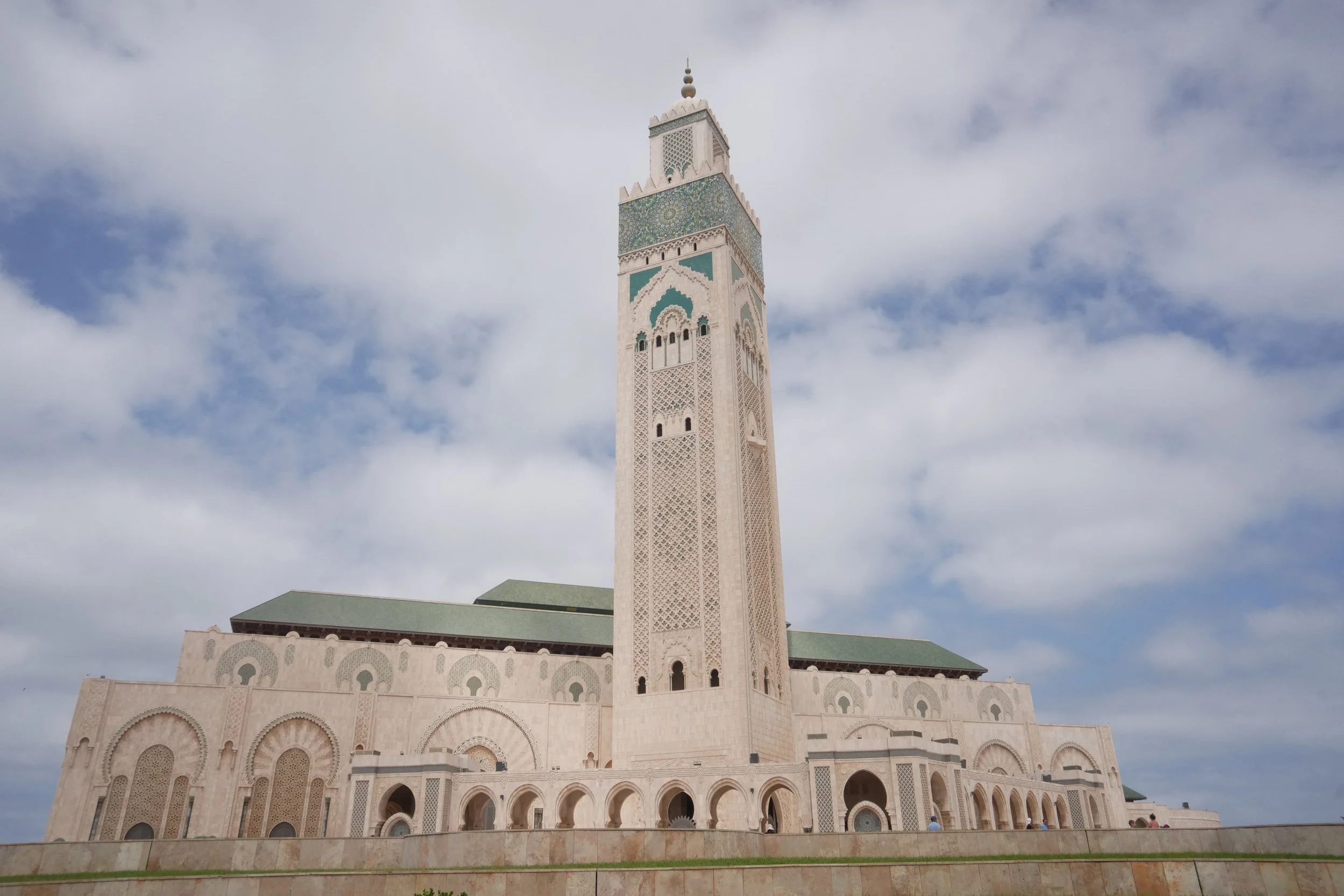
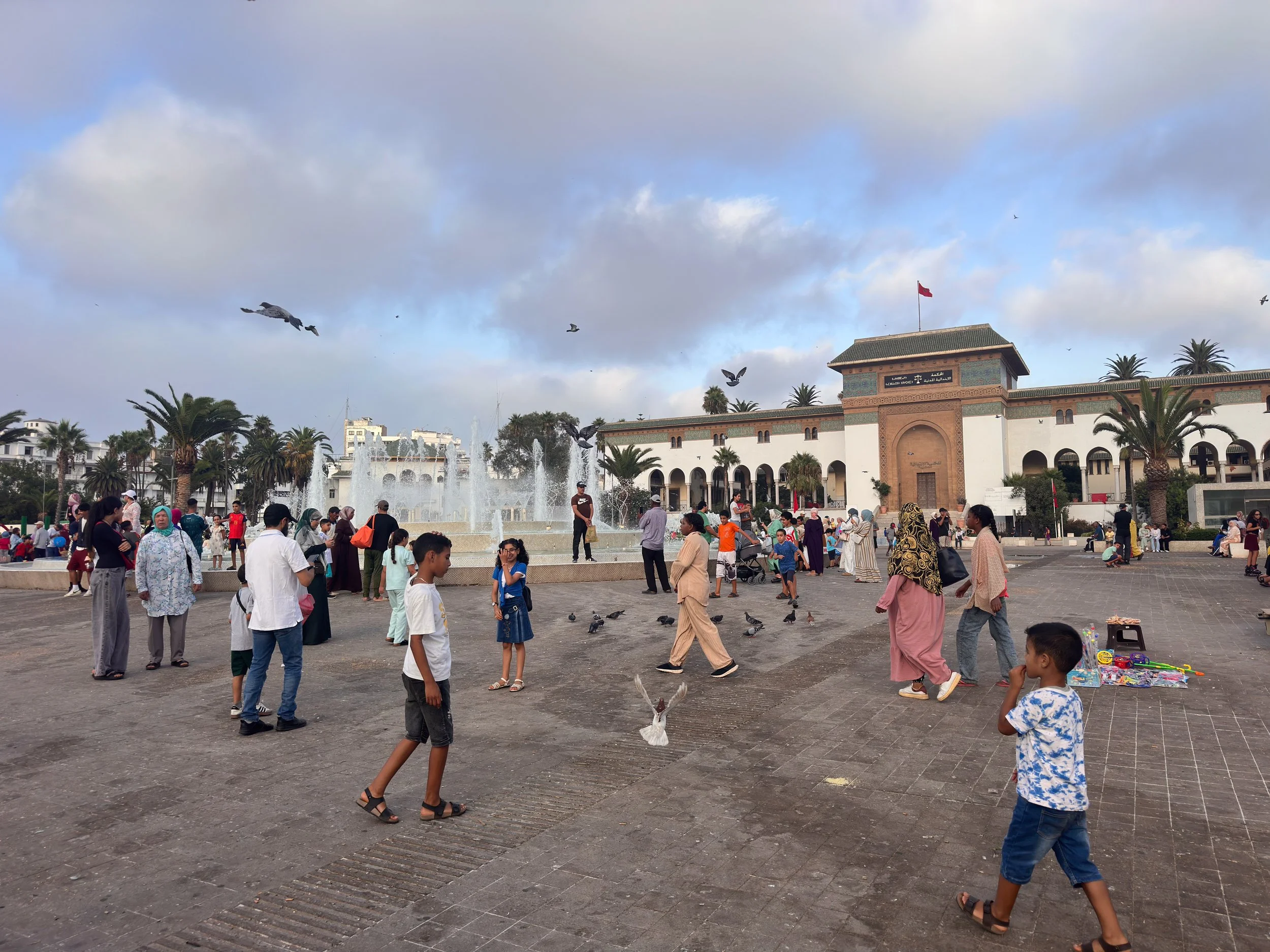
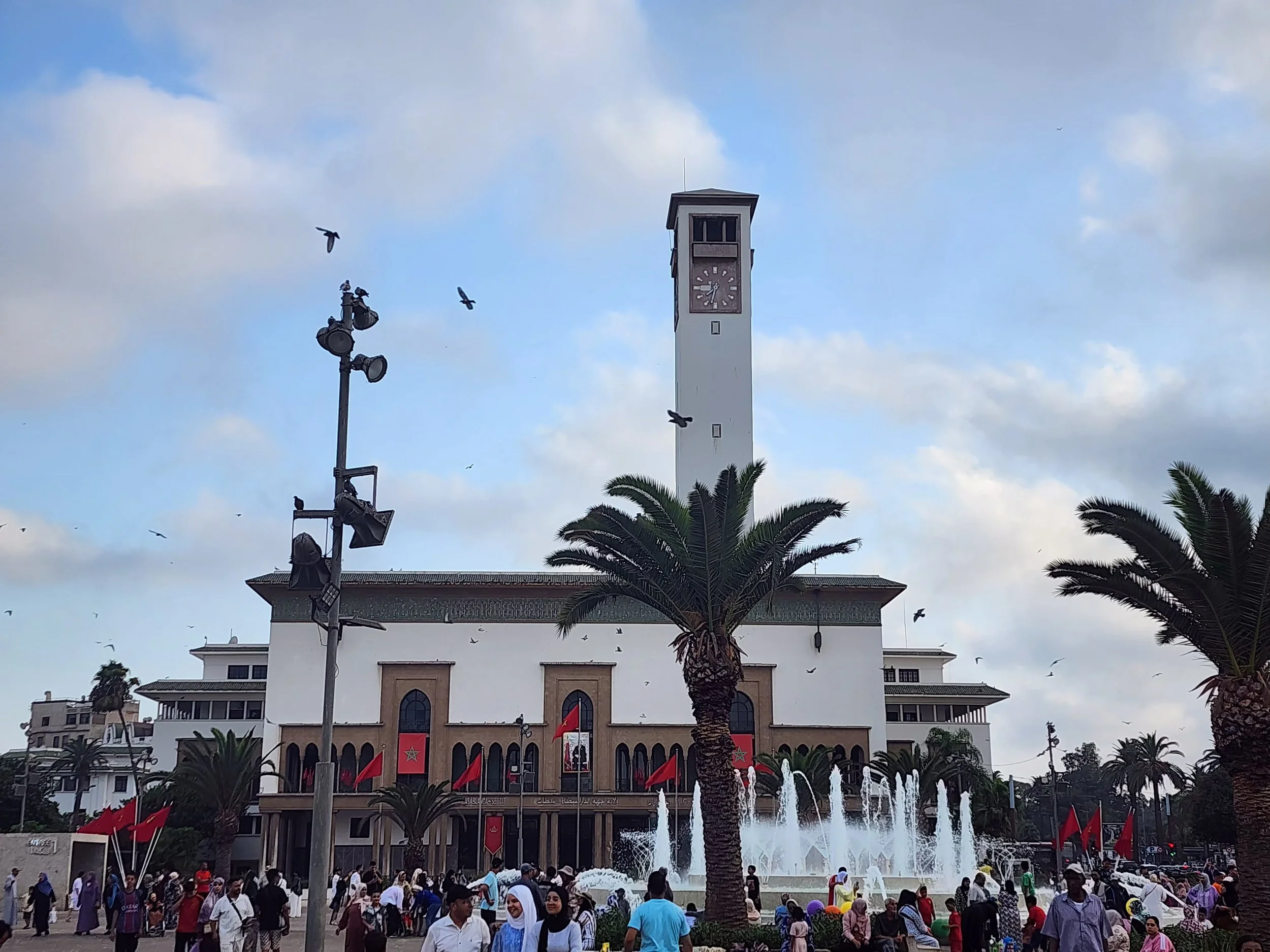
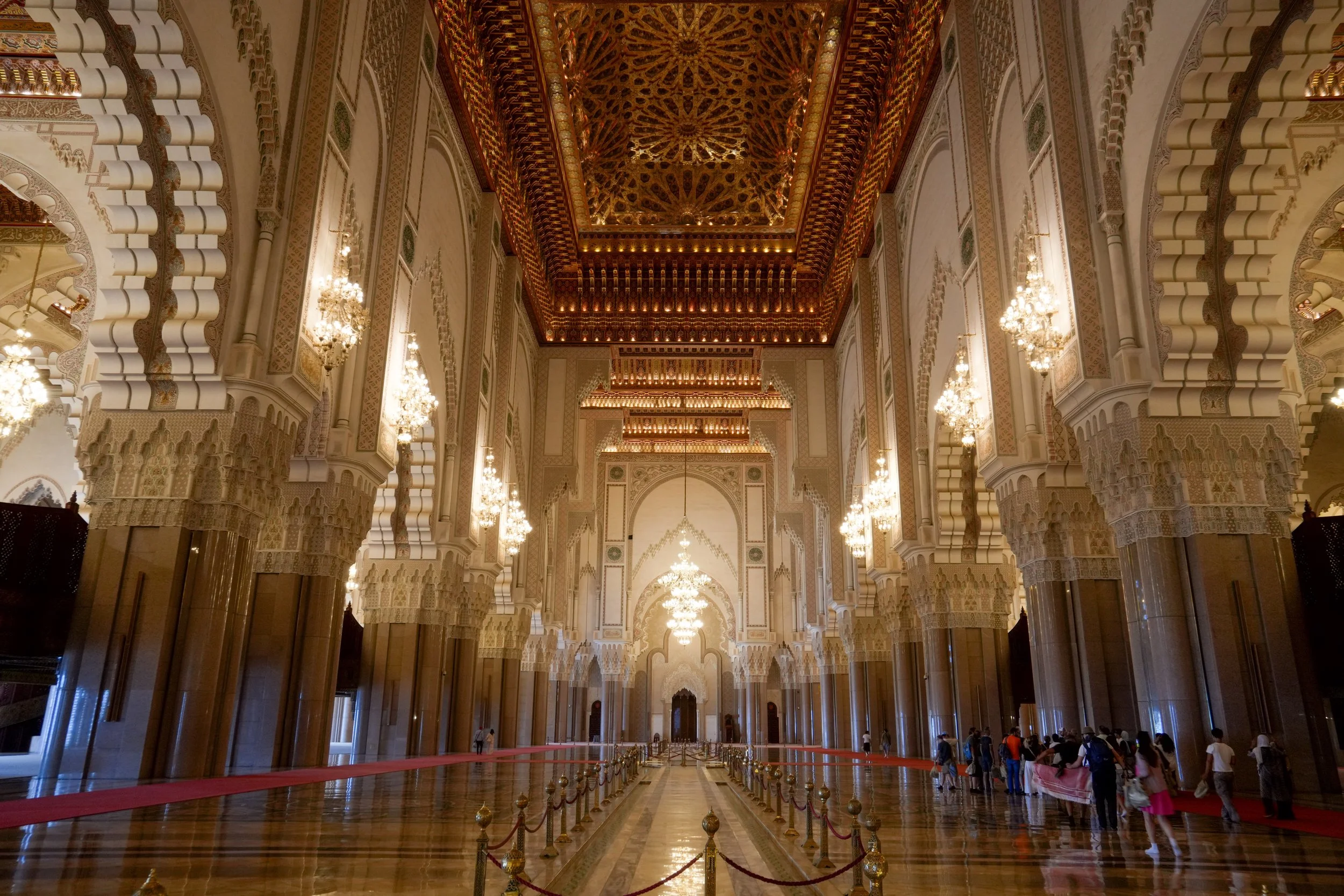
Casablanca was our introduction to Morocco, and almost immediately there was this mixture of old and new.
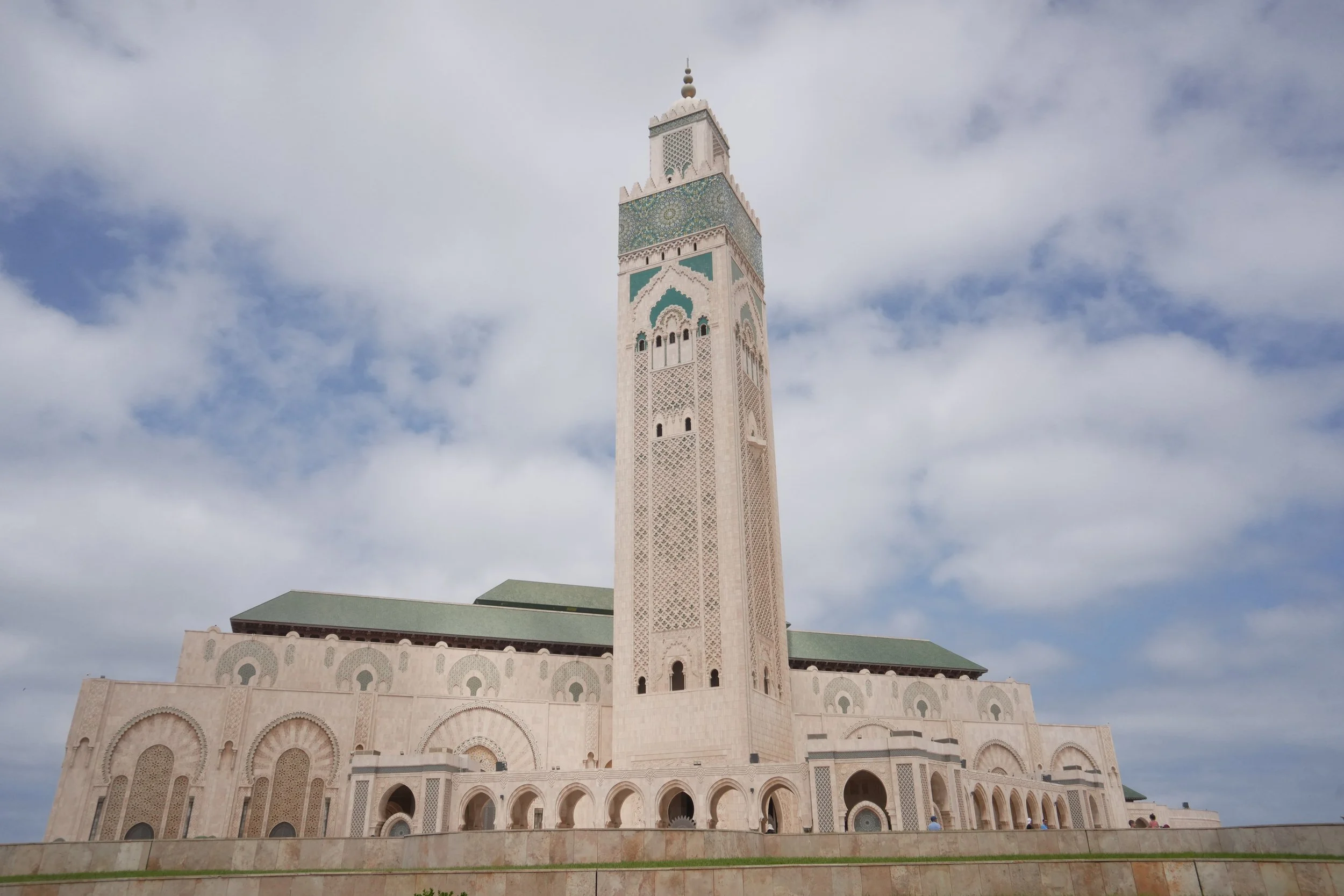
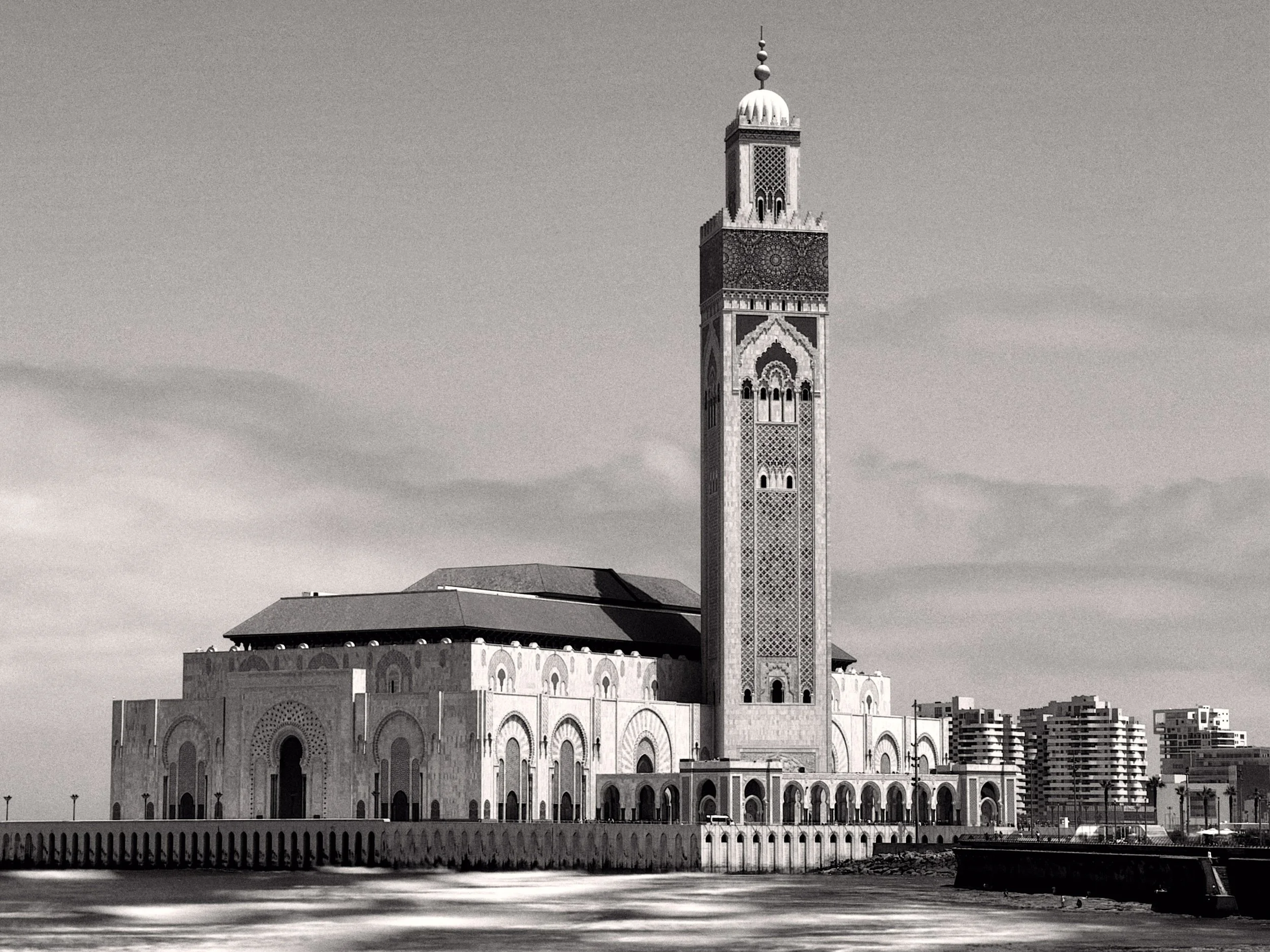
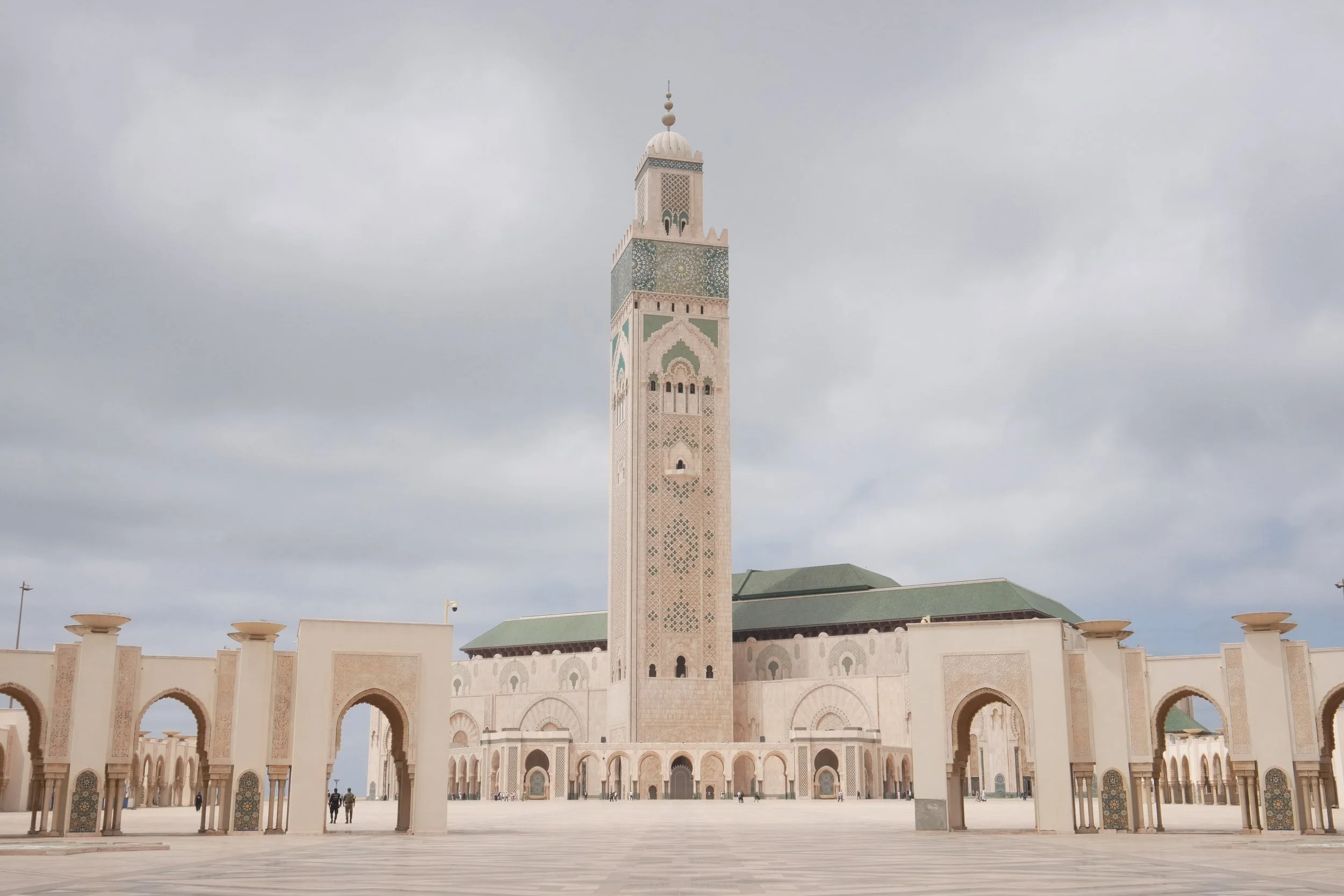
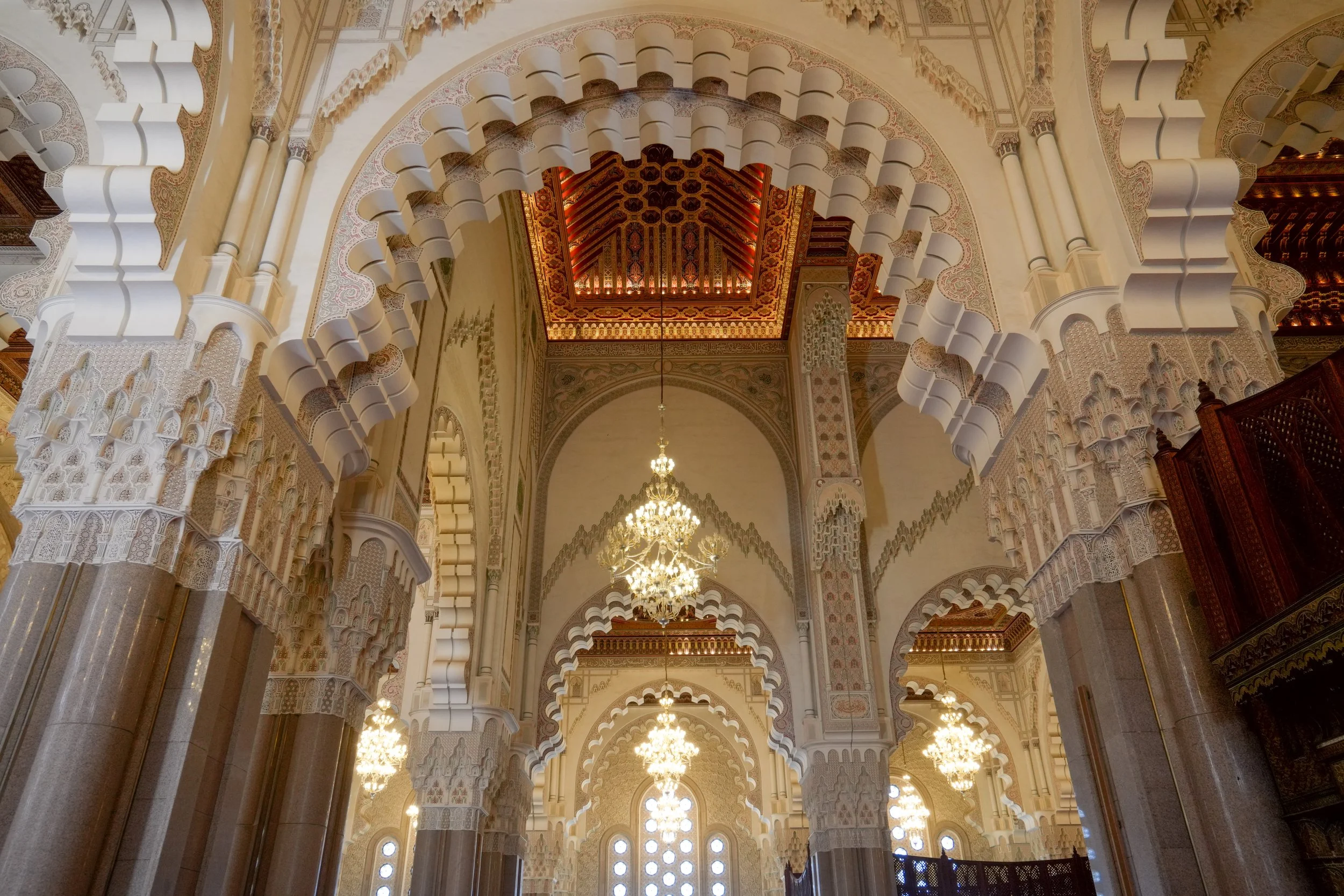
One of our first major stops was the Hassan II Mosque. It's difficult to understand its scale from photographs. Sitting along the Atlantic, the mosque dominates the waterfront, but up close I found myself paying just as much attention to the details—the patterns, surfaces, doors, tilework and the people moving through all of it.
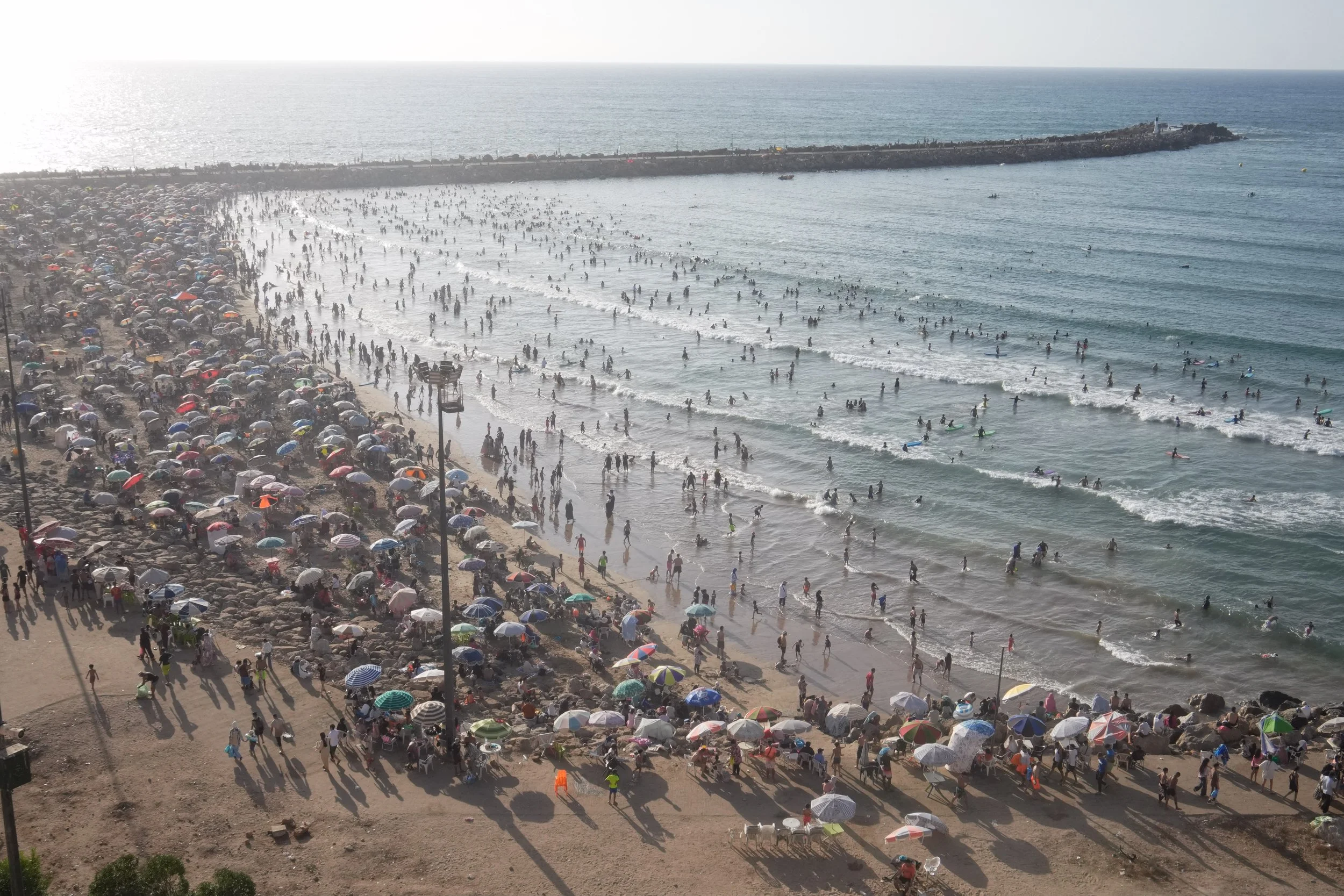
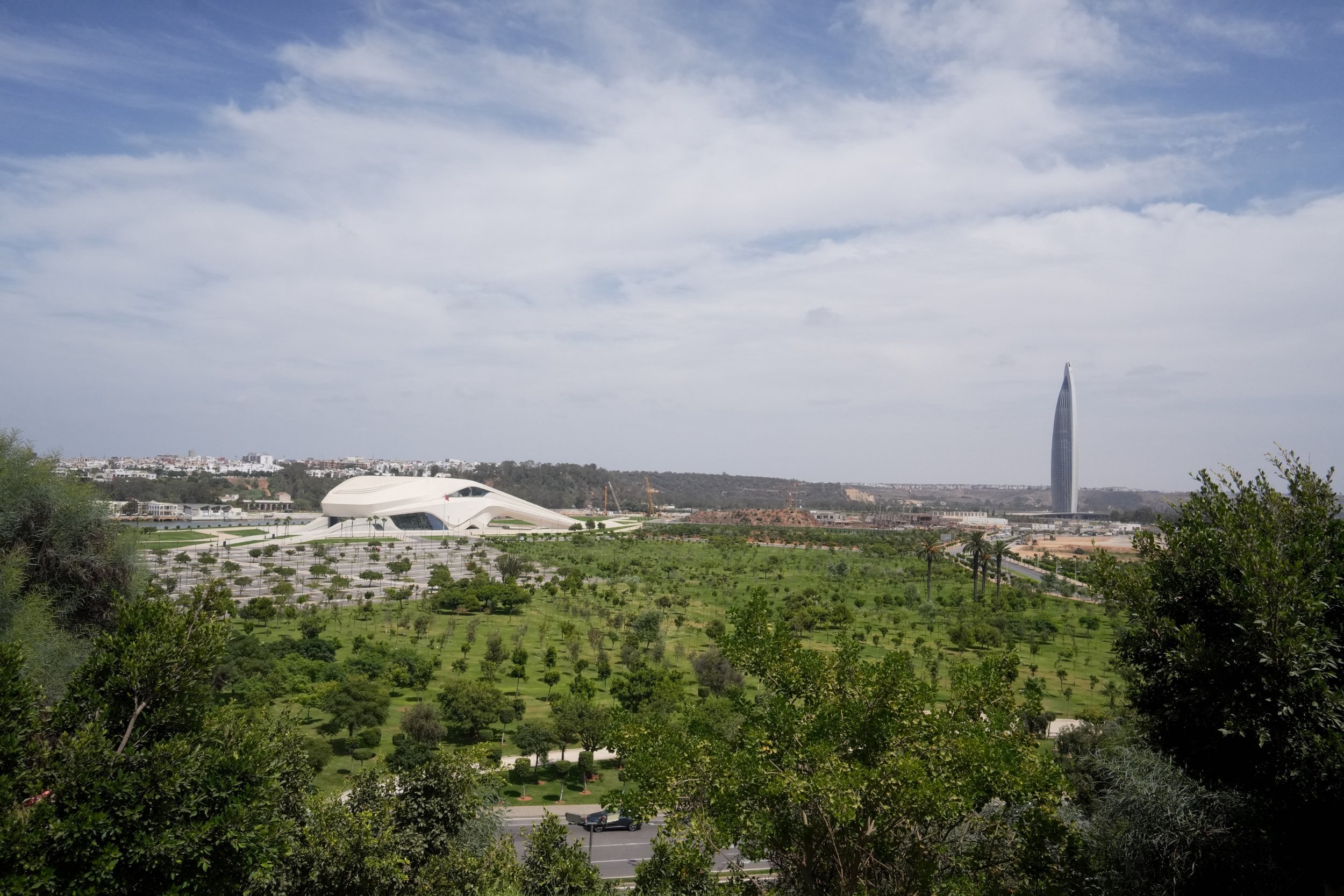
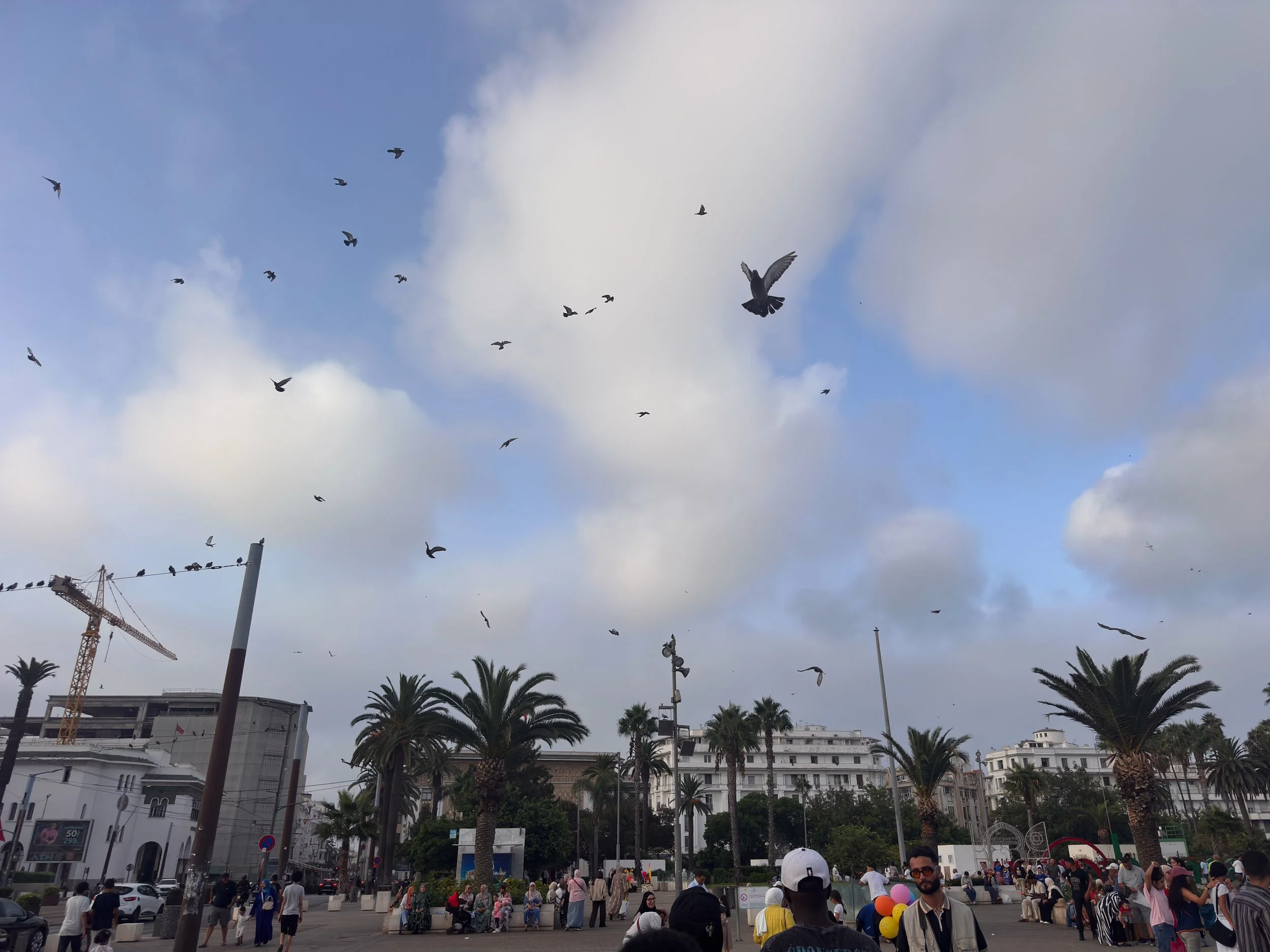
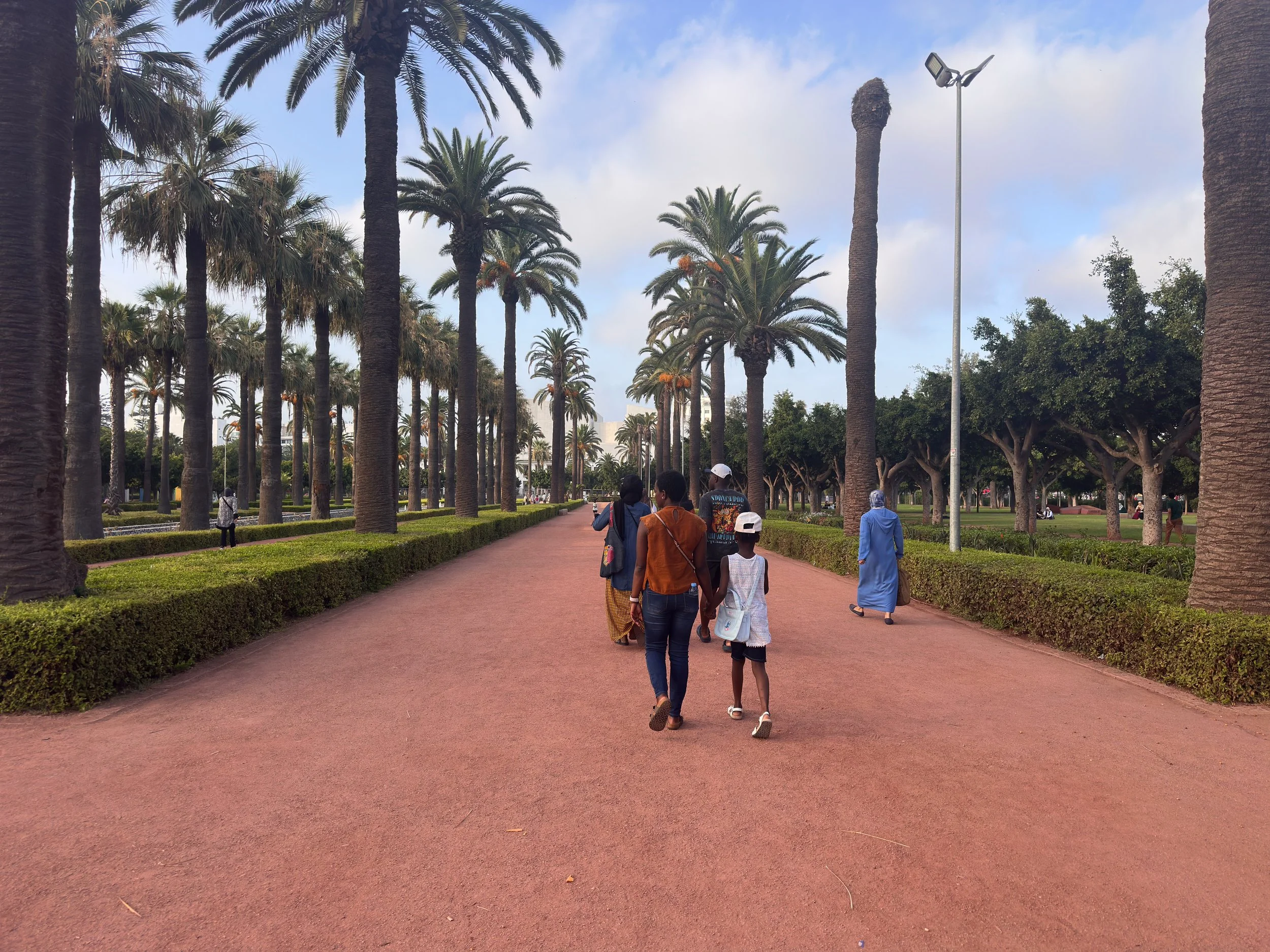
We also spent time along the waterfront and walking through some of the city's parks. Toward the end of the day, the light became one of the things I remember most. That first evening gave me my first real opportunity to simply walk around with a camera and begin figuring out what I was interested in photographing in Morocco.
Rabat
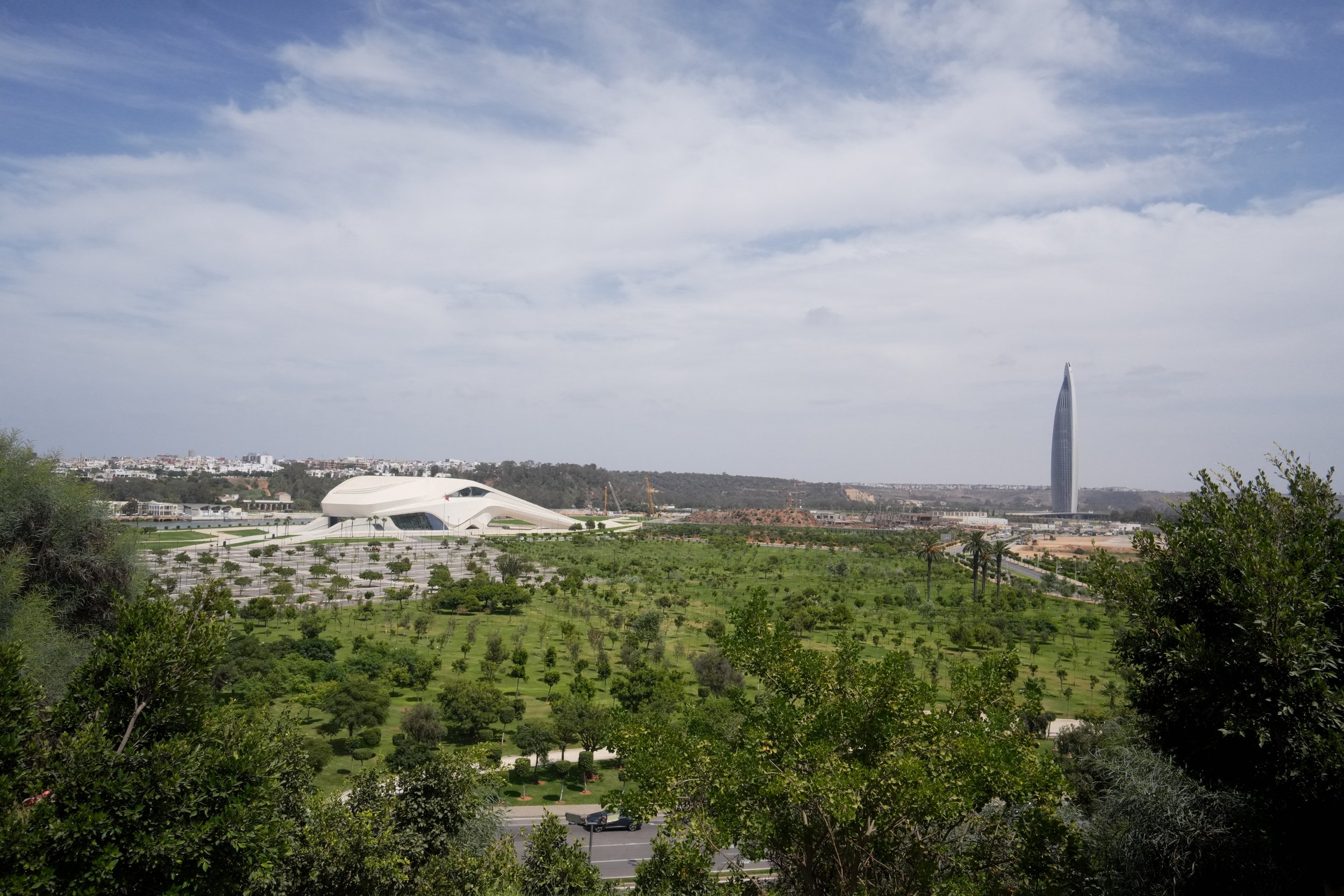
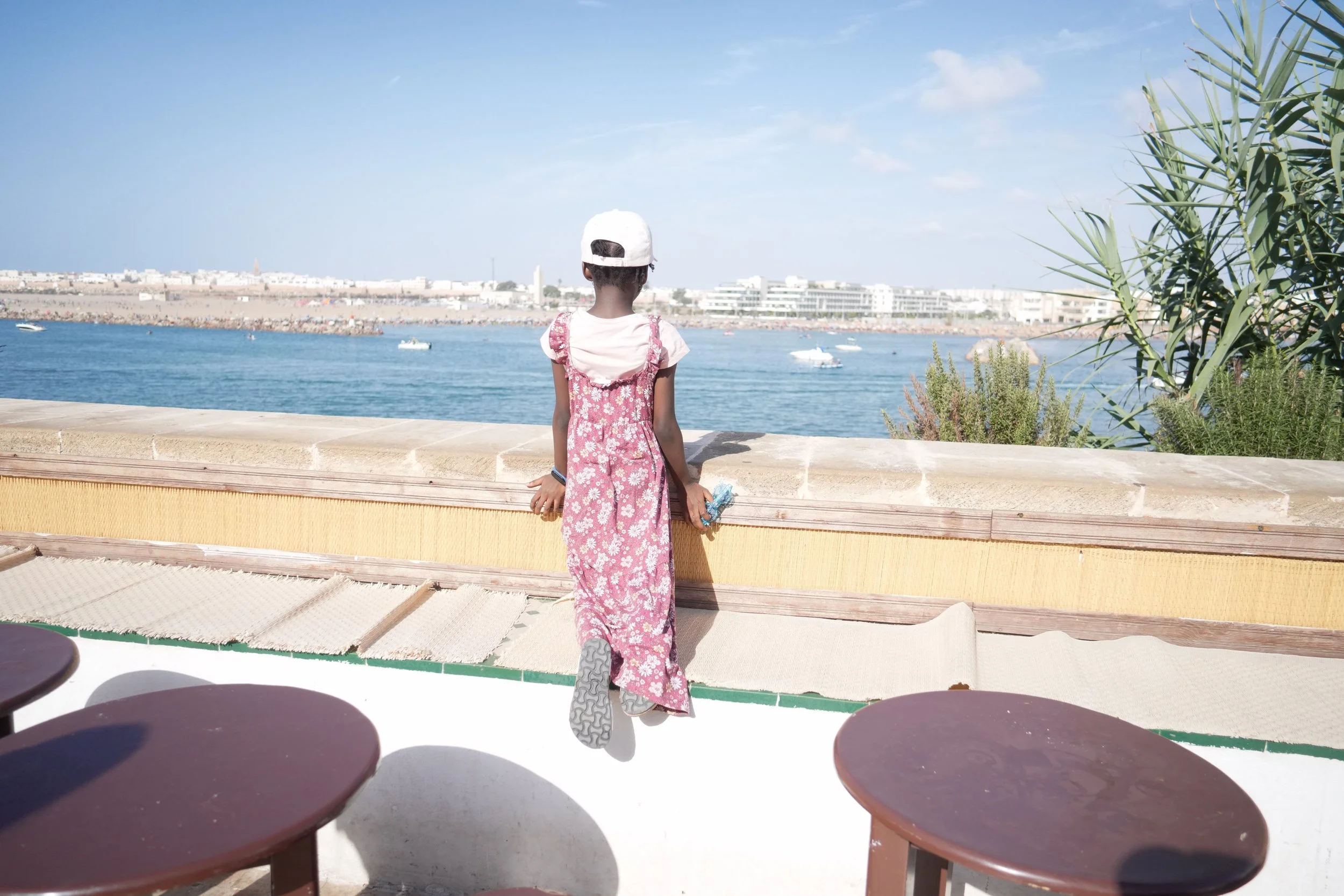
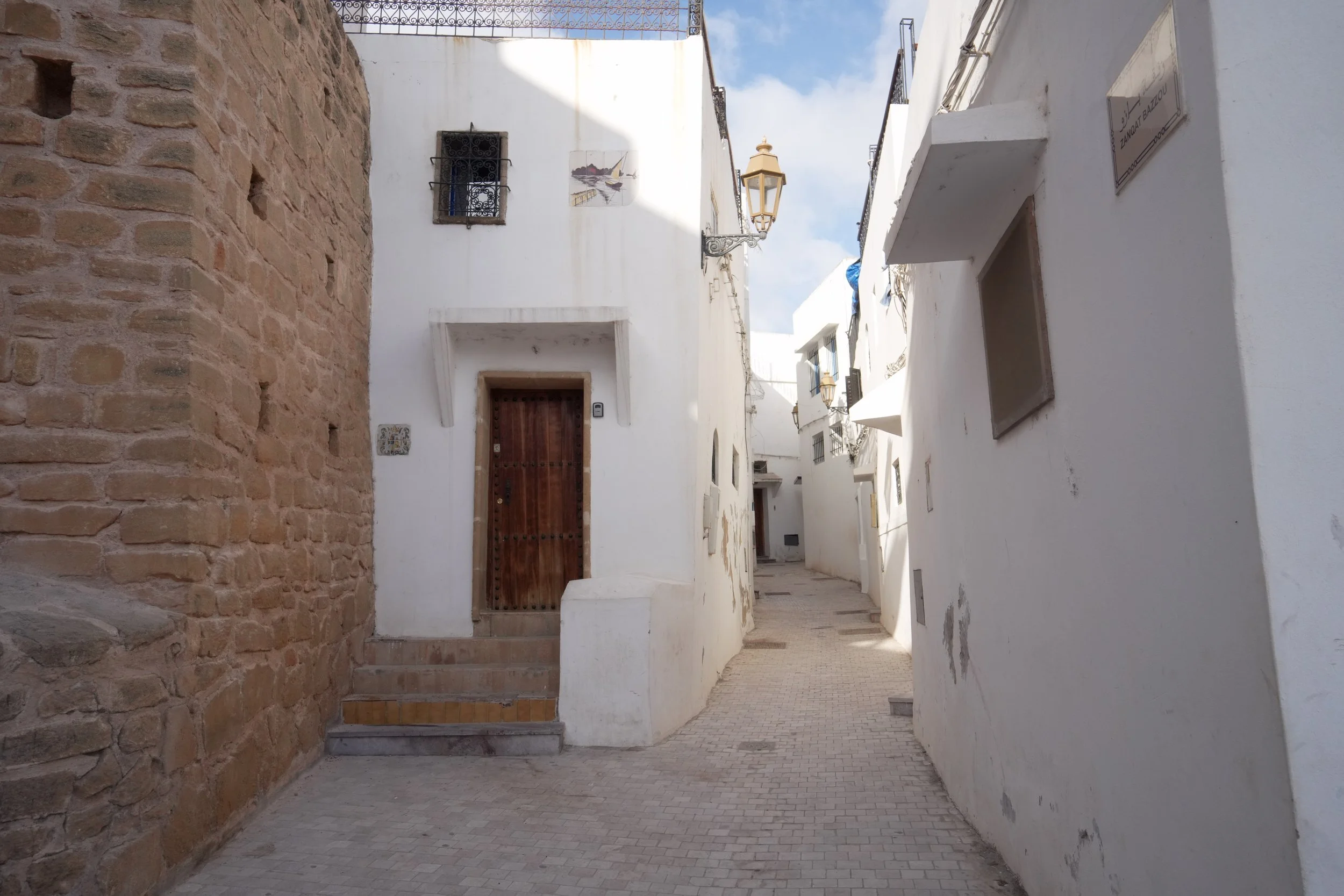
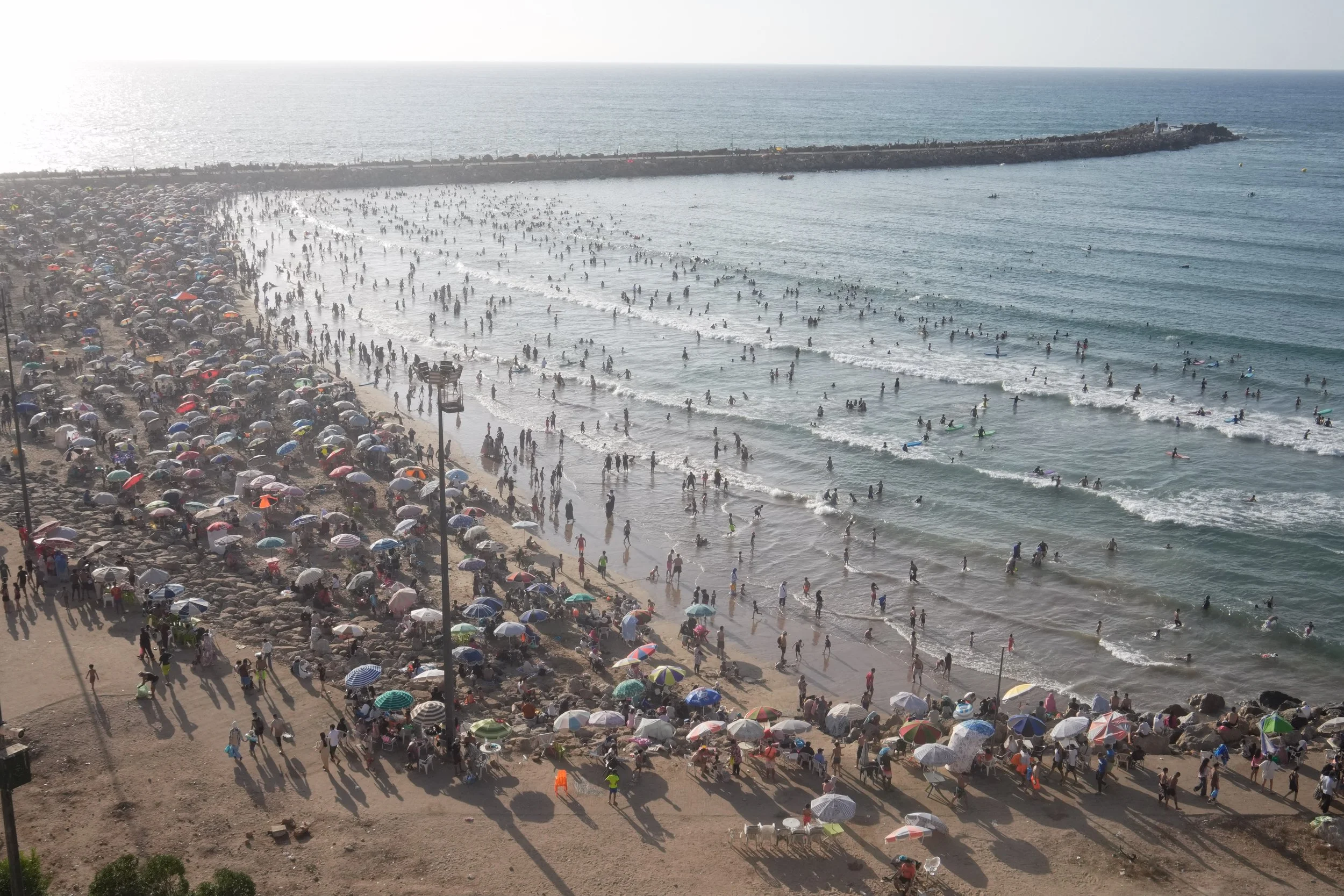
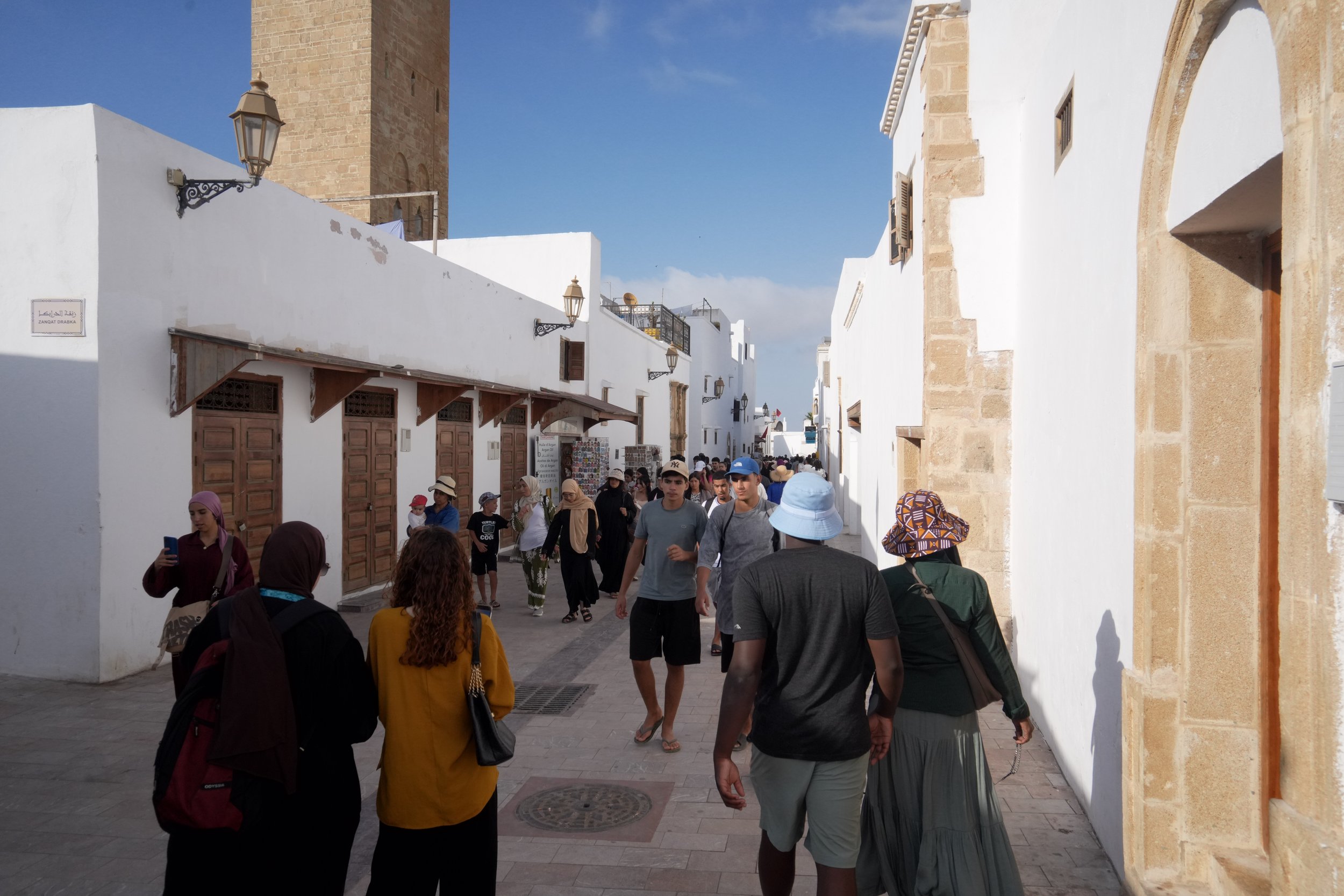
Rabat felt different.
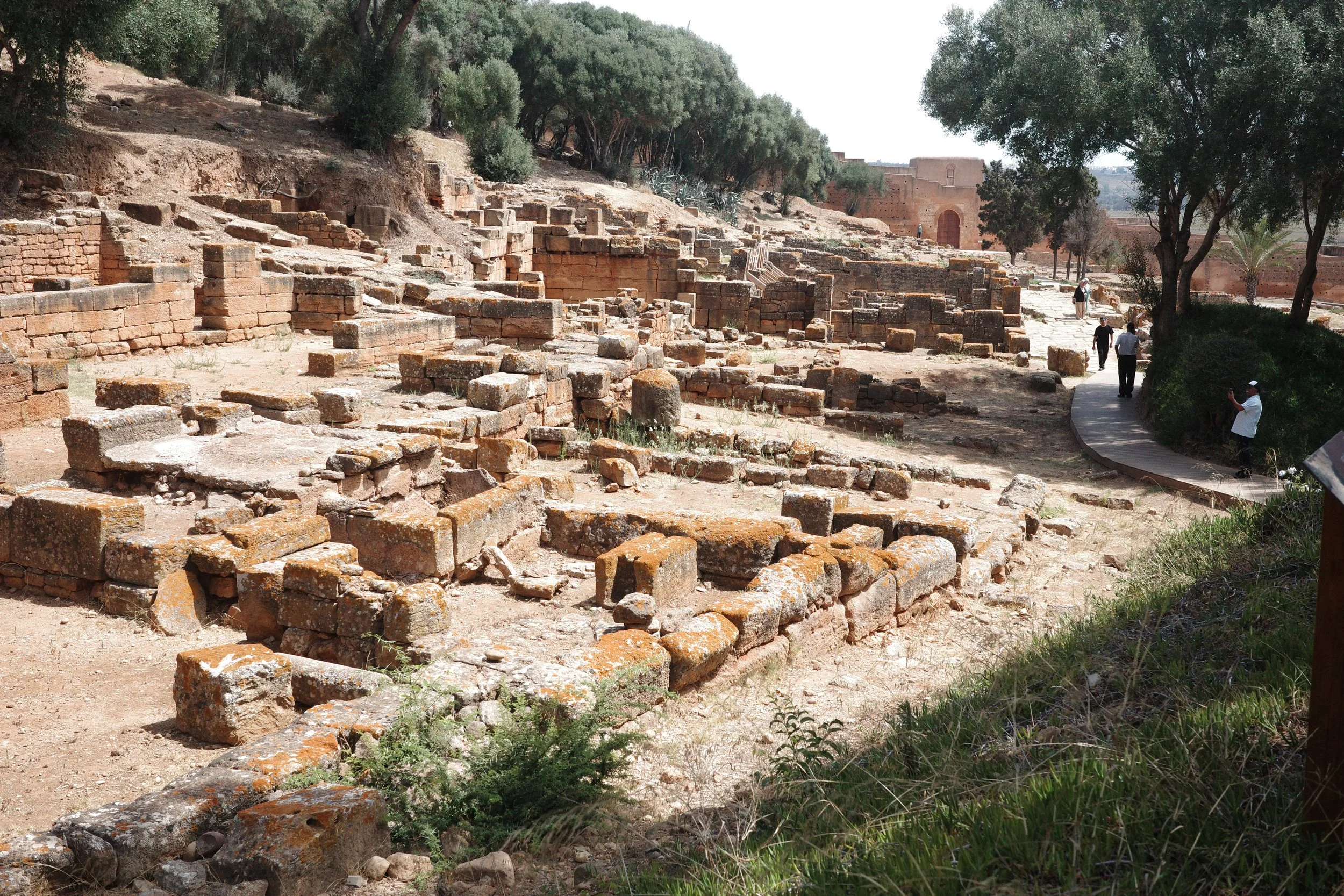
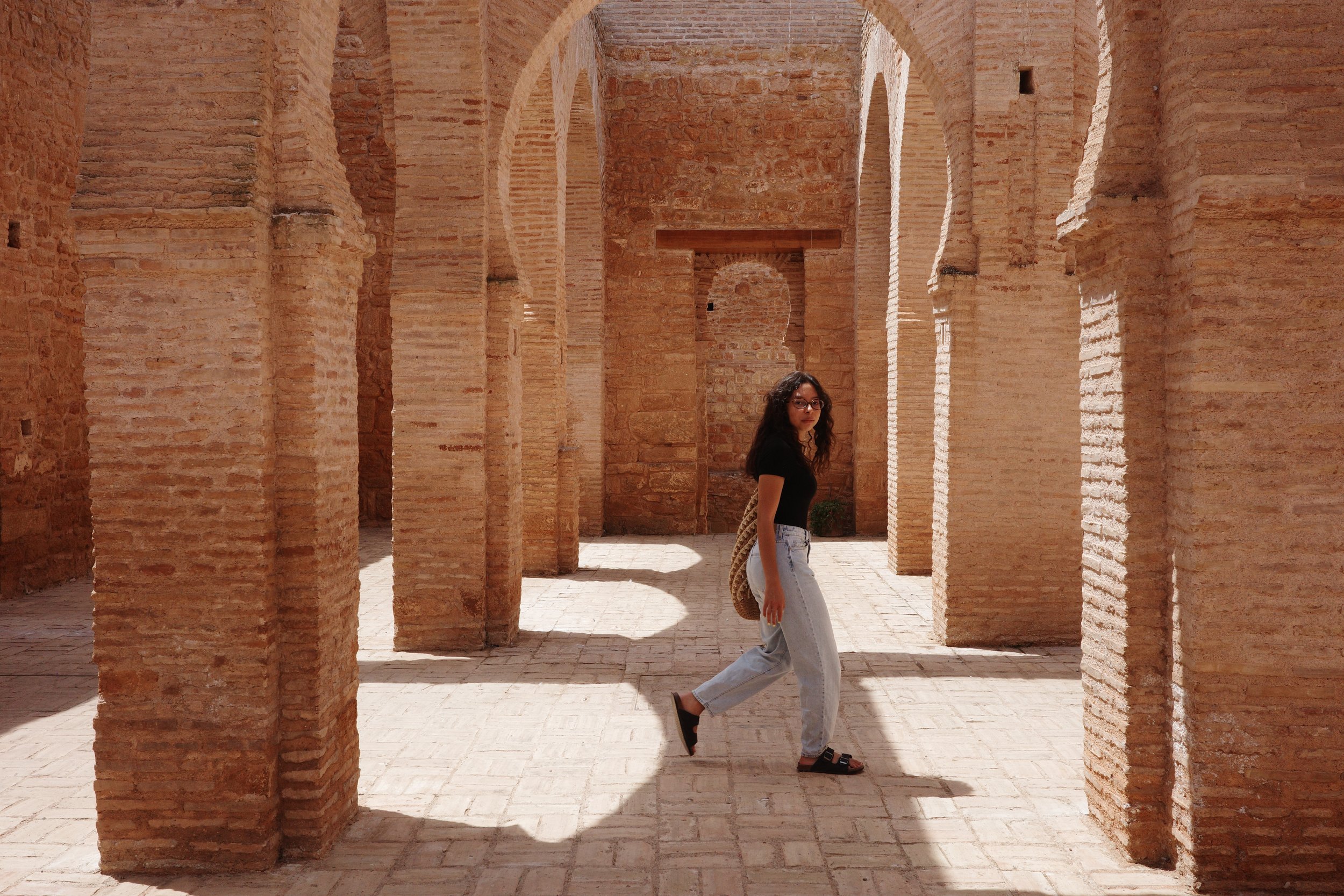
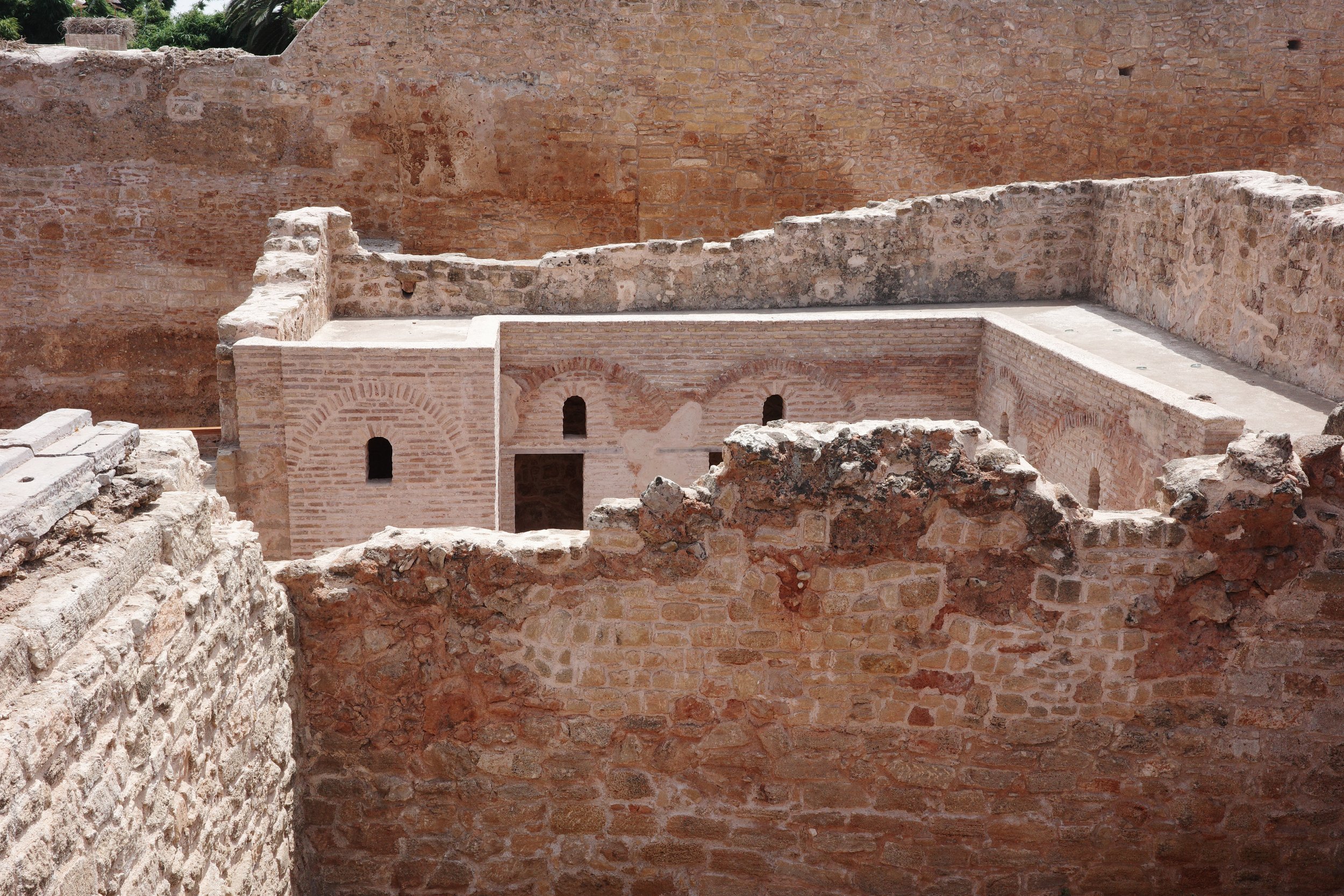
We visited Chellah, where the ruins and gardens made the city suddenly feel much older and quieter. There were layers of history everywhere, but it wasn't a place I felt the need to rush through. It was somewhere to wander.
The Kasbah was almost the opposite visually—more color, narrower spaces and more activity.
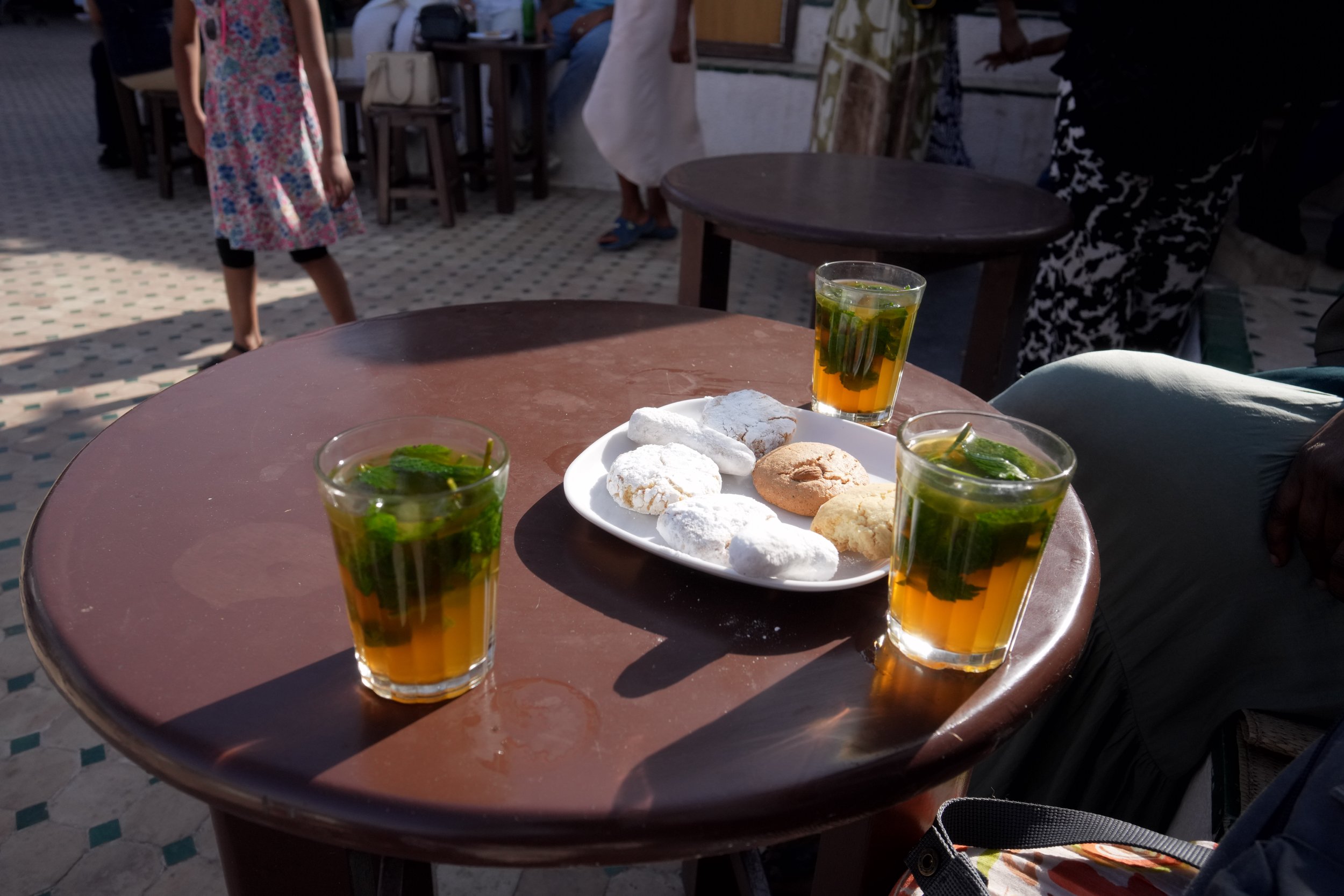
One of my favorite memories from Rabat was much simpler: sitting with tea overlooking the water. Those quieter moments became just as much a part of how I remember Morocco as any landmark.
Asilah + Tangier
As we moved north, Morocco began changing again.
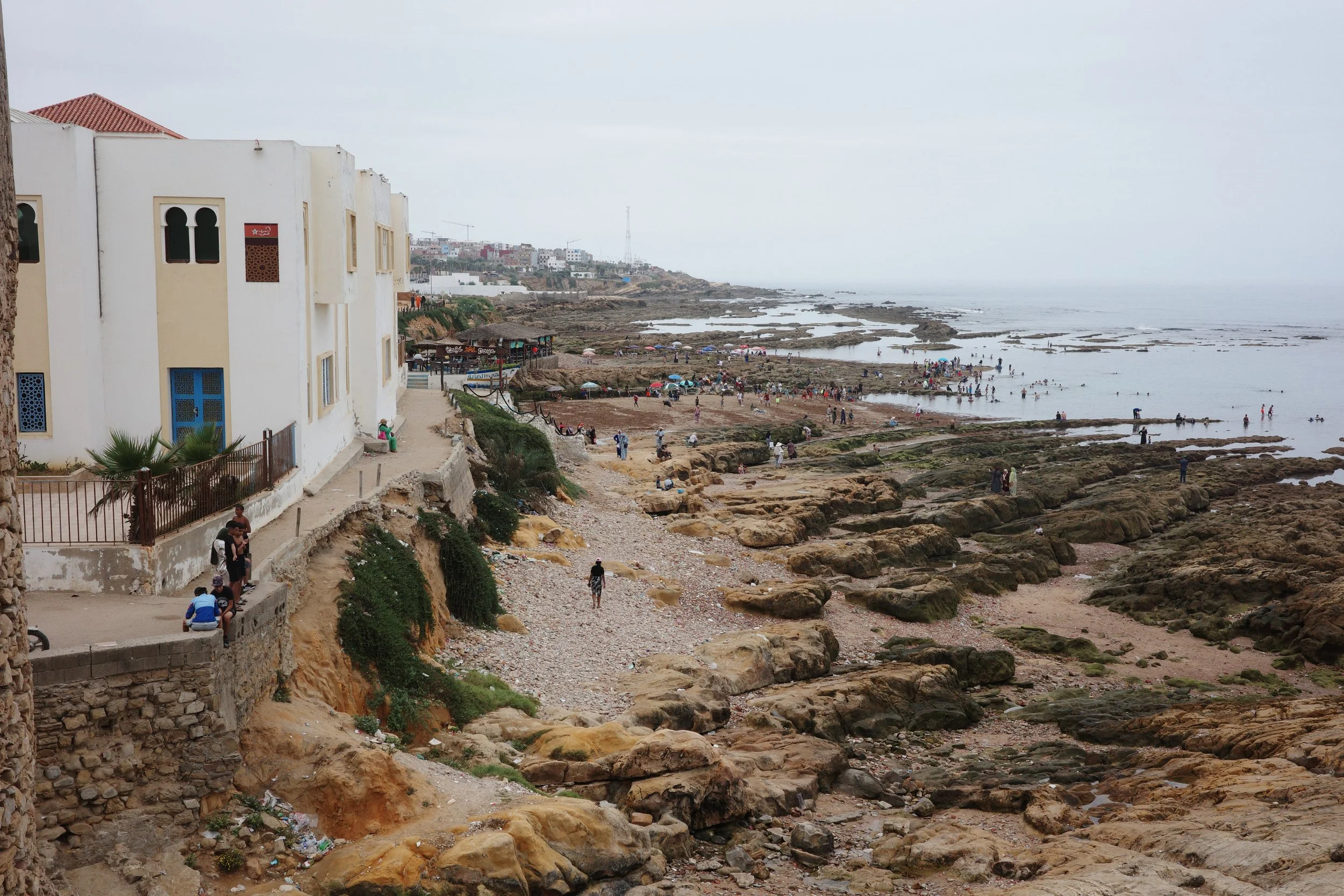
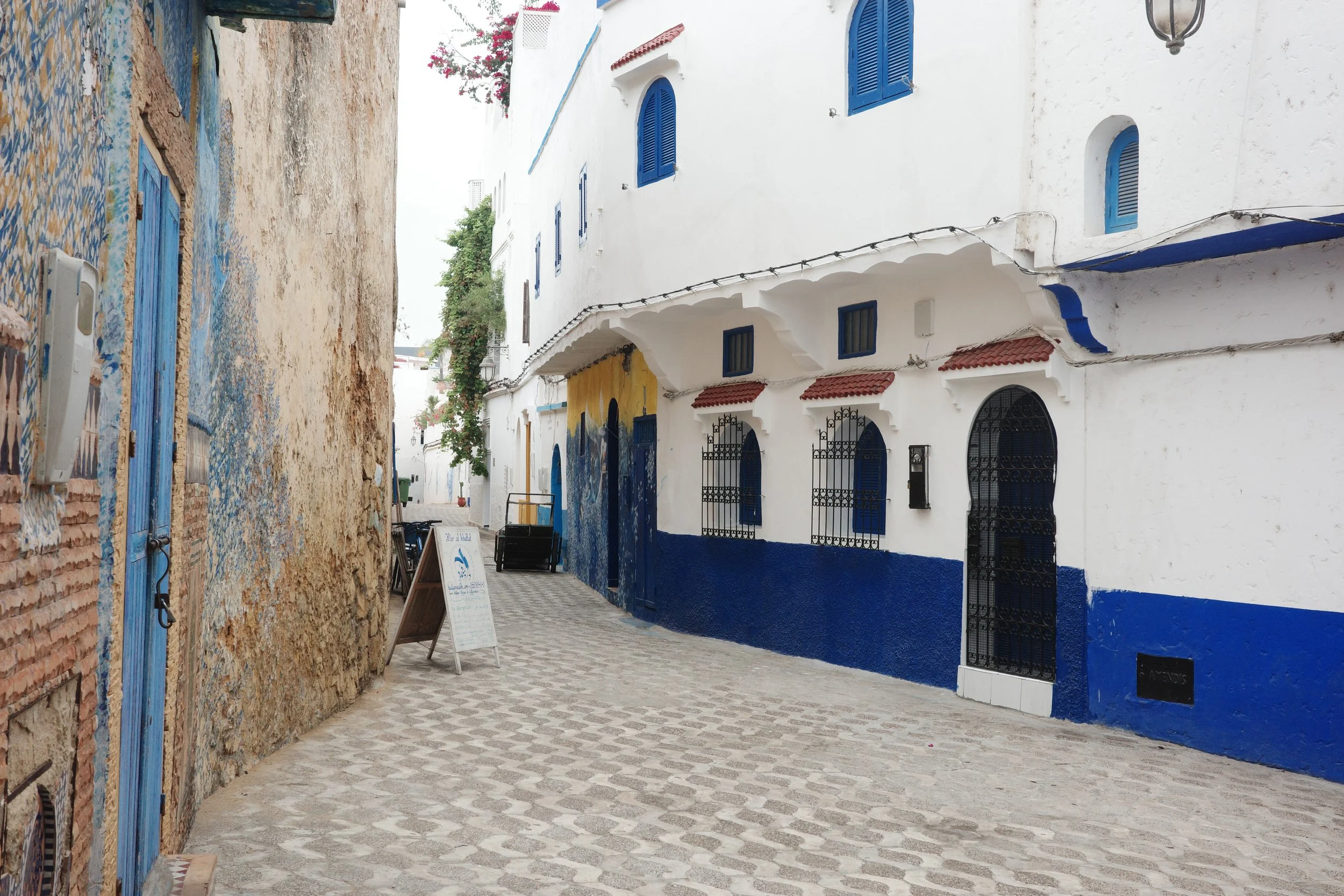
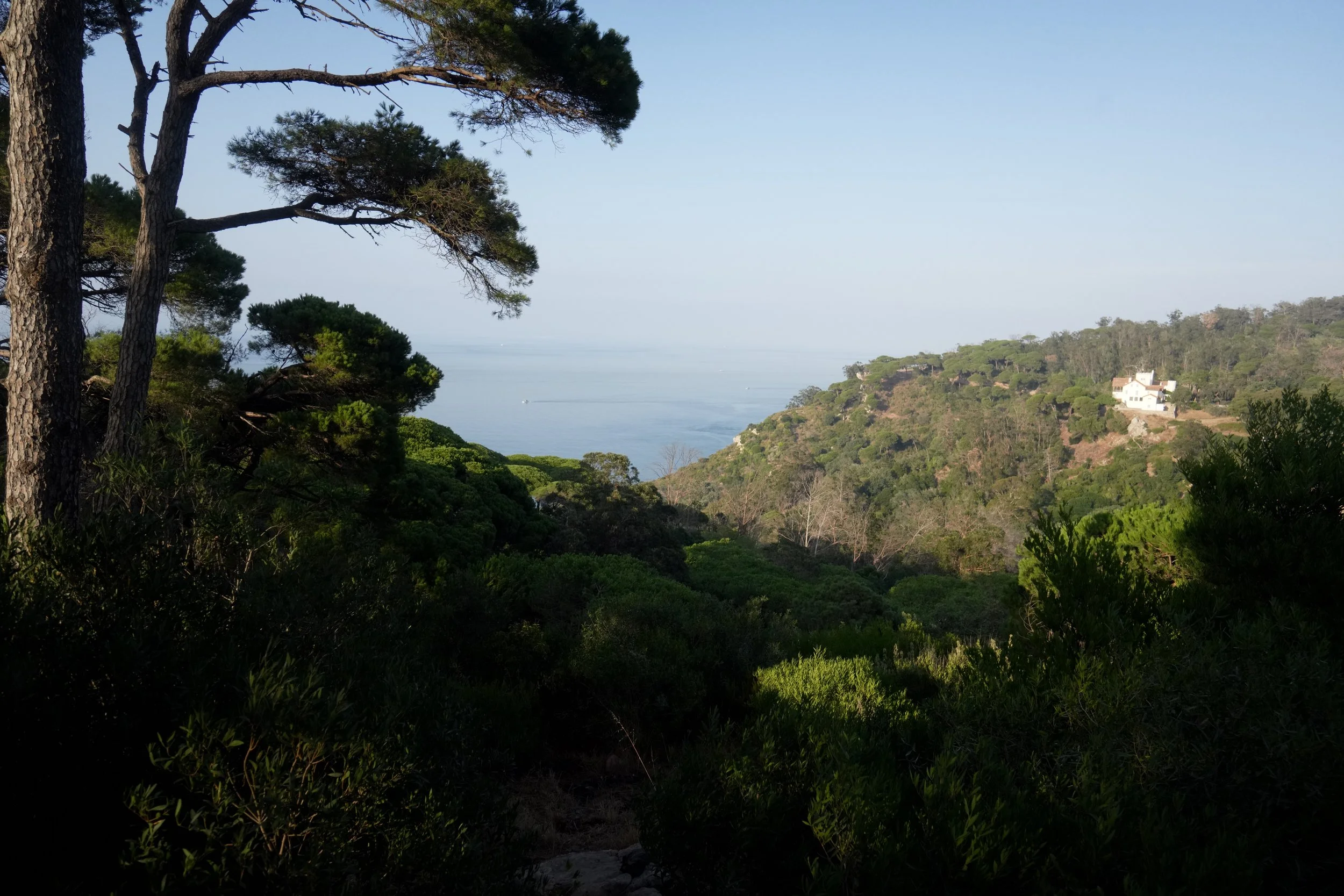
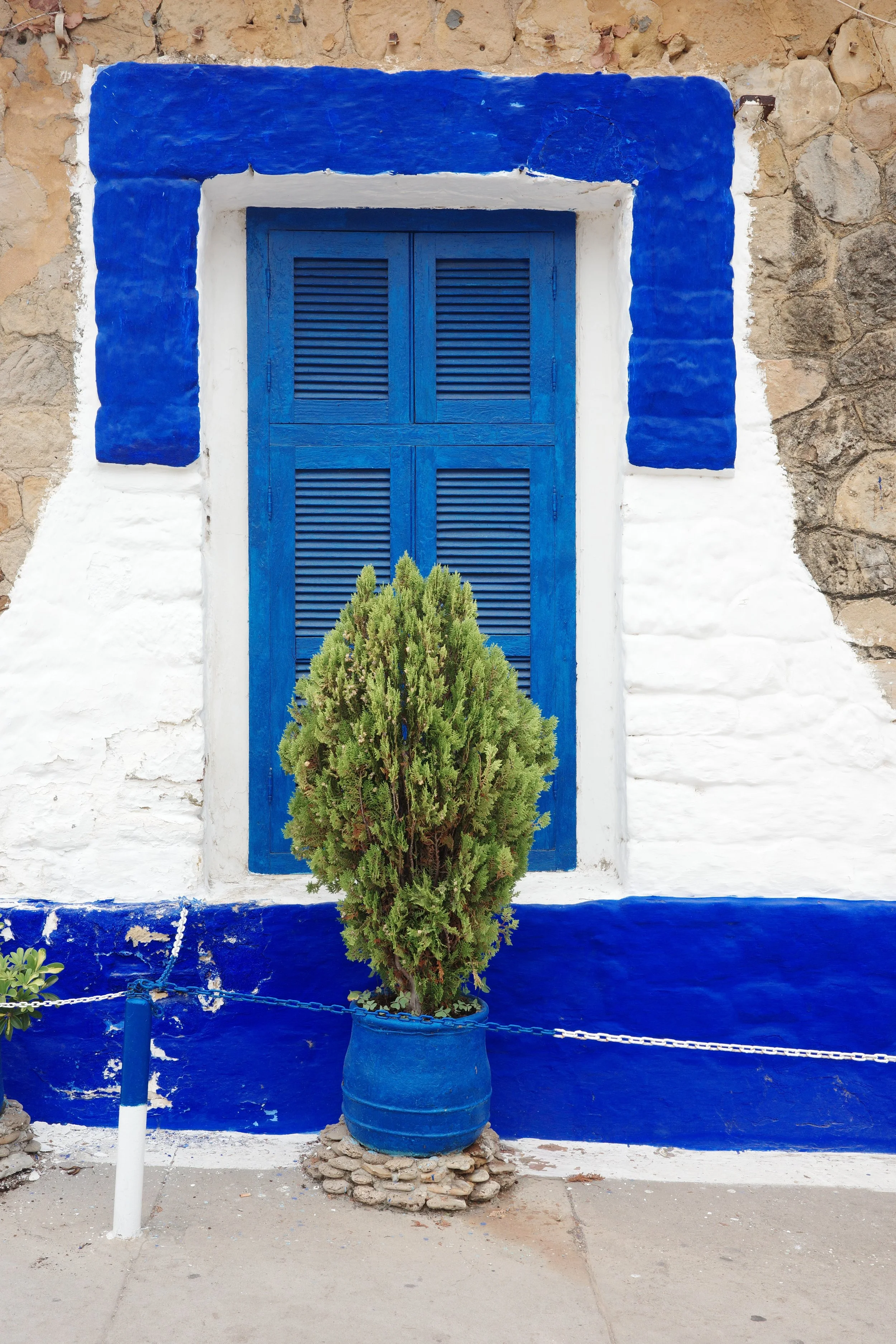
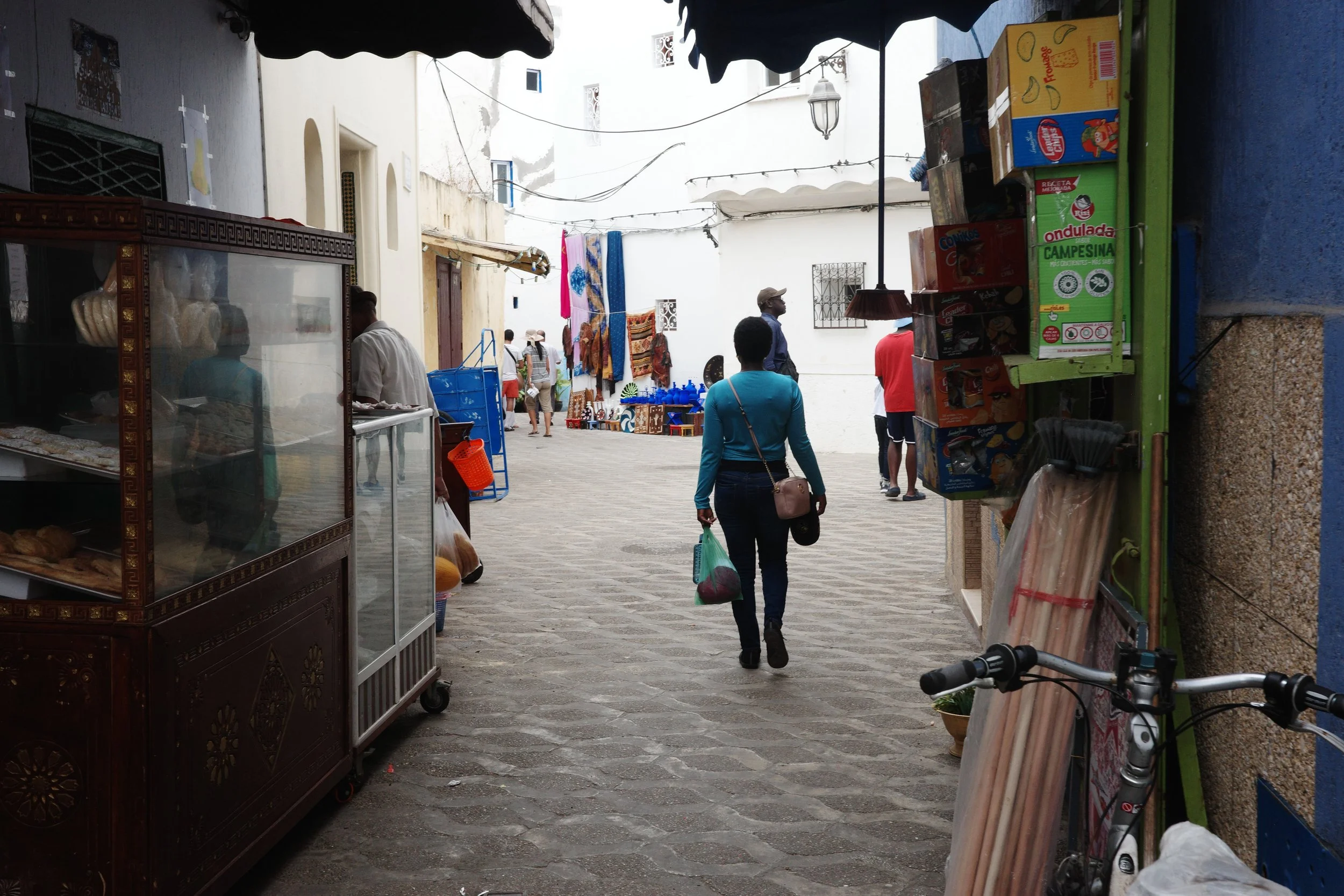
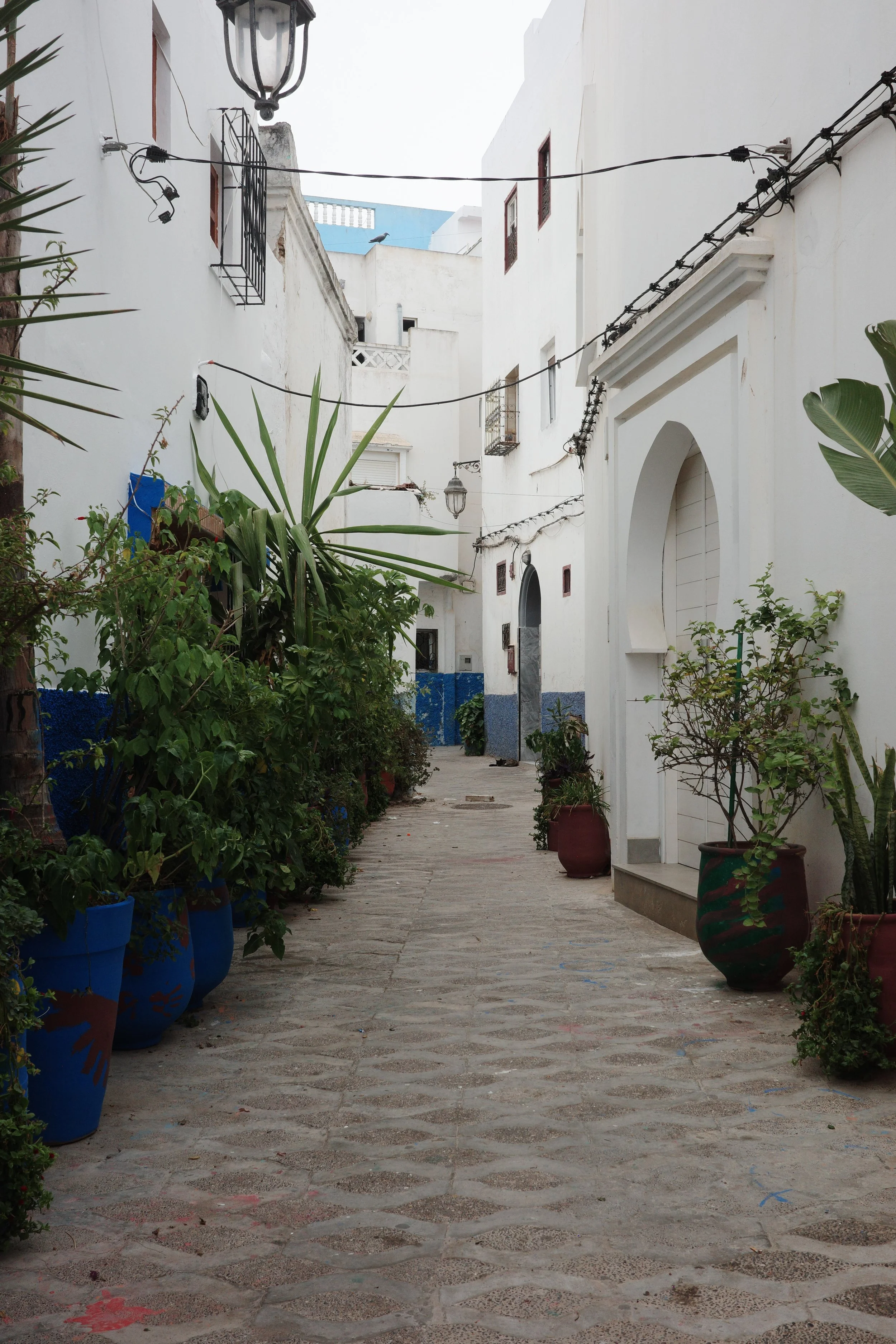
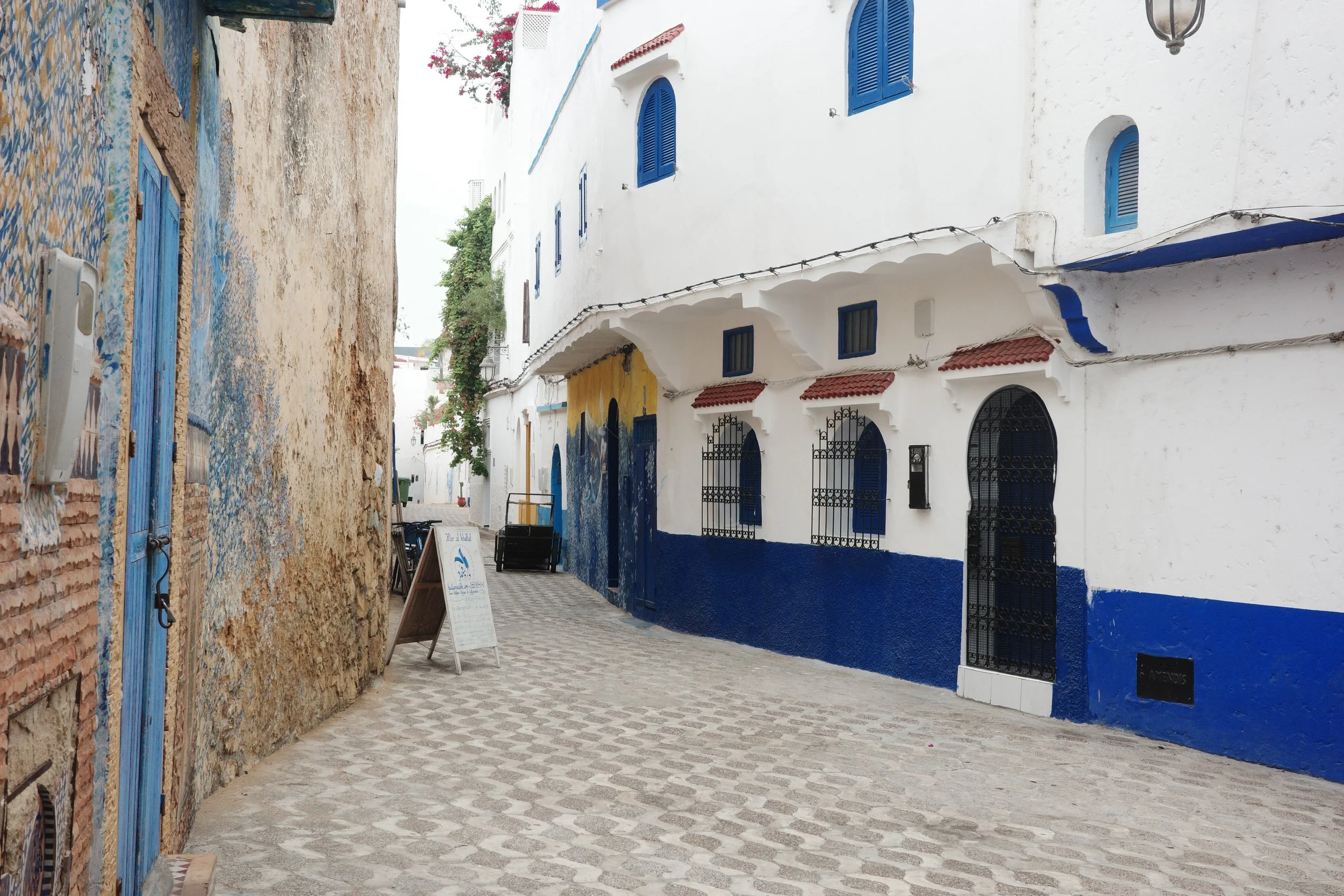
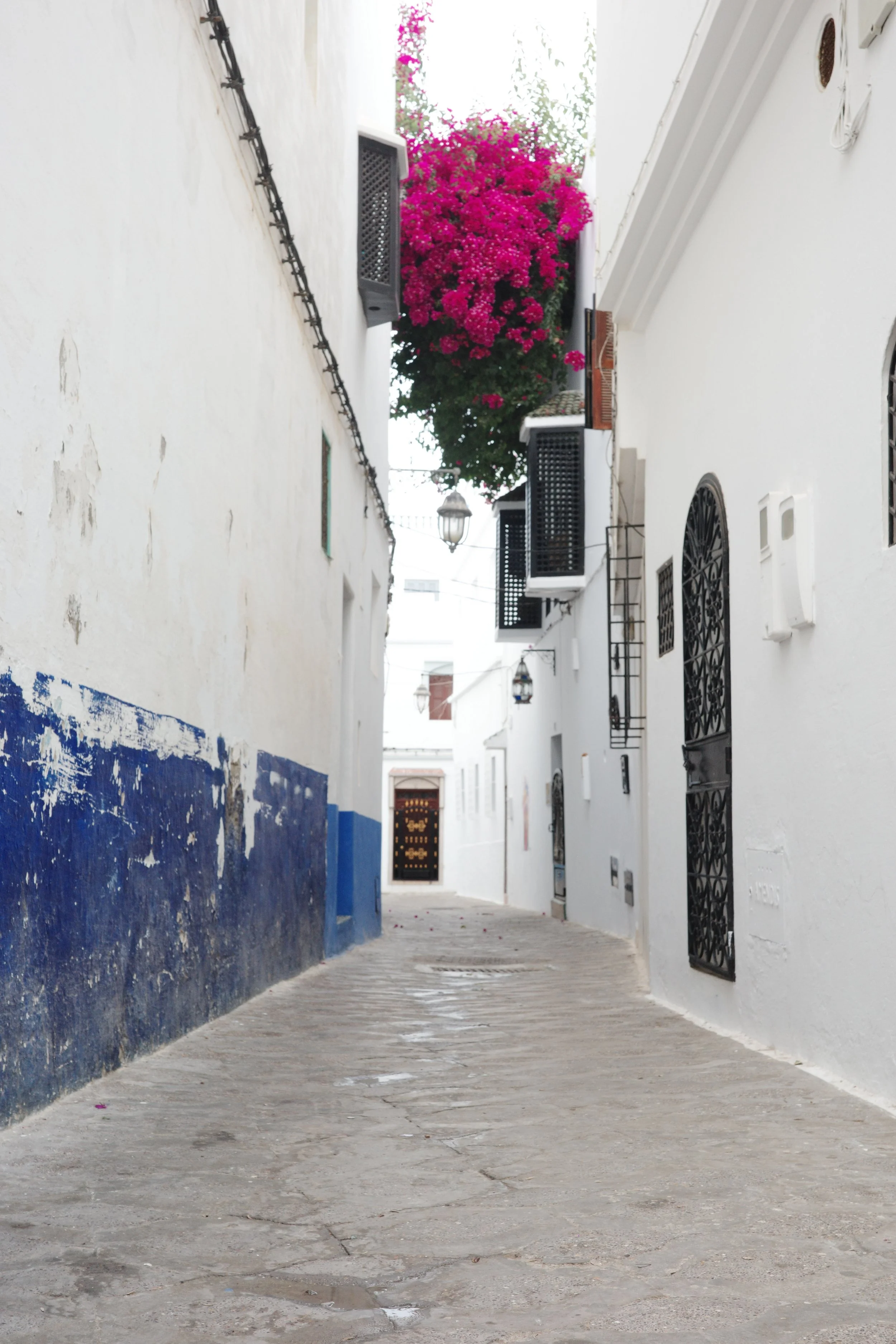
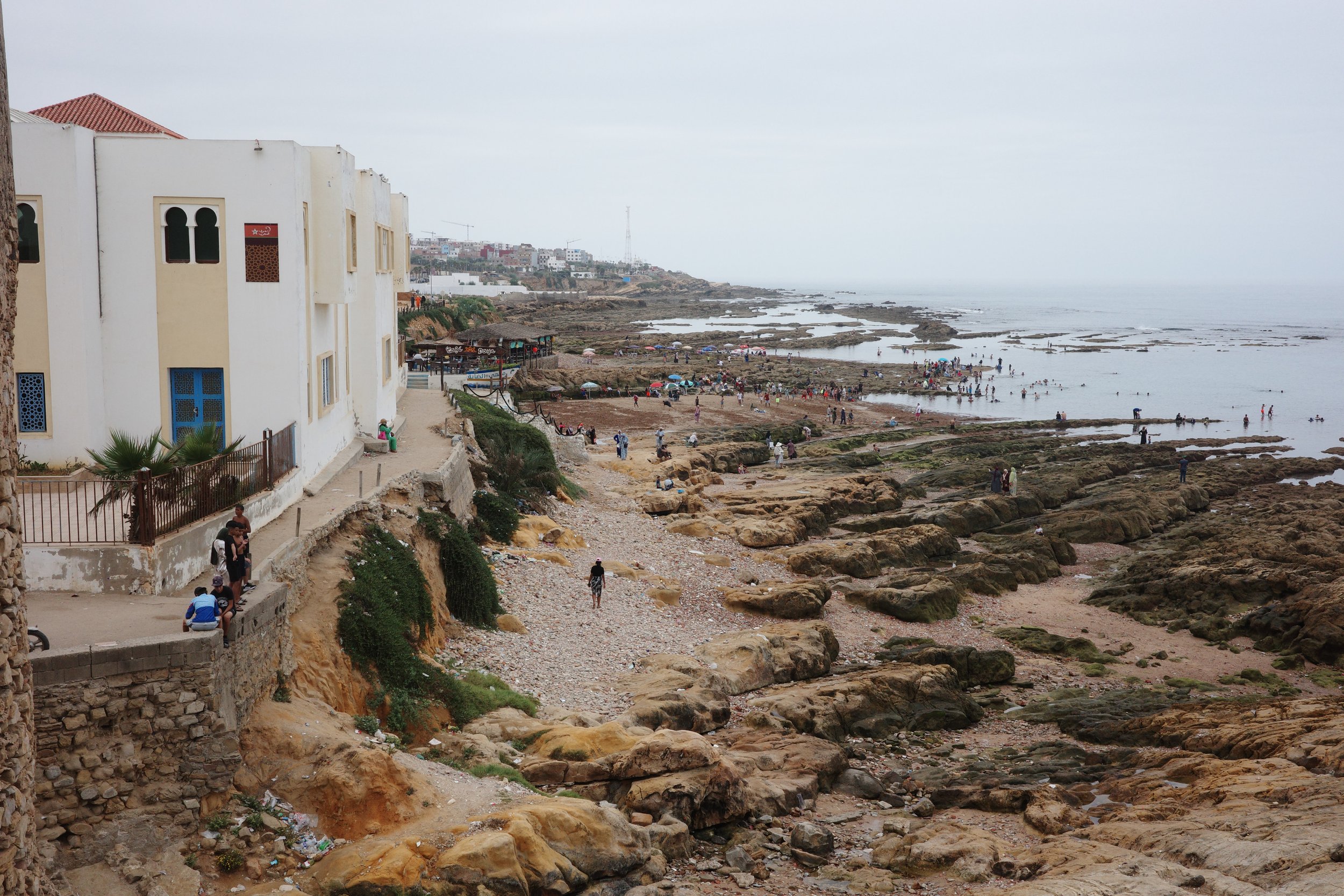
Asilah had the feeling of a small coastal town: whitewashed buildings, blue details and the Atlantic nearby. The visual palette was completely different from what we'd already seen.
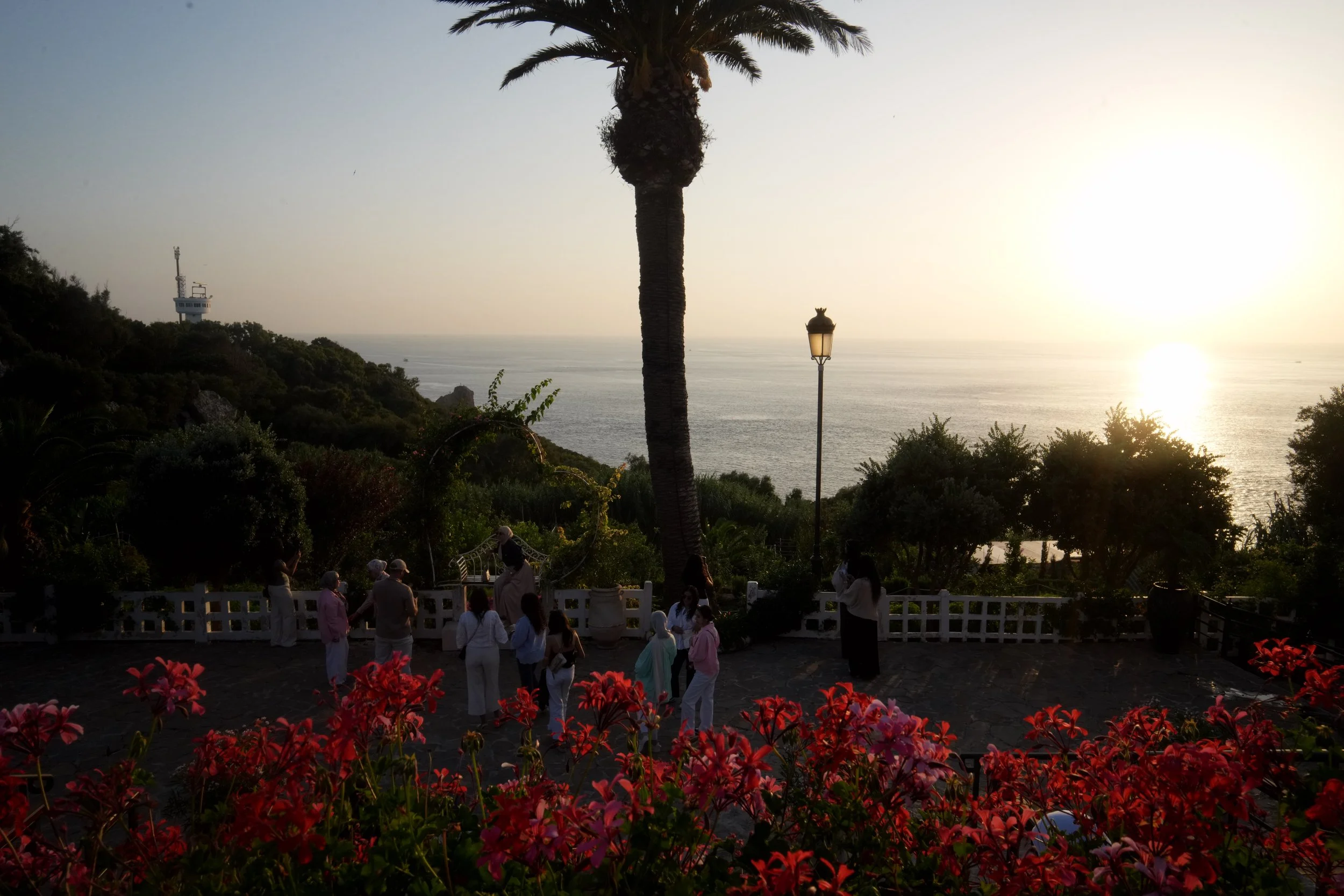
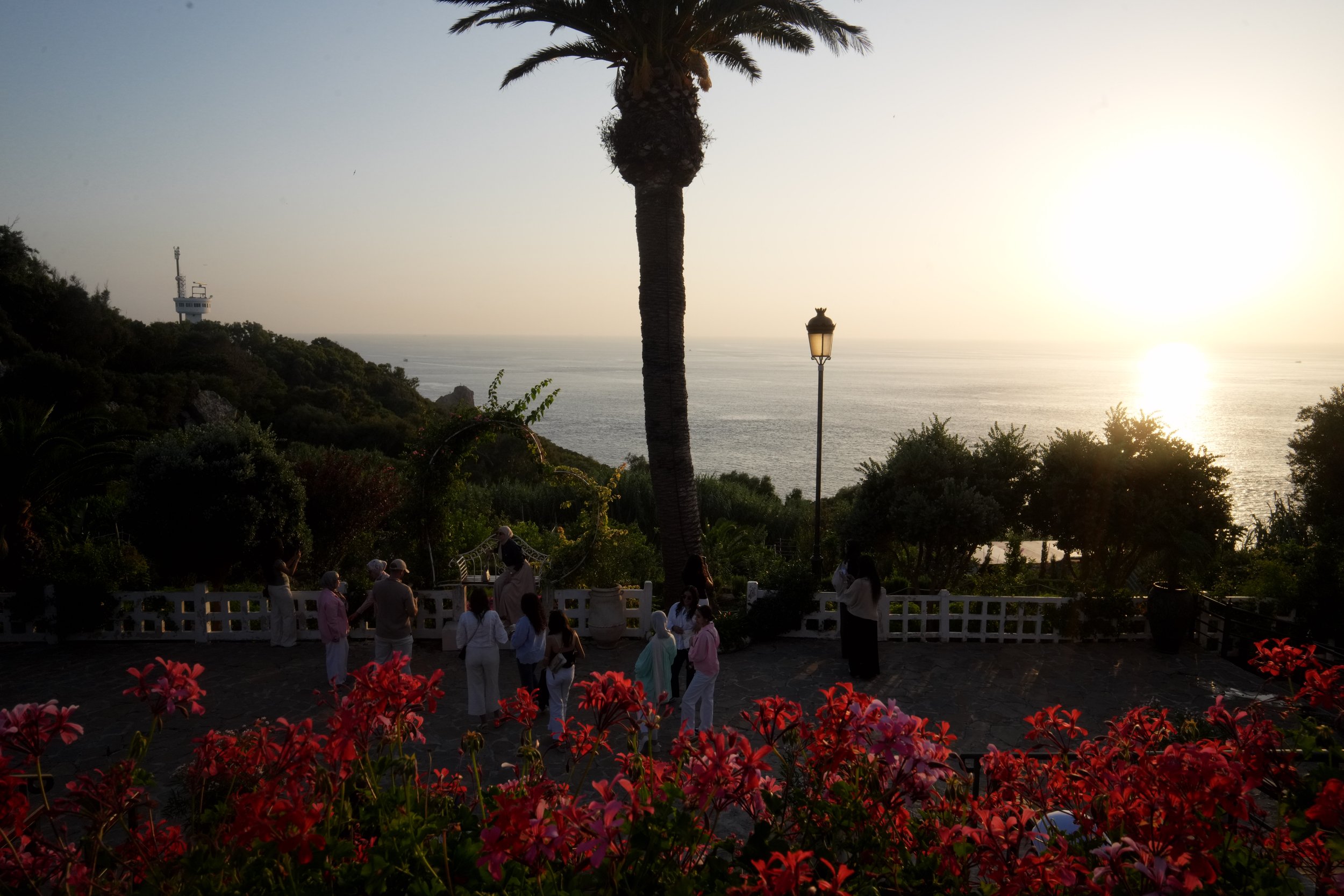
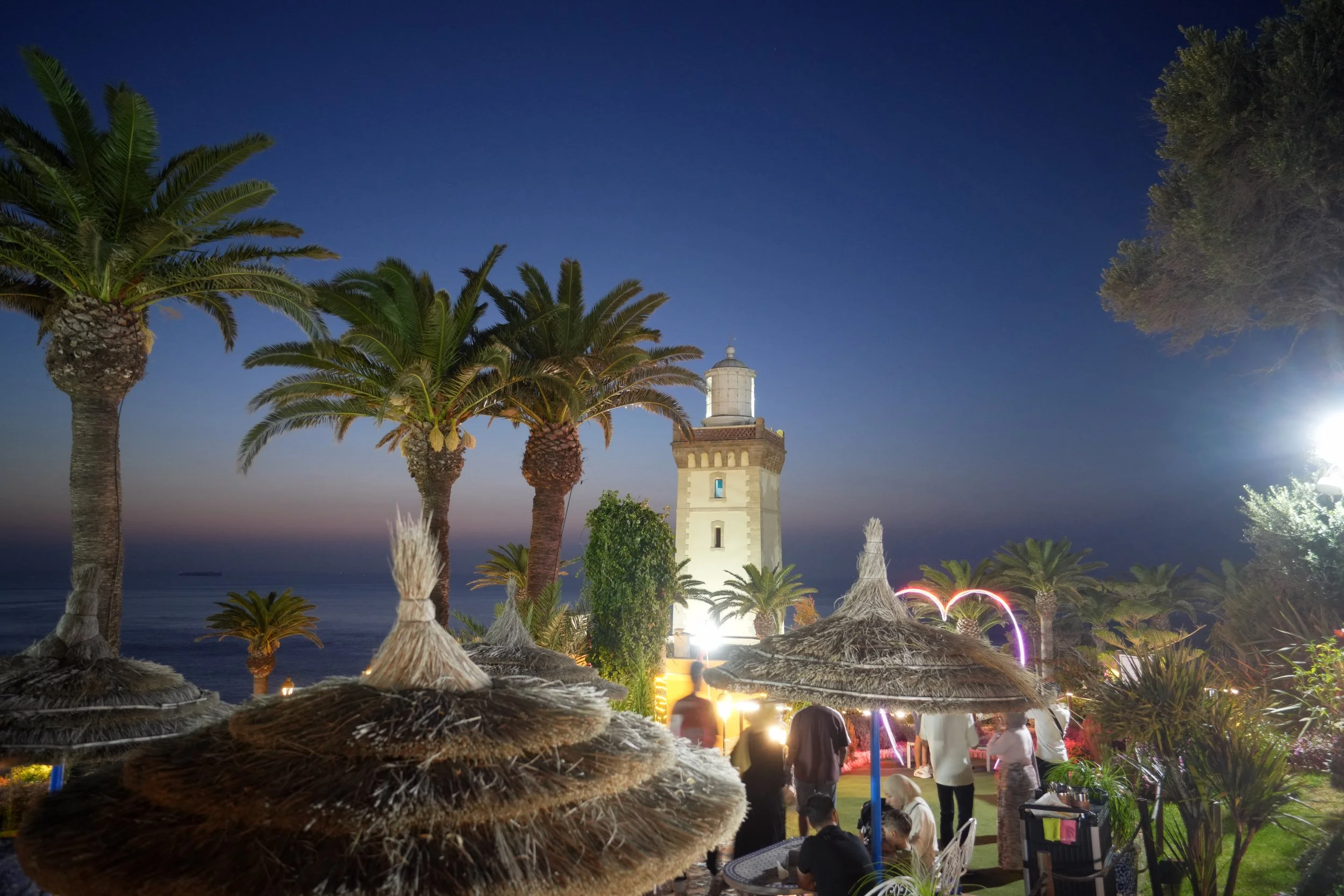
Tangier brought us farther north still, toward the Mediterranean and the point where Morocco seems to be looking across the water toward Europe.
What interested me throughout the trip was how quickly my idea of what Morocco looked like kept changing. There wasn't one version of the country to photograph.
Chefchaouen
Getting to Chefchaouen meant driving into the mountains for several hours.
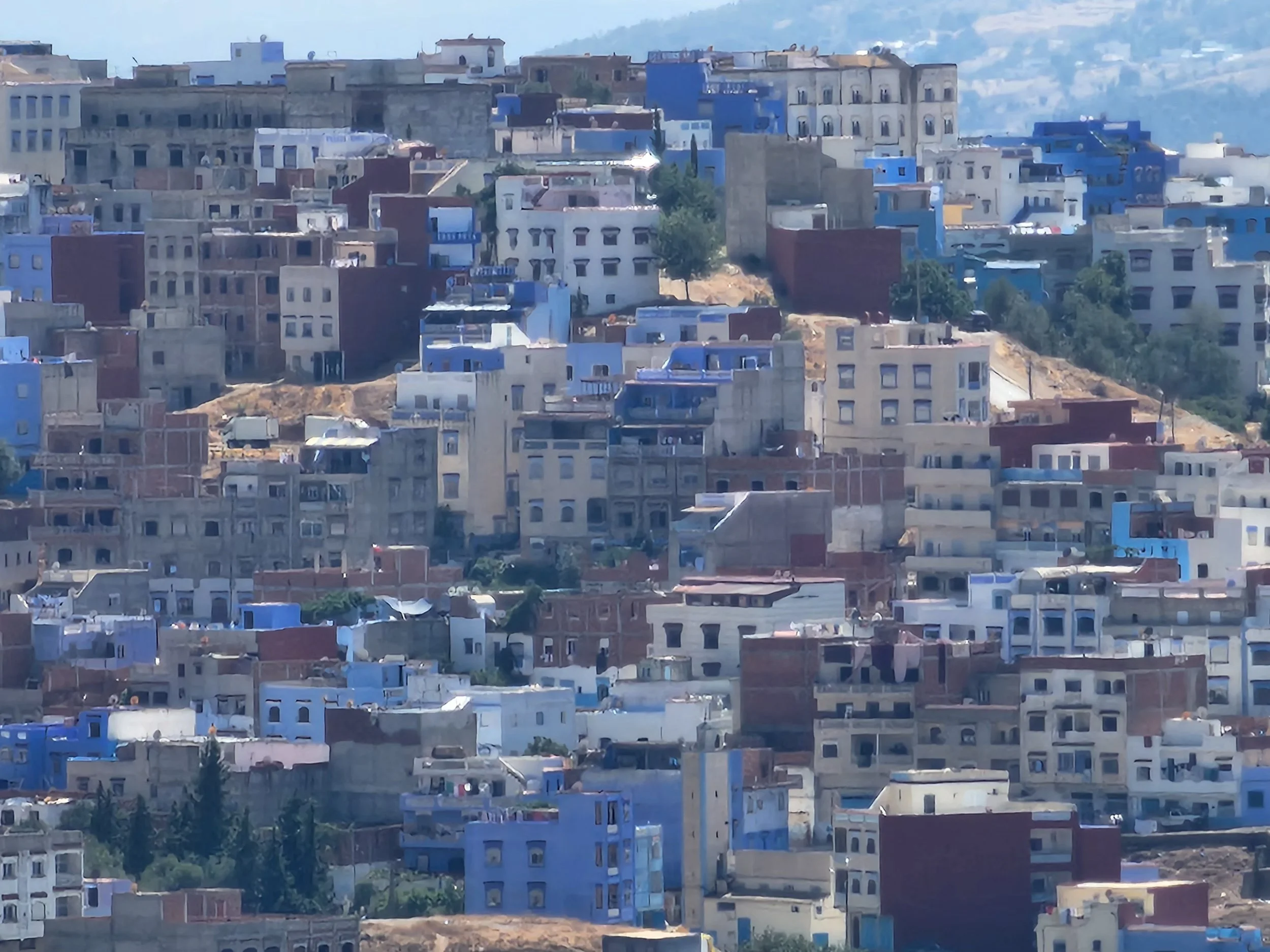
And then everything turned blue.
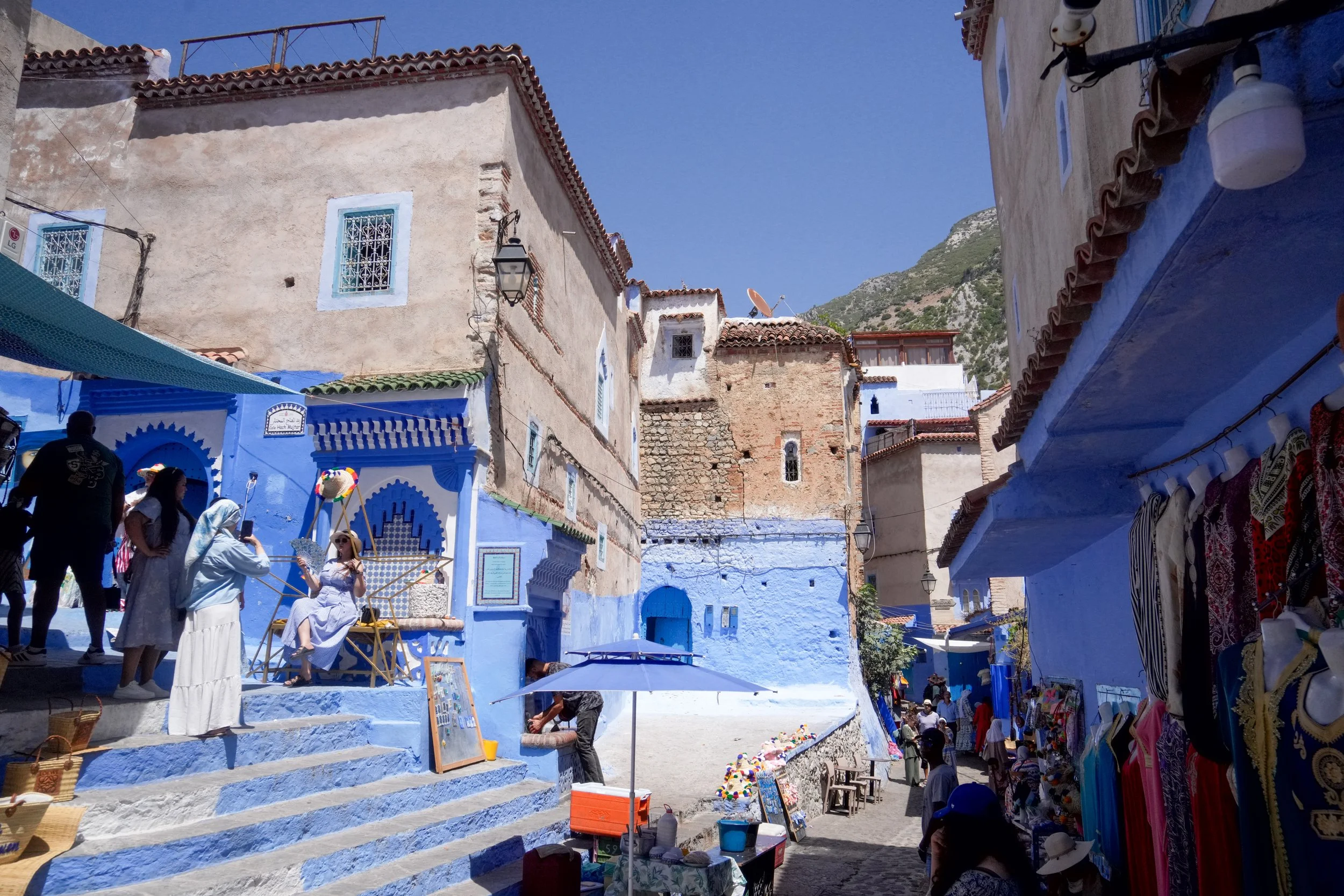
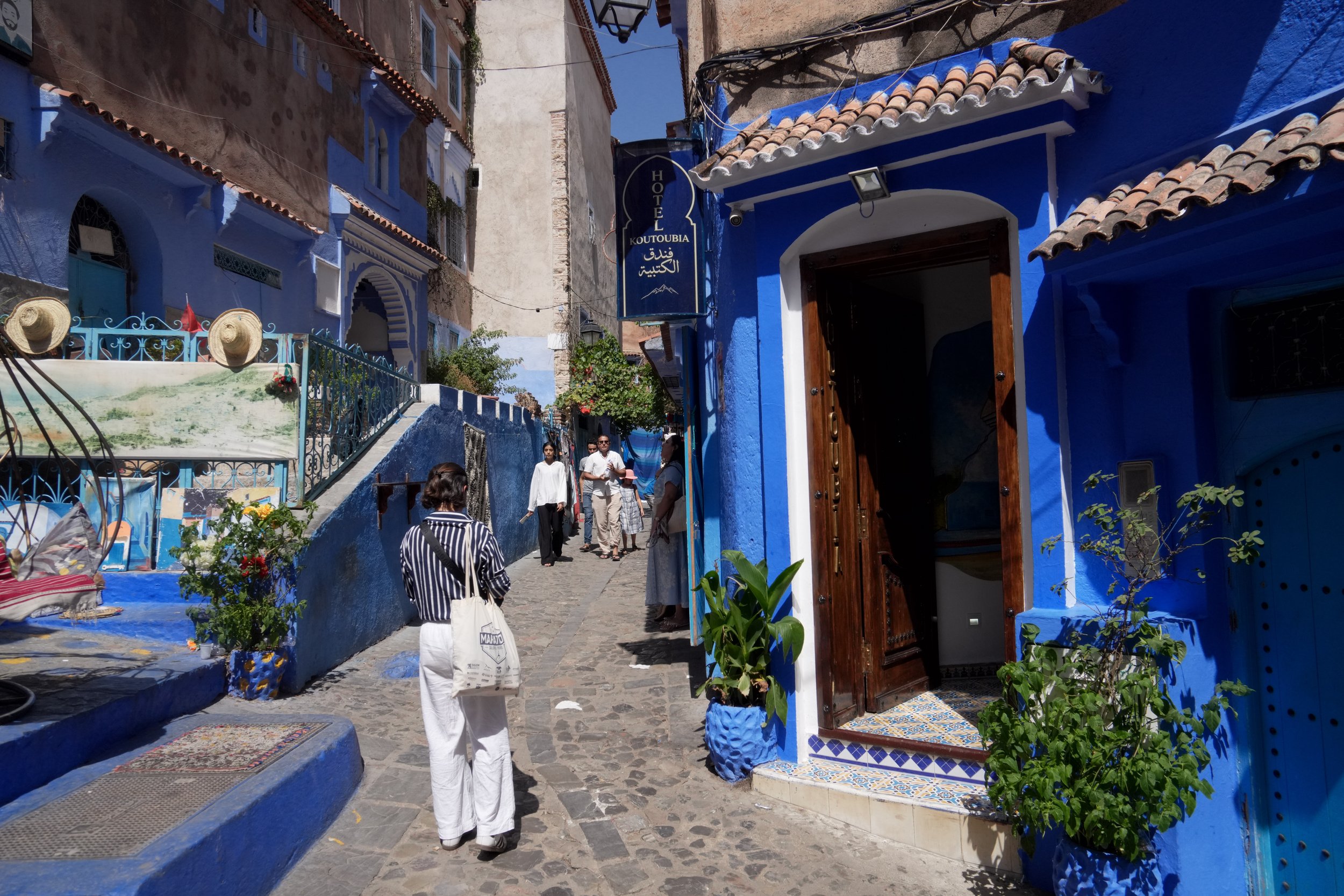
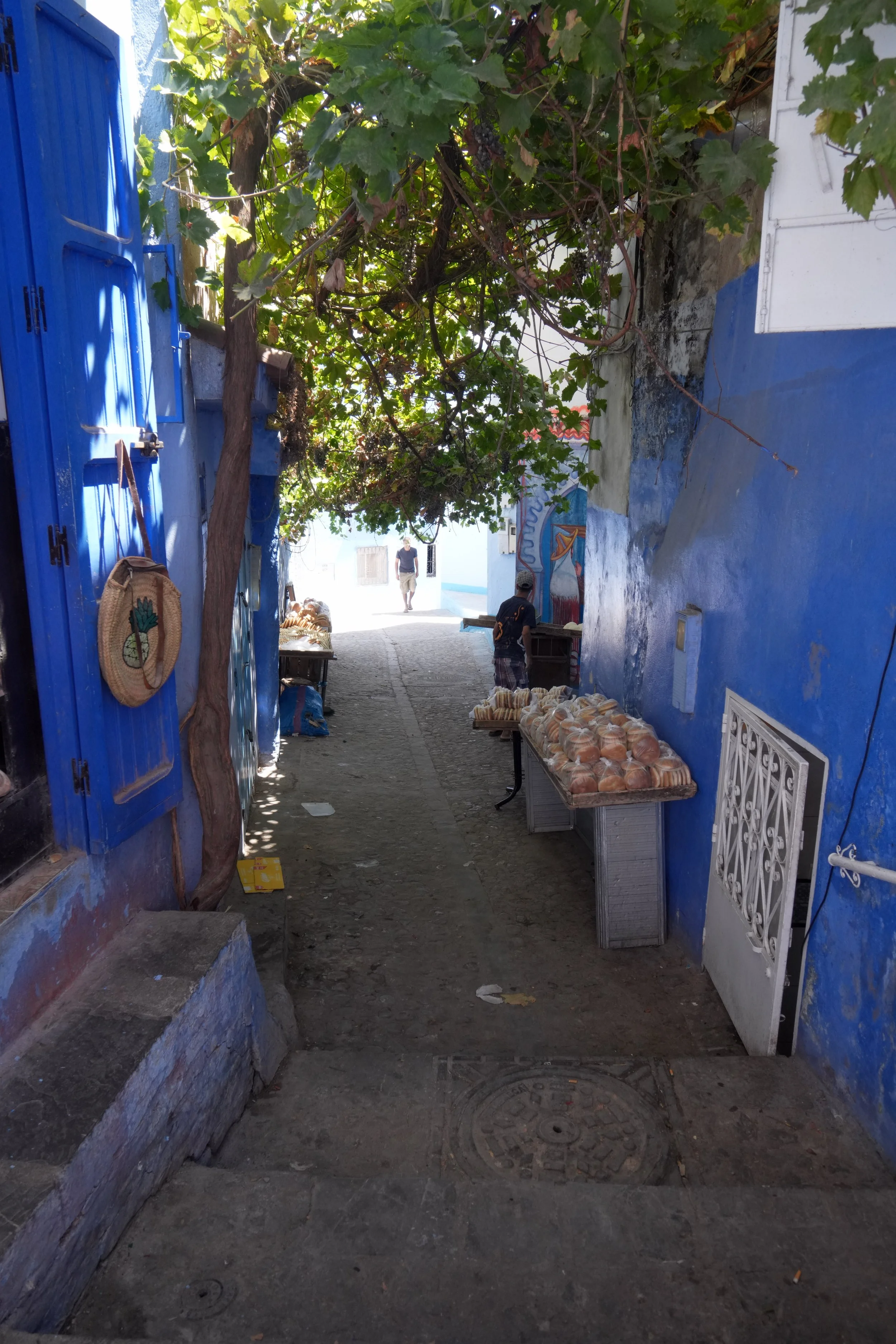
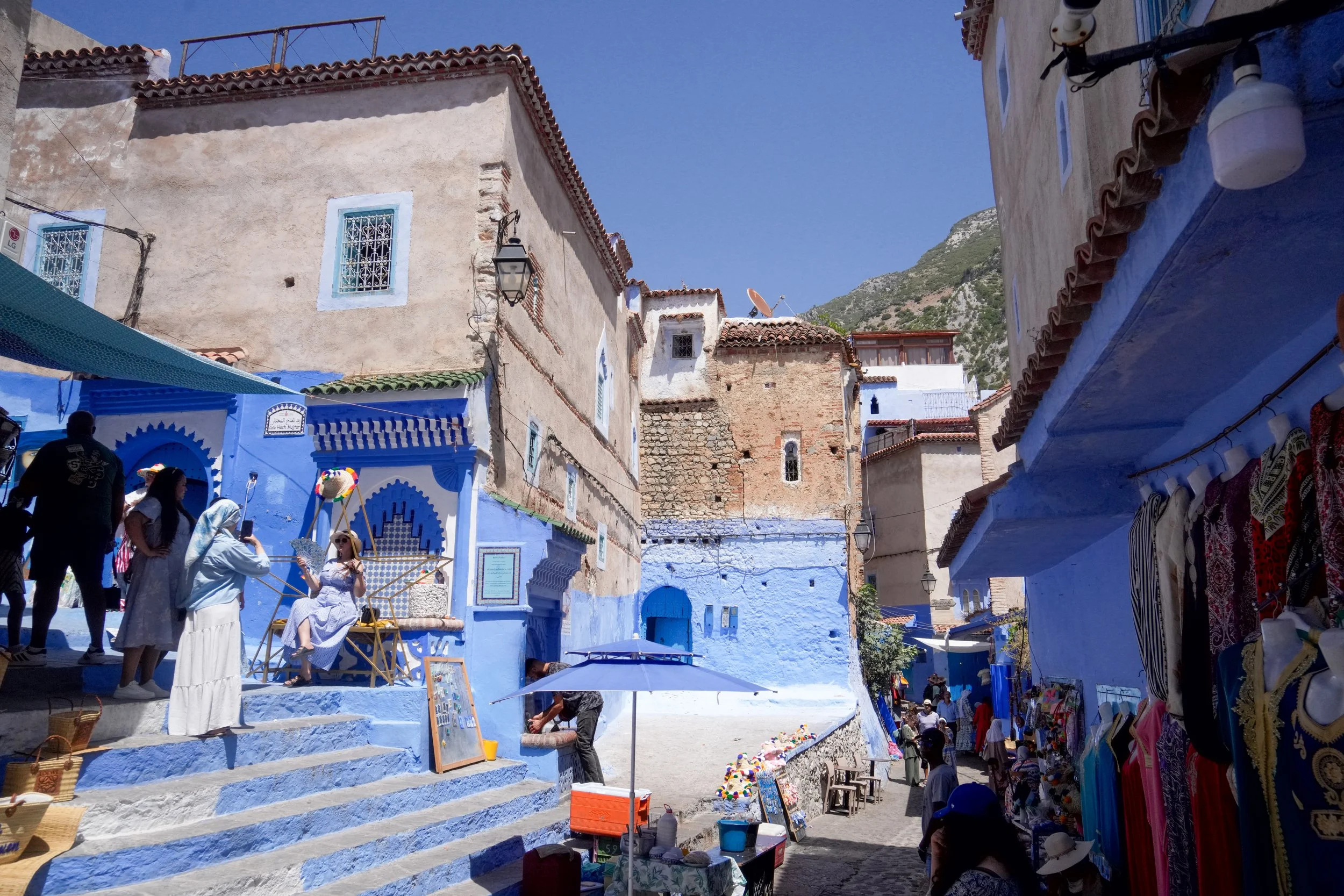
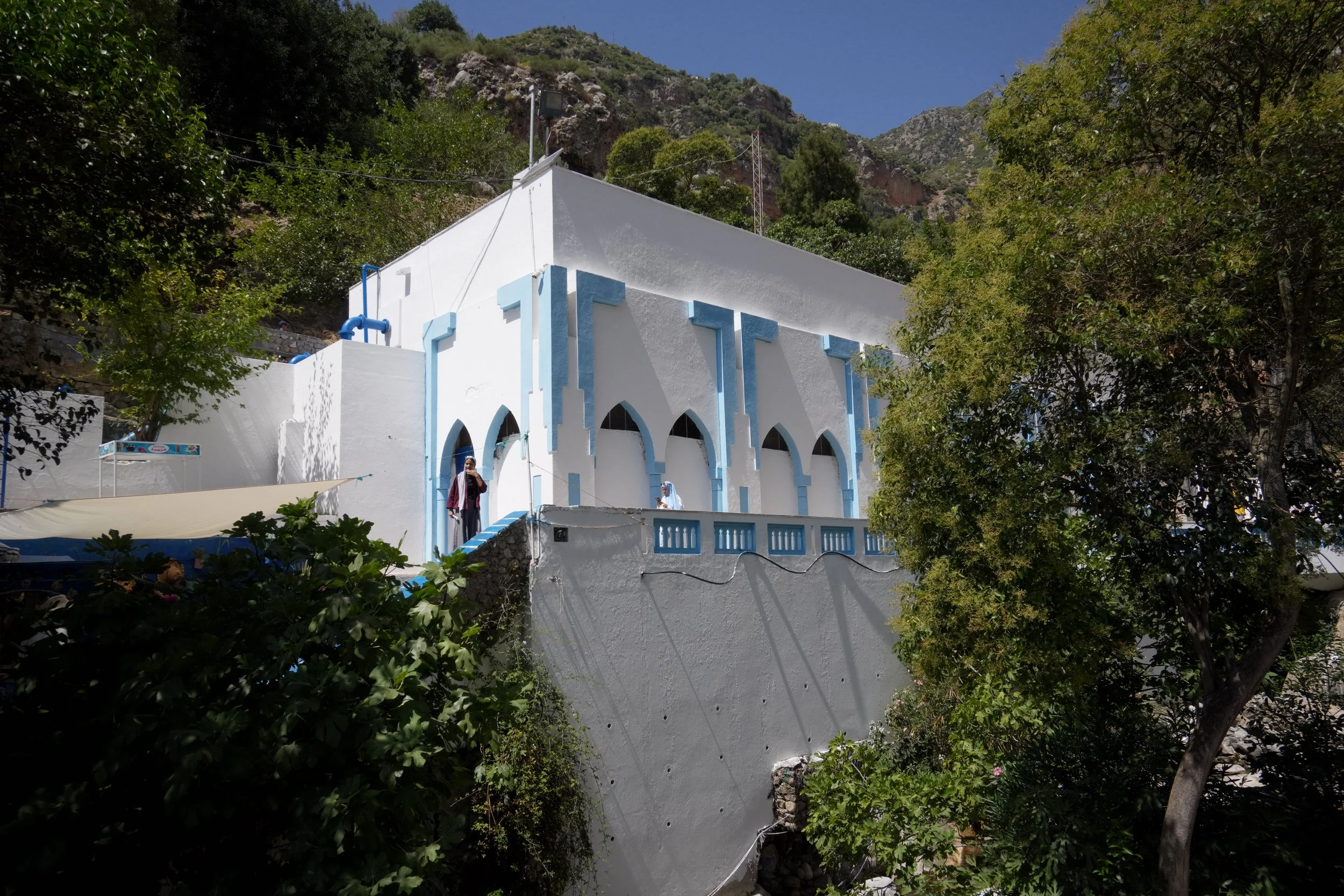
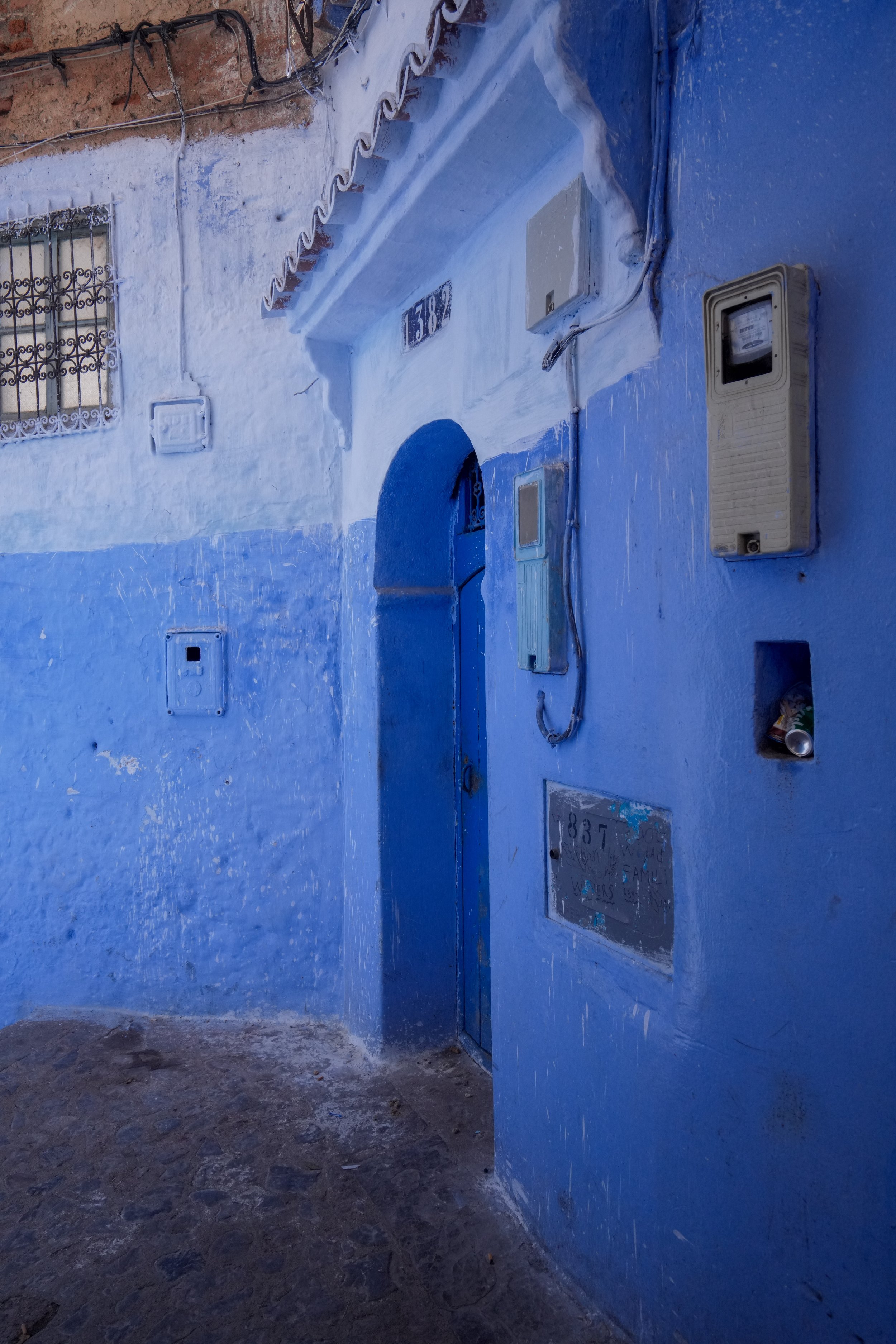
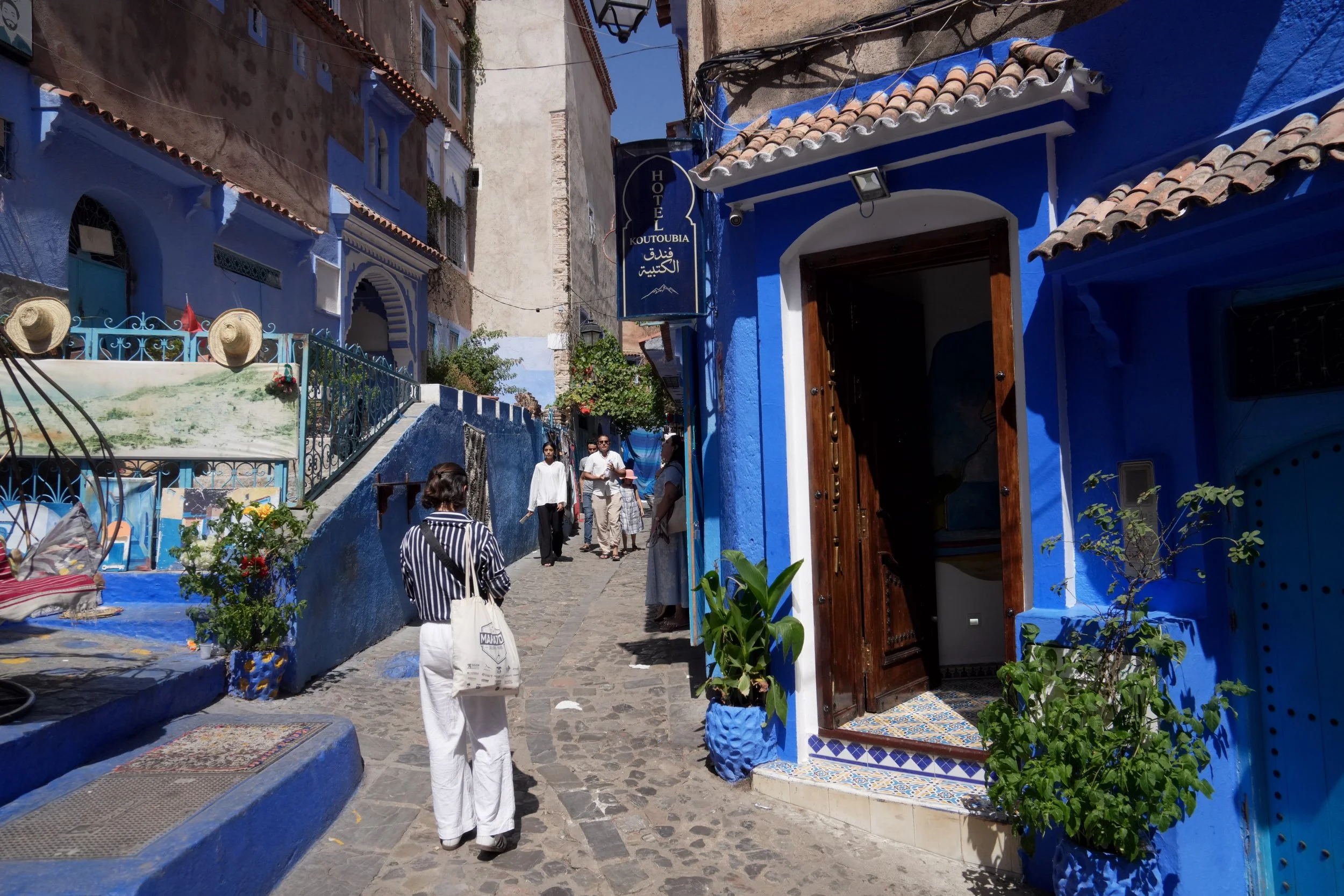
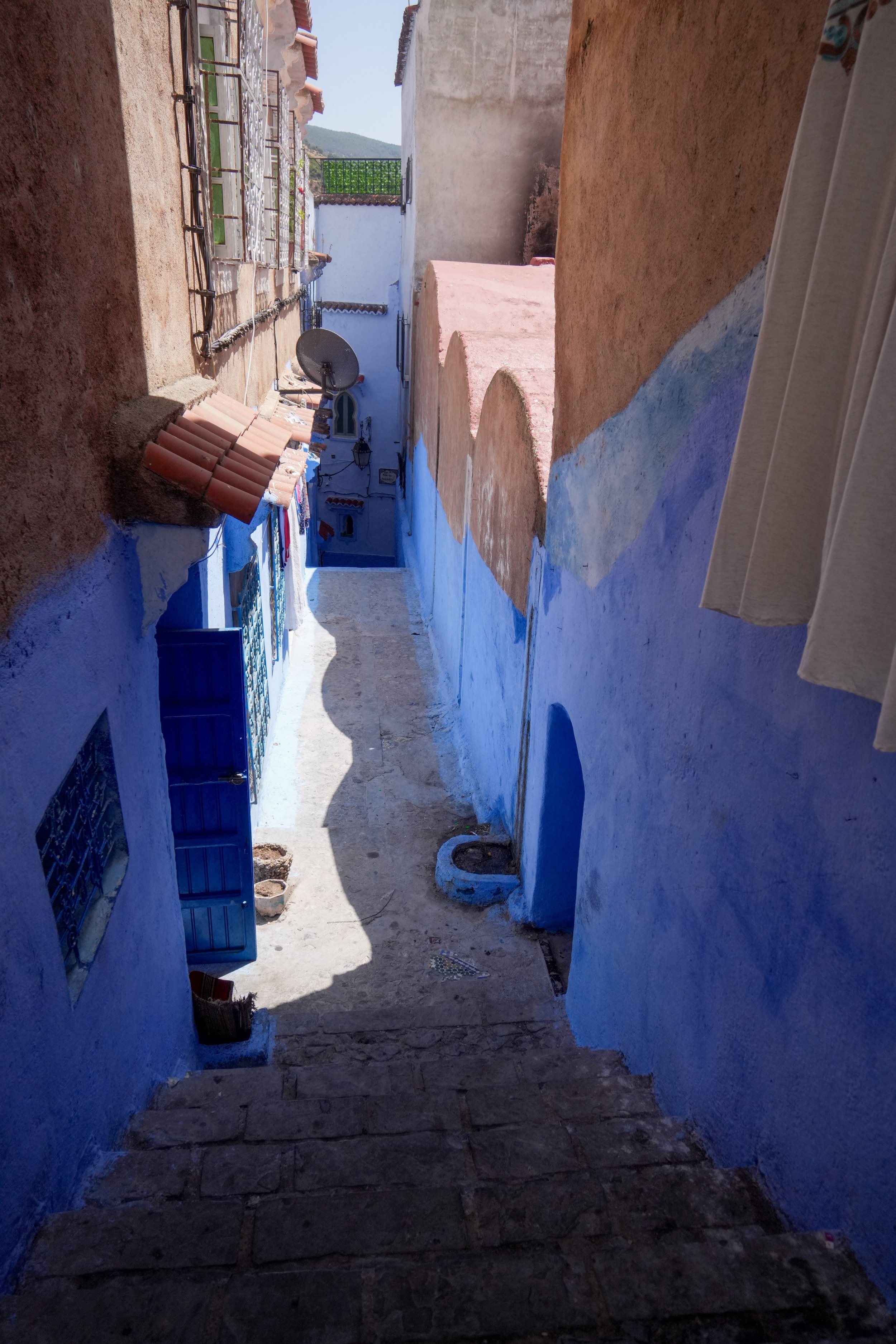
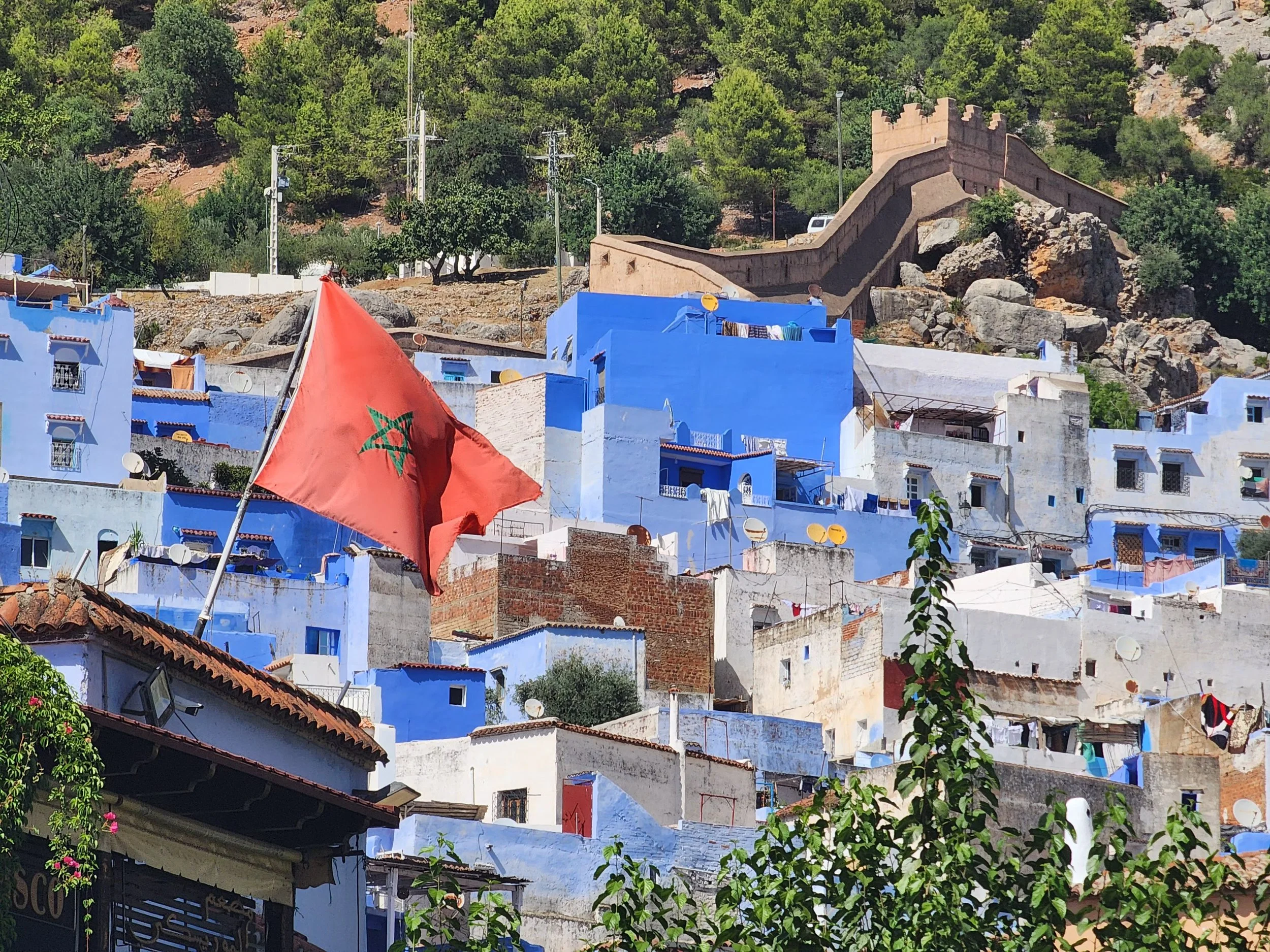
Chefchaouen is one of those places that almost seems too visually obvious to photograph. Blue walls. Blue stairs. Blue doors. Narrow passages. Everywhere you turn, there's another photograph waiting for you.
But after a while, I became less interested in photographing the blue city and more interested in what was happening within it—the people walking through those spaces, the small details outside homes and shops, and the places where light and shadow changed all that blue into different shades.
There was also a peacefulness to Chefchaouen that stood apart from some of the larger cities we'd visited.
Marrakesh — Jemaa el-Fnaa
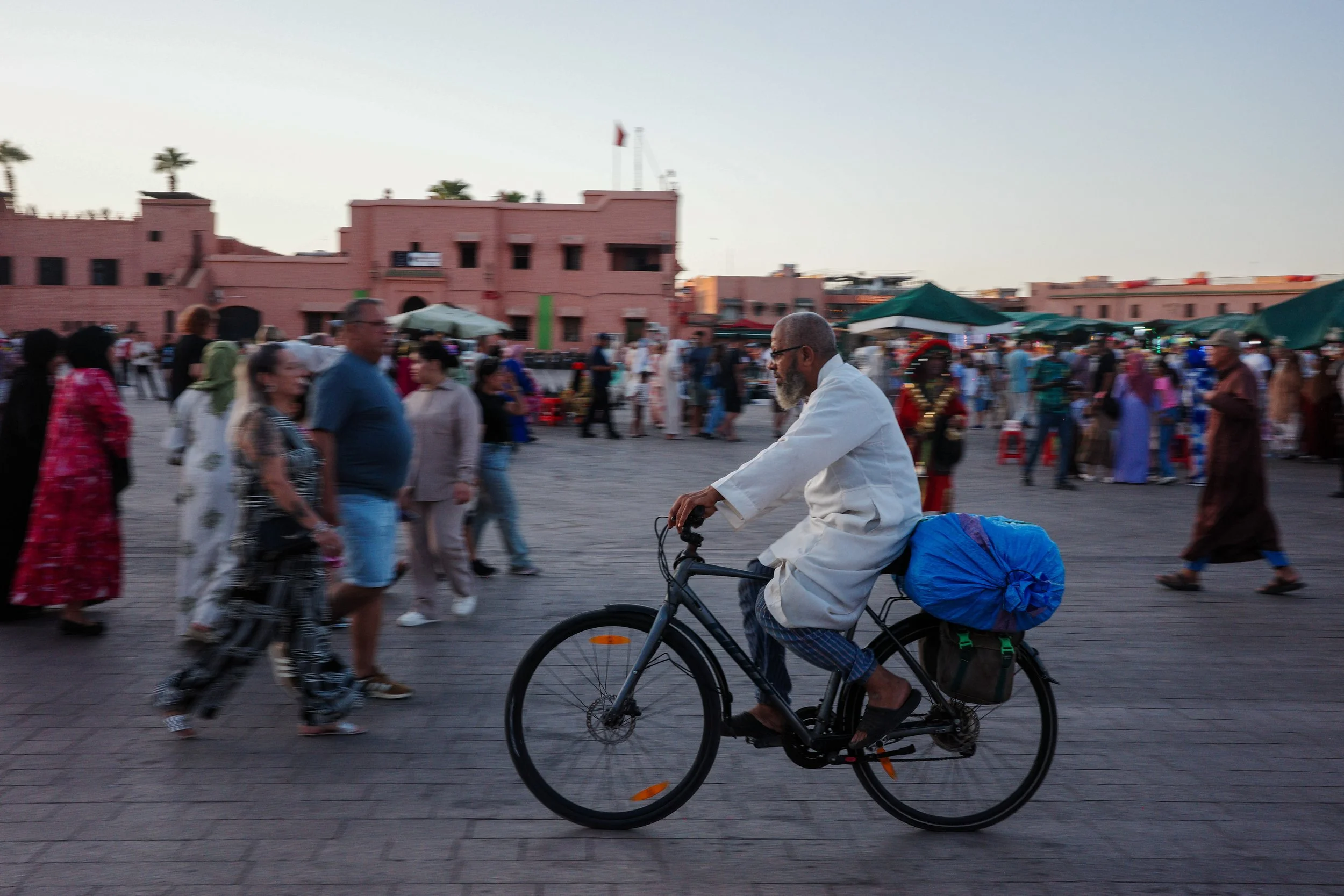
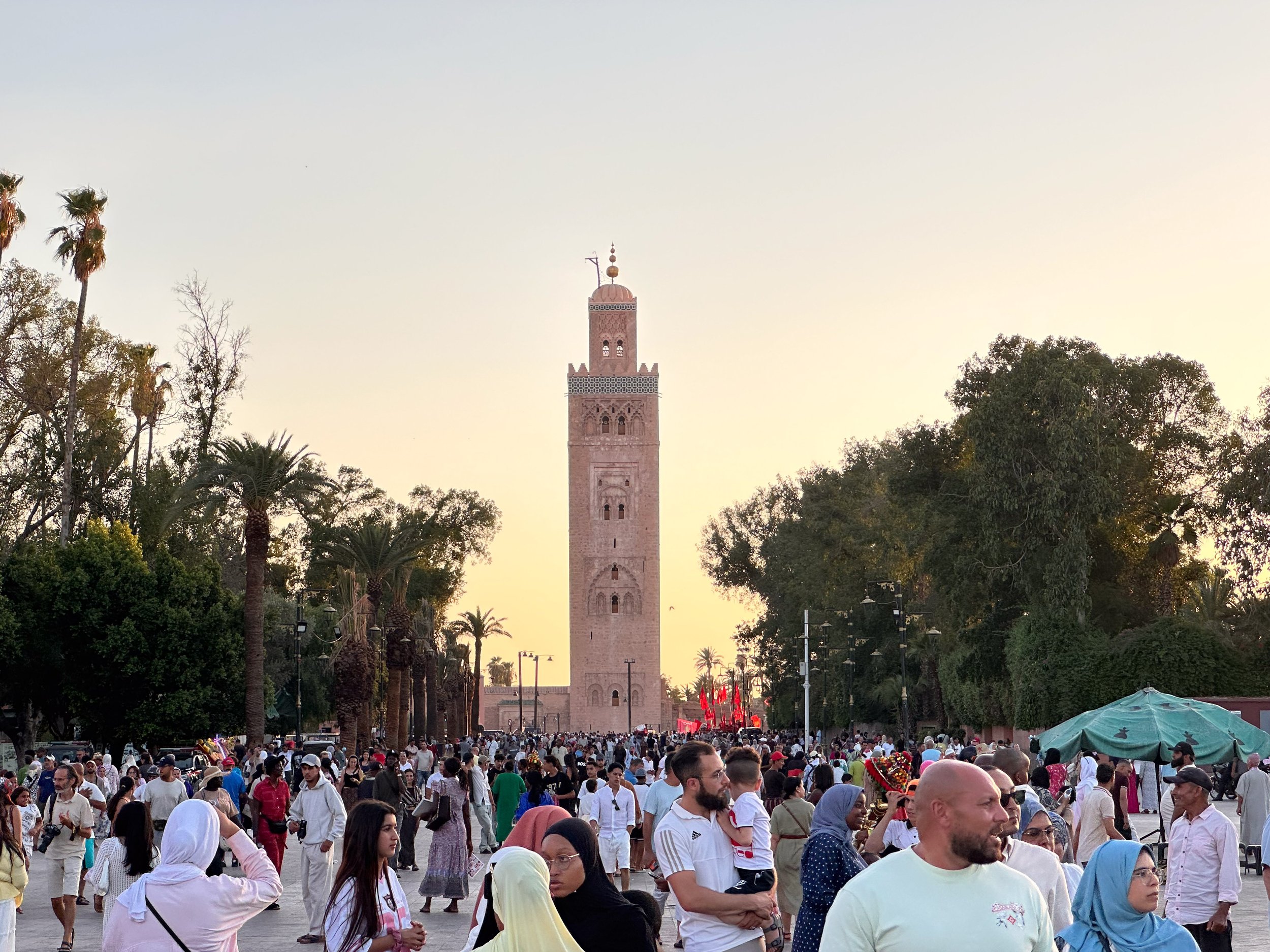
Most of the time we spent in Marrakesh itself was around Jemaa el-Fnaa and the market surrounding it. We had other things planned outside the city, so this became the part of Marrakesh we experienced most.
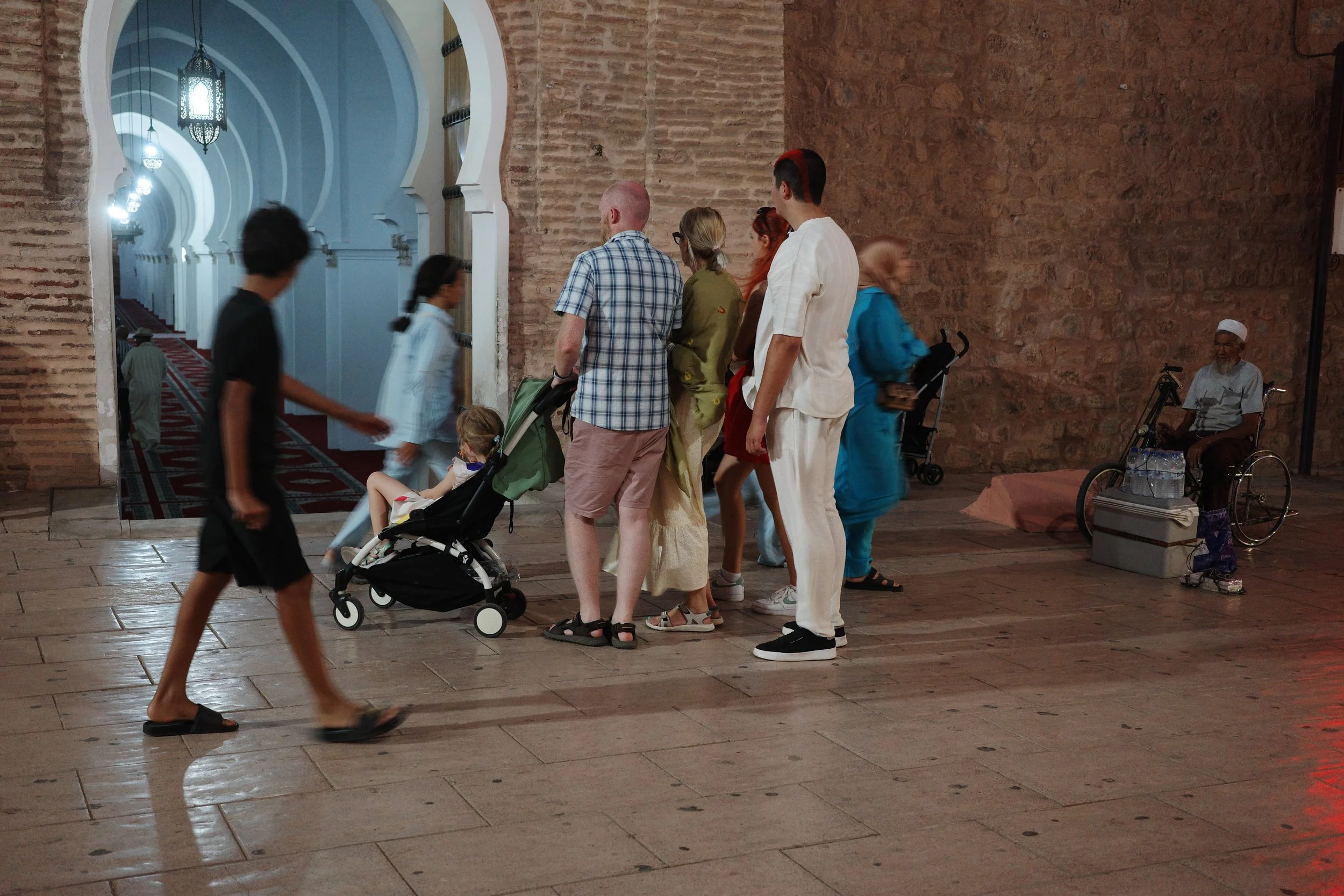
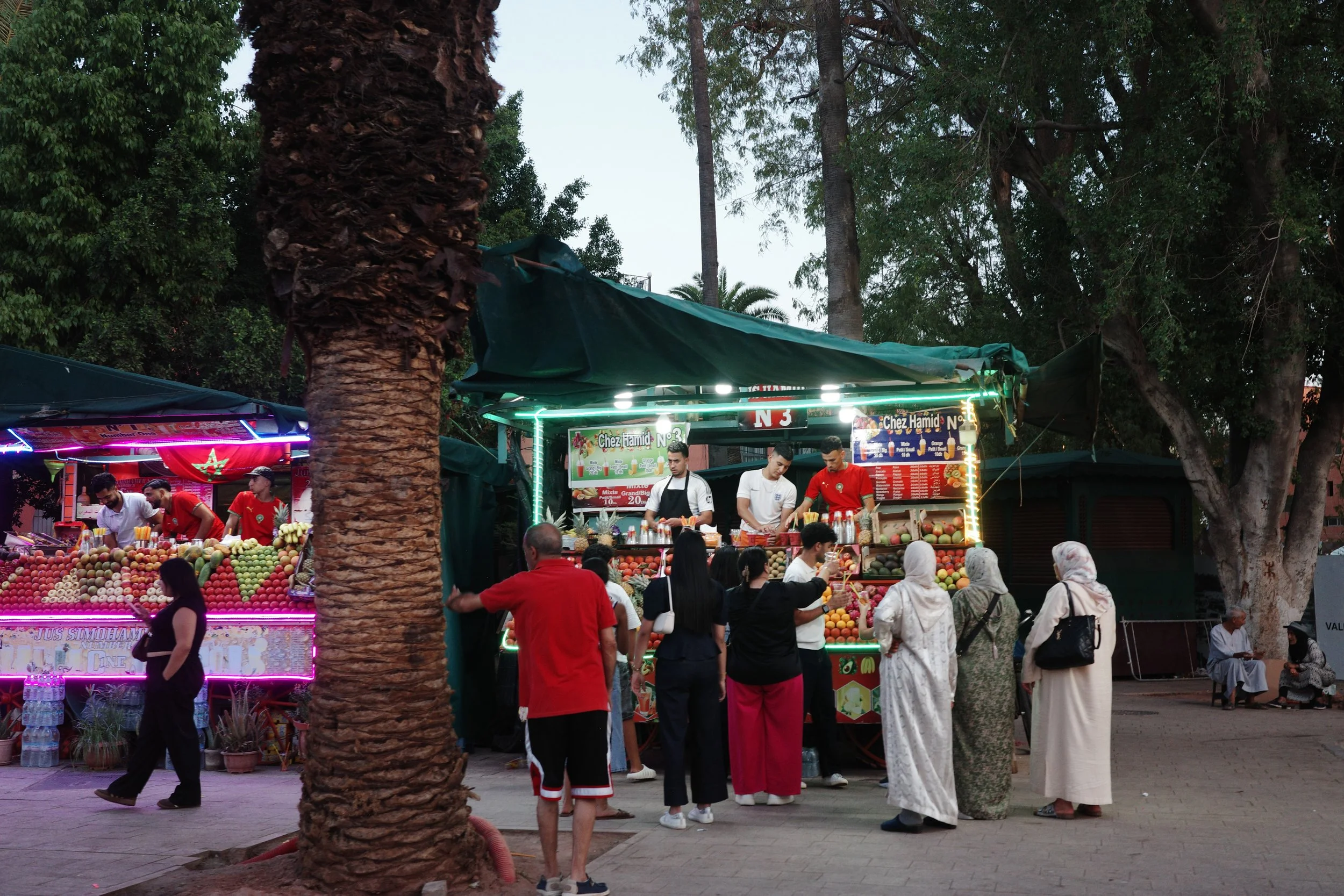
The market is this mixture of locals, vendors and visitors all occupying the same space. People are selling things, buying things, meeting friends, eating, working, passing through or, like us, simply trying to take it all in. Everywhere you look, something is competing for your attention.
But while walking through it, I kept thinking about how long some version of this has been happening here.
Jemaa el-Fnaa has been a gathering place for centuries. The version we experienced belongs to this particular moment in time. People have cell phones in their hands. There are digital payments. Tourists arrive with cameras. We traveled thousands of miles and got there with a flight and a car ride.
Hundreds of years ago, almost everything about getting there would have been different.
Travel would have taken considerably longer. The things being bought and sold would have changed. The languages, clothing, transportation and ways people exchanged money would have changed. Yet people still would have arrived here to trade, work, eat, talk, meet other people and see what was happening.
Standing in the middle of all of that history made the place feel bigger than the moment we happened to be experiencing.
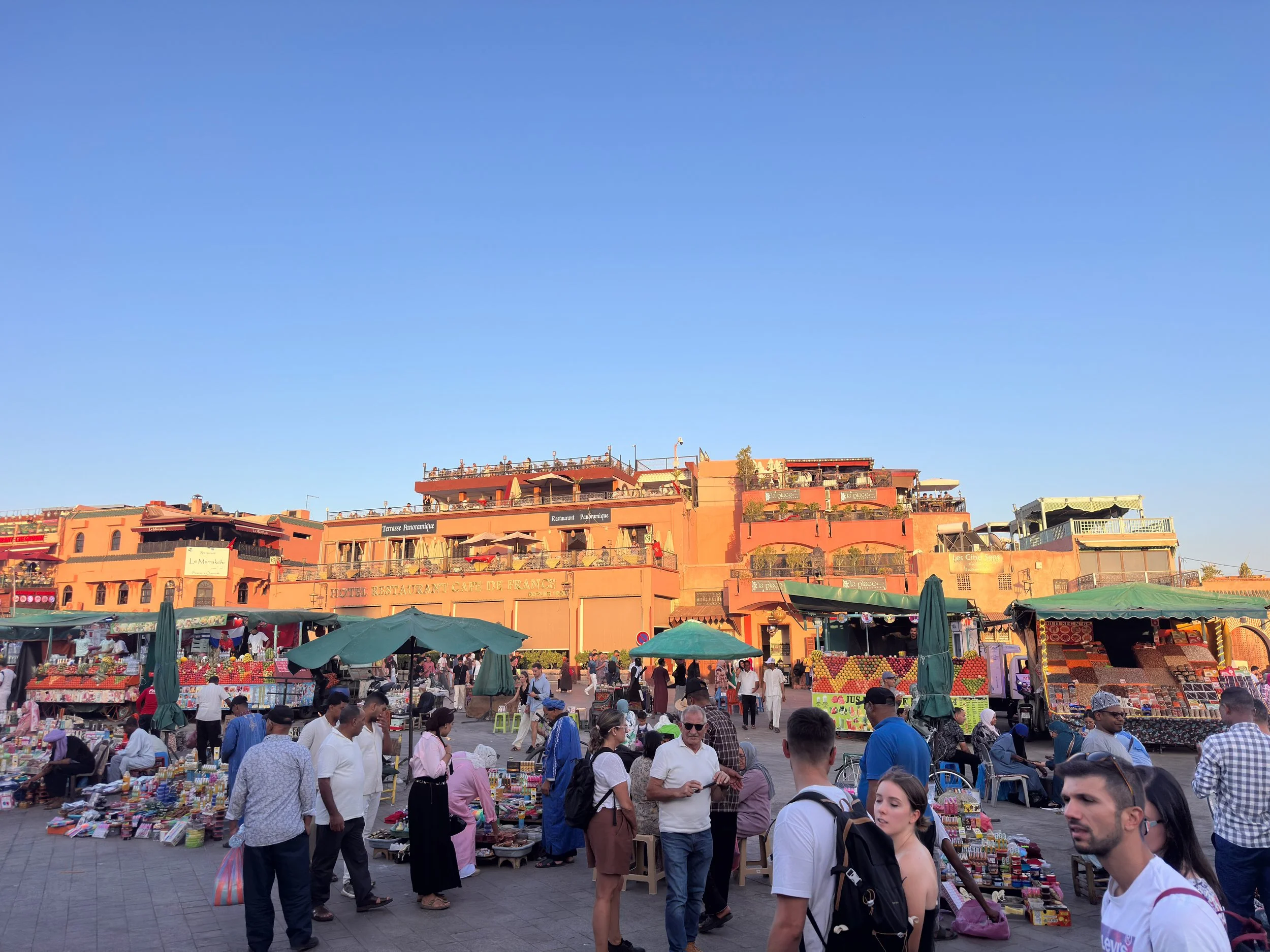
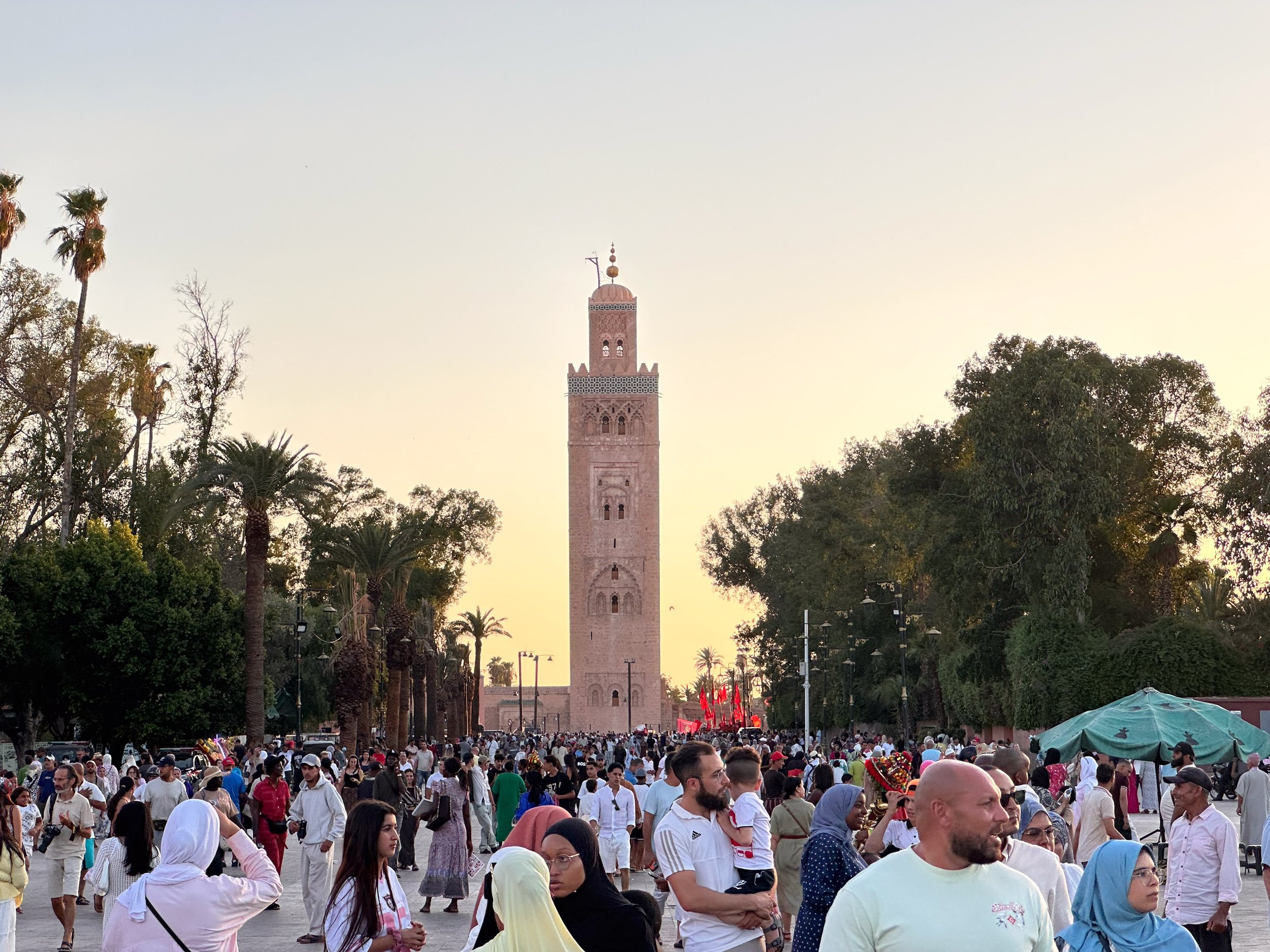
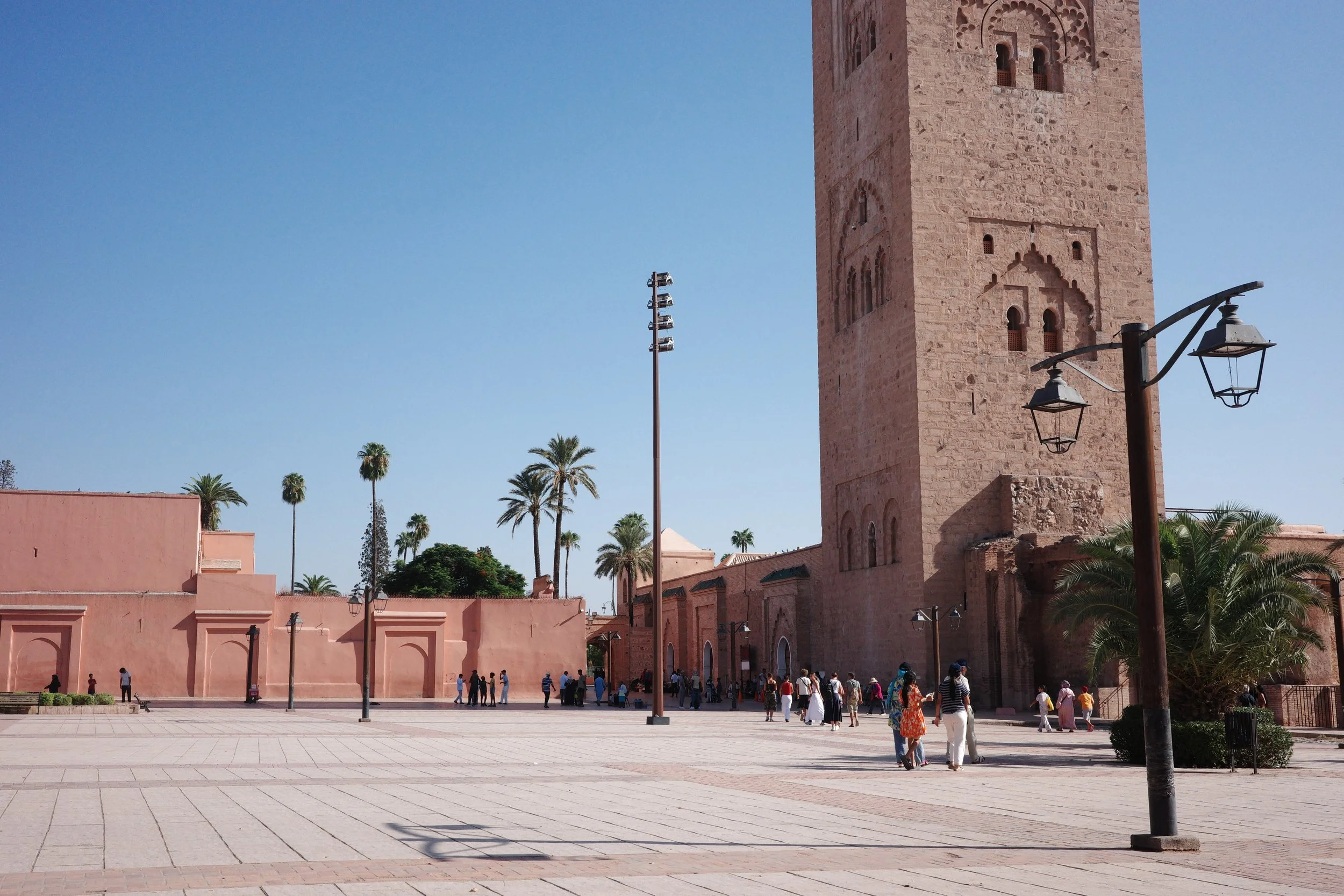
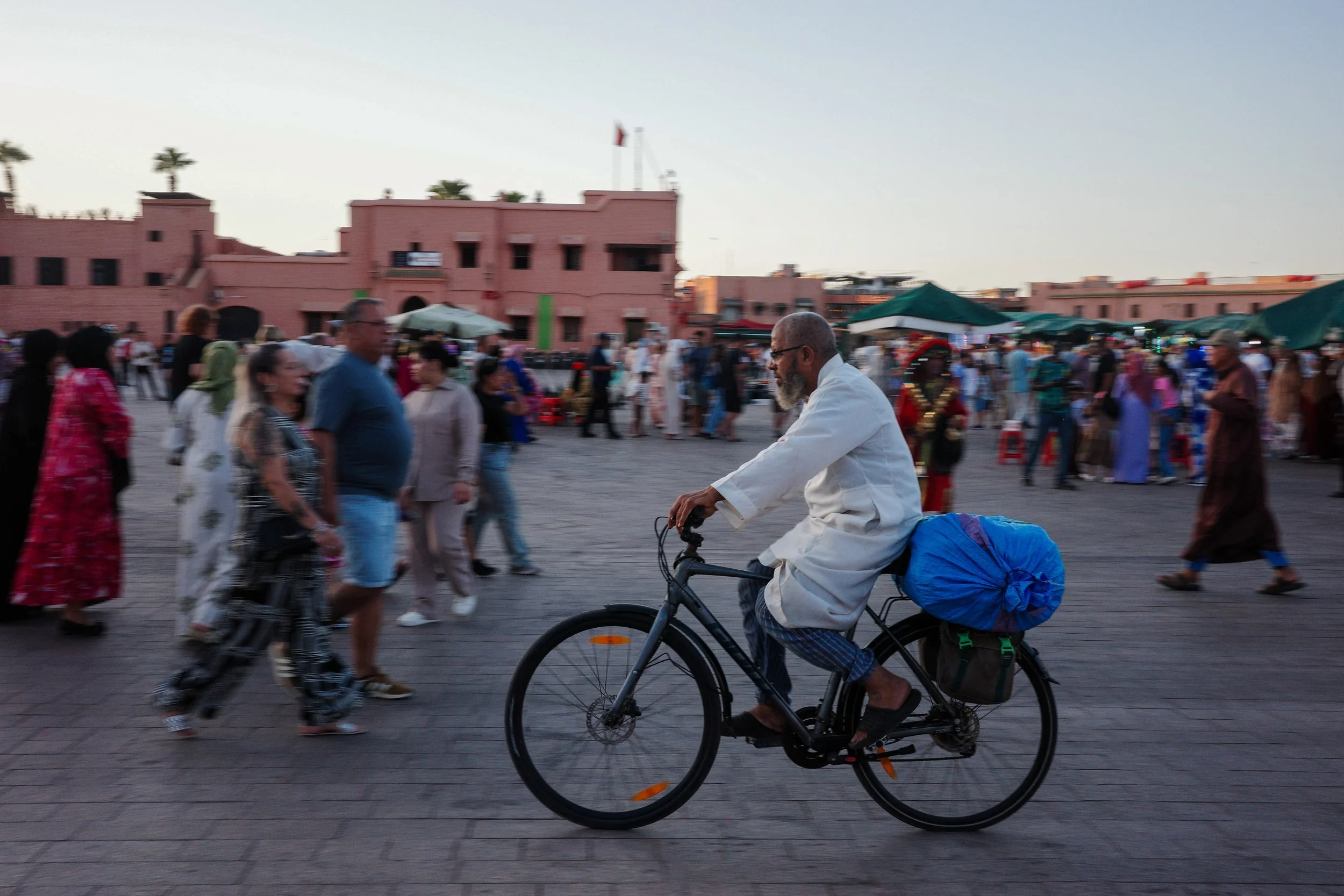
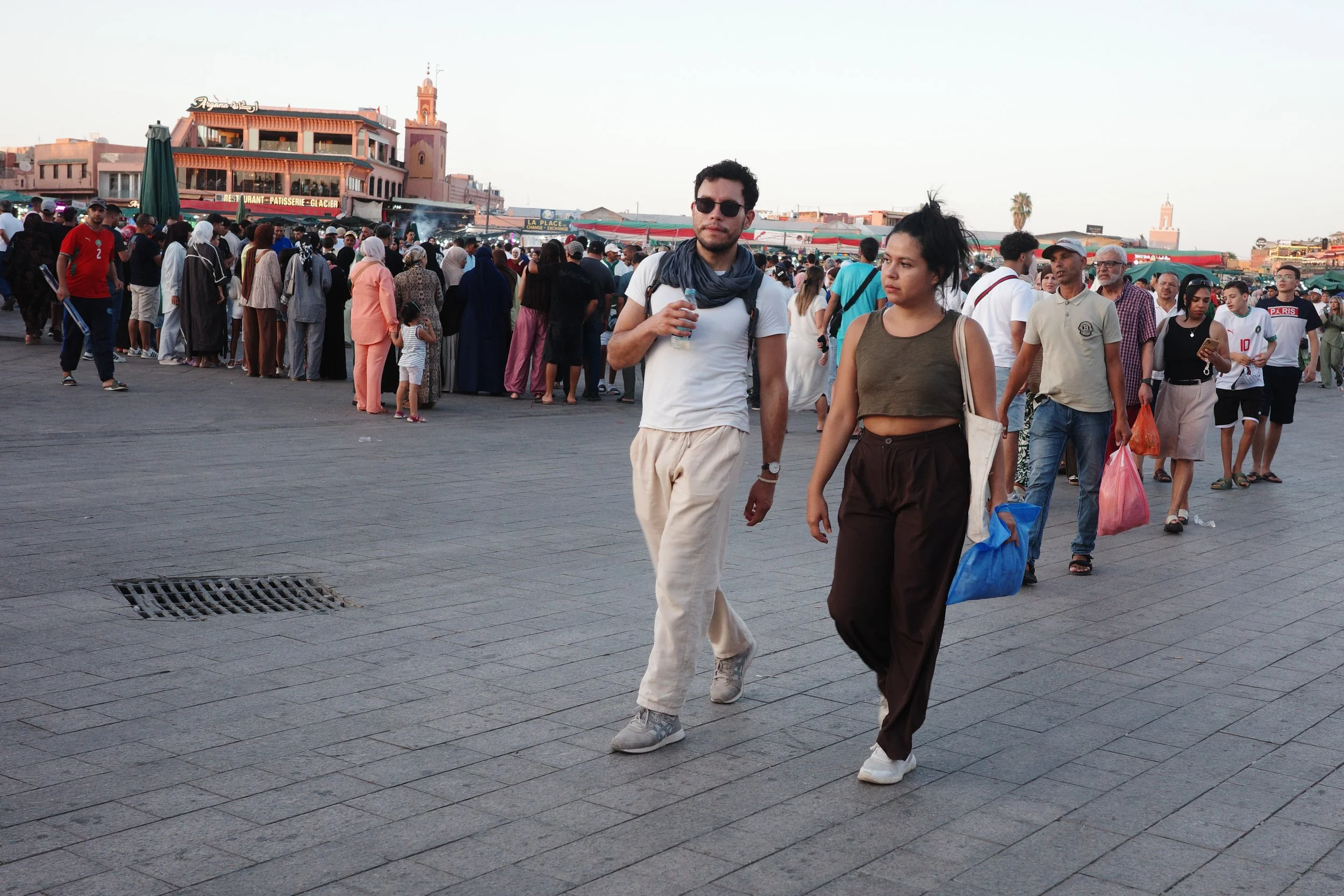
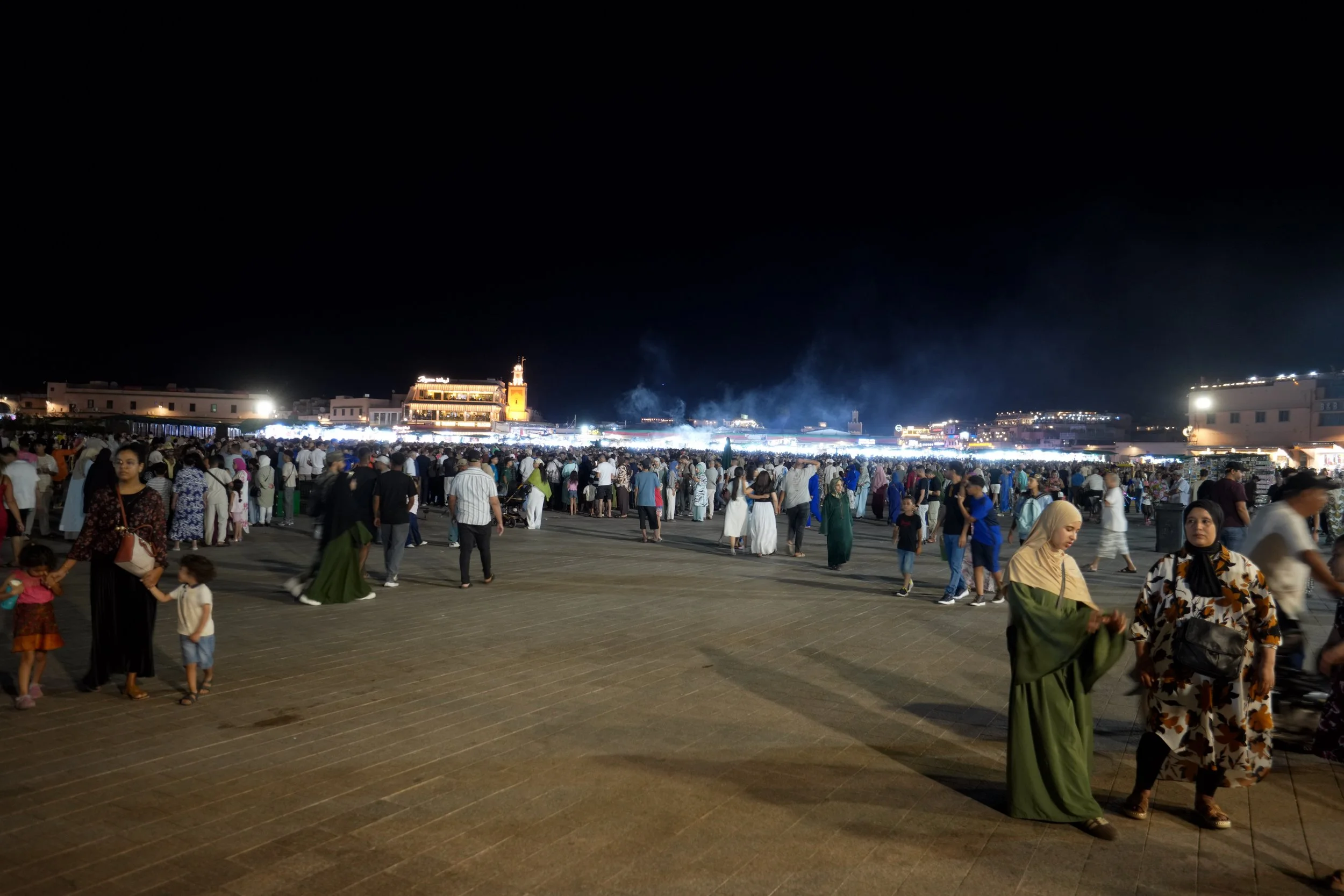
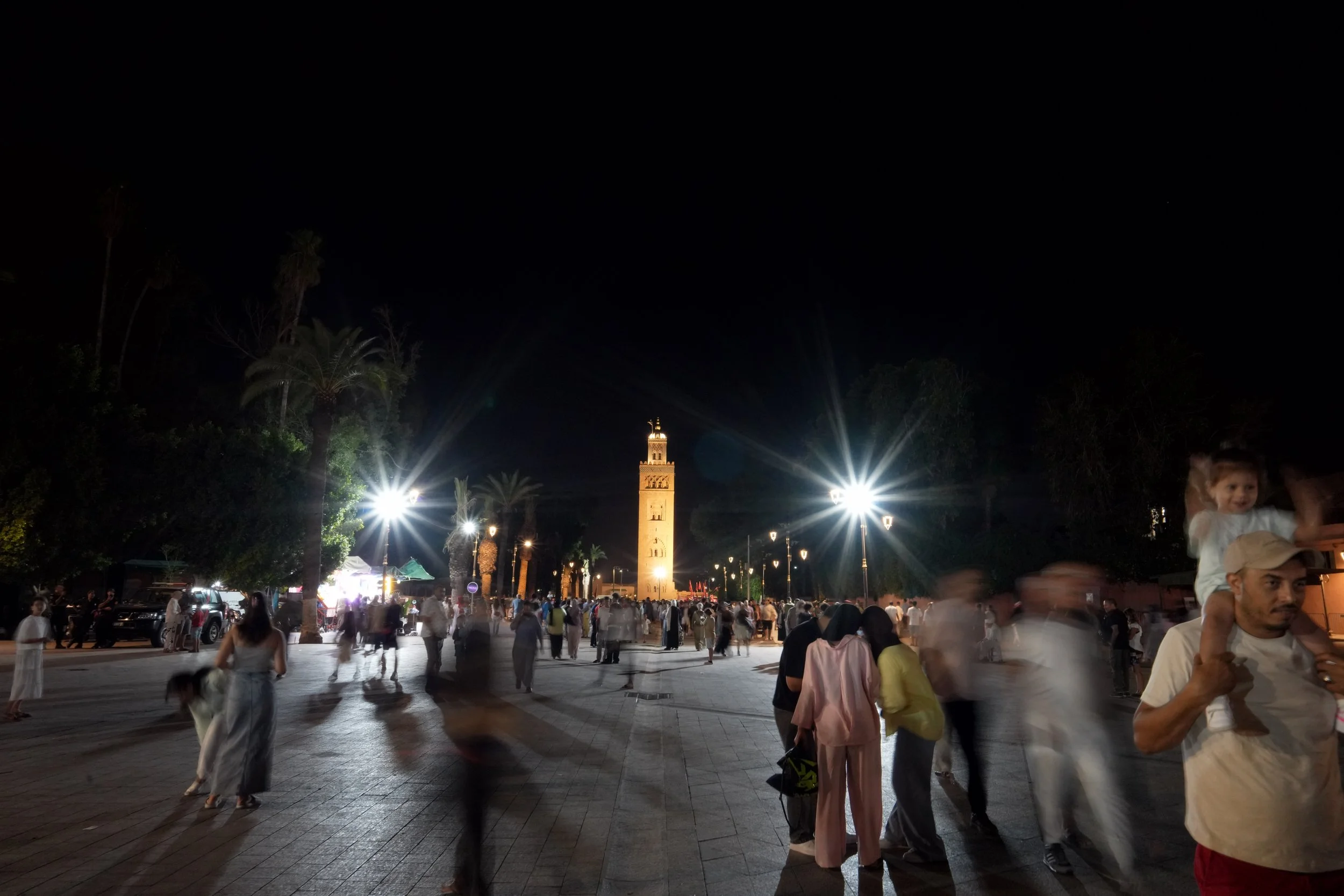
At night, the square changes.
The first night we walked through after dinner, I only had the Ricoh GR IIIx with me. The lights came on, food stalls filled with people, and the entire place became even more concentrated.
When we returned the next night, I brought the Sony.
Above Marrakesh
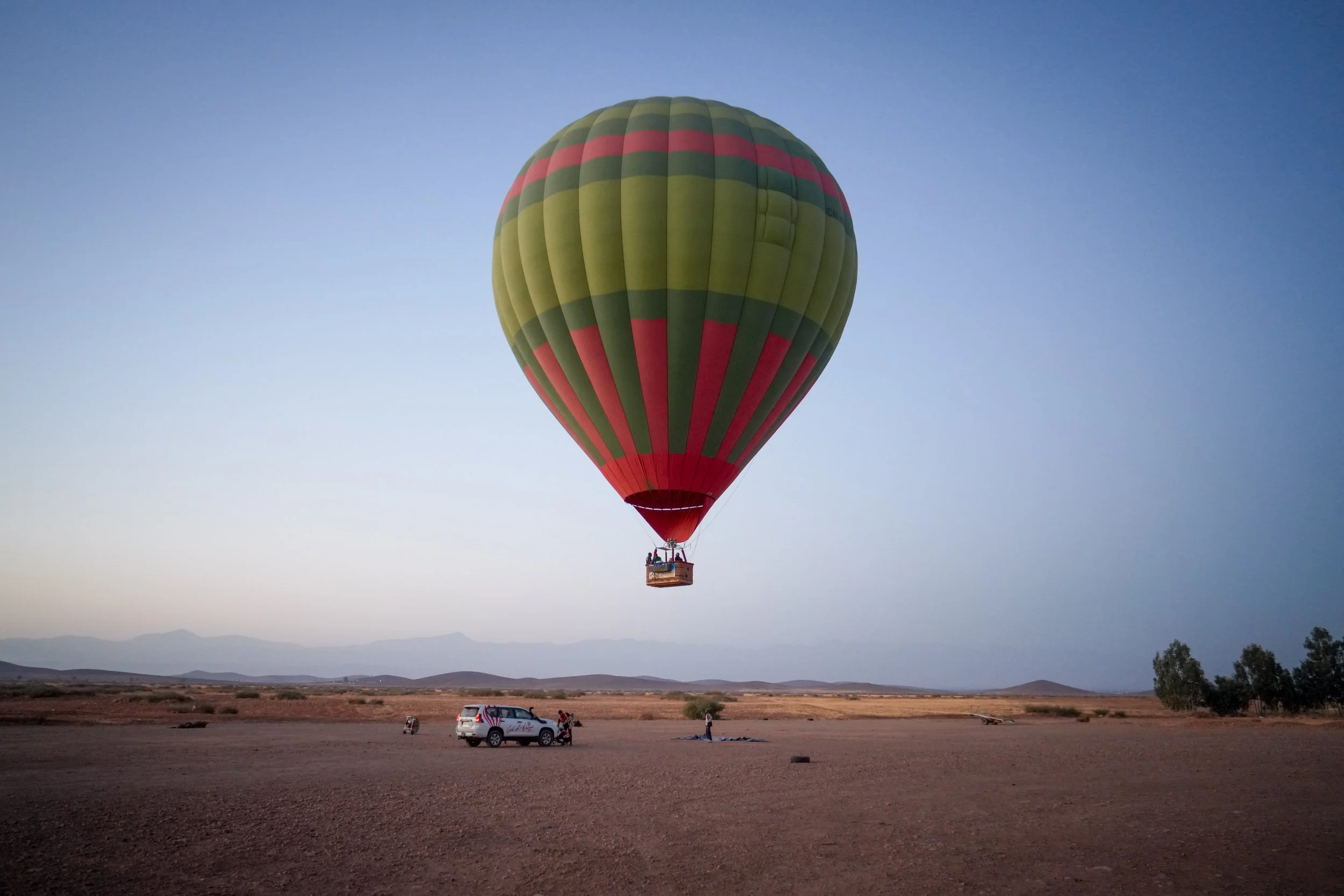
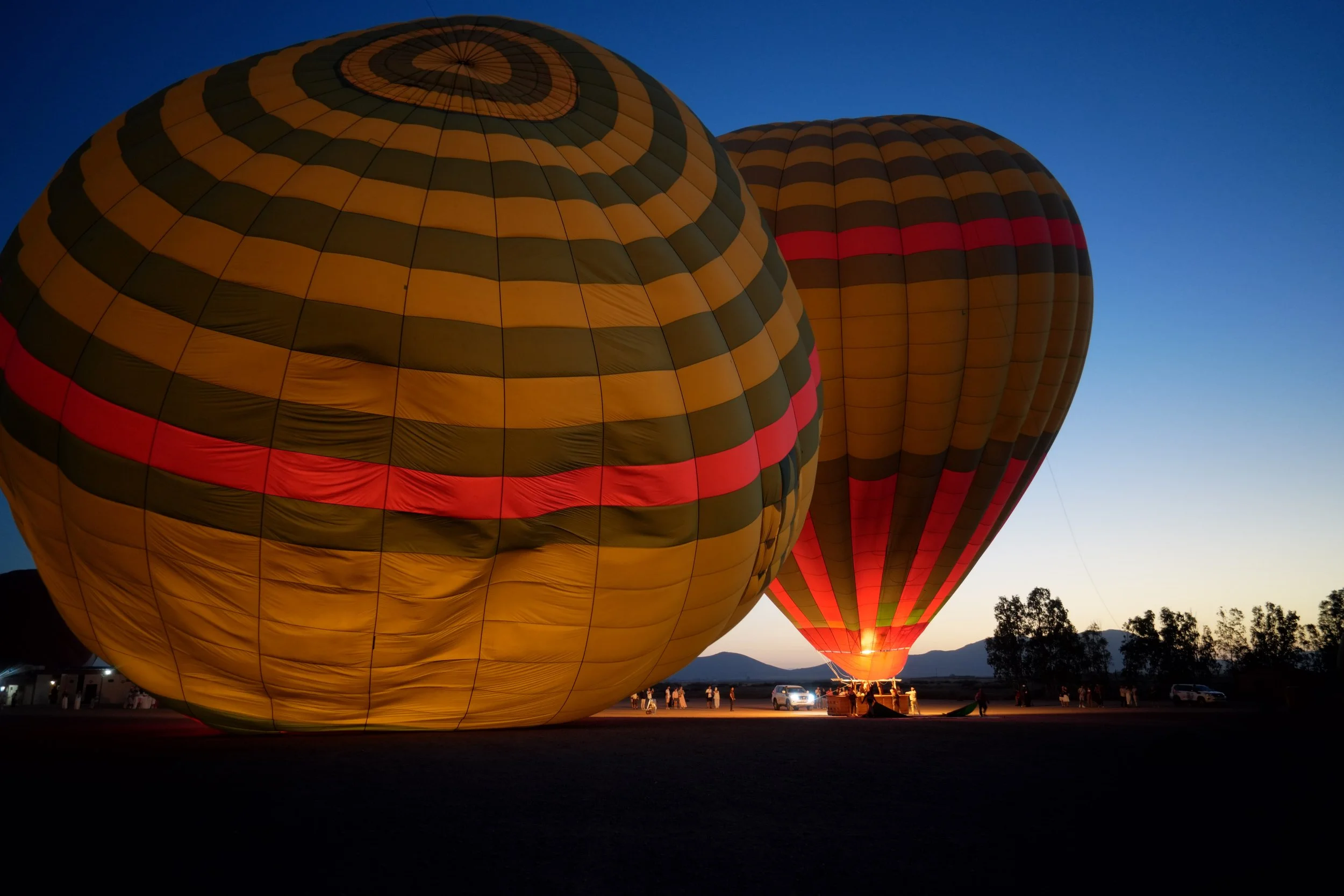
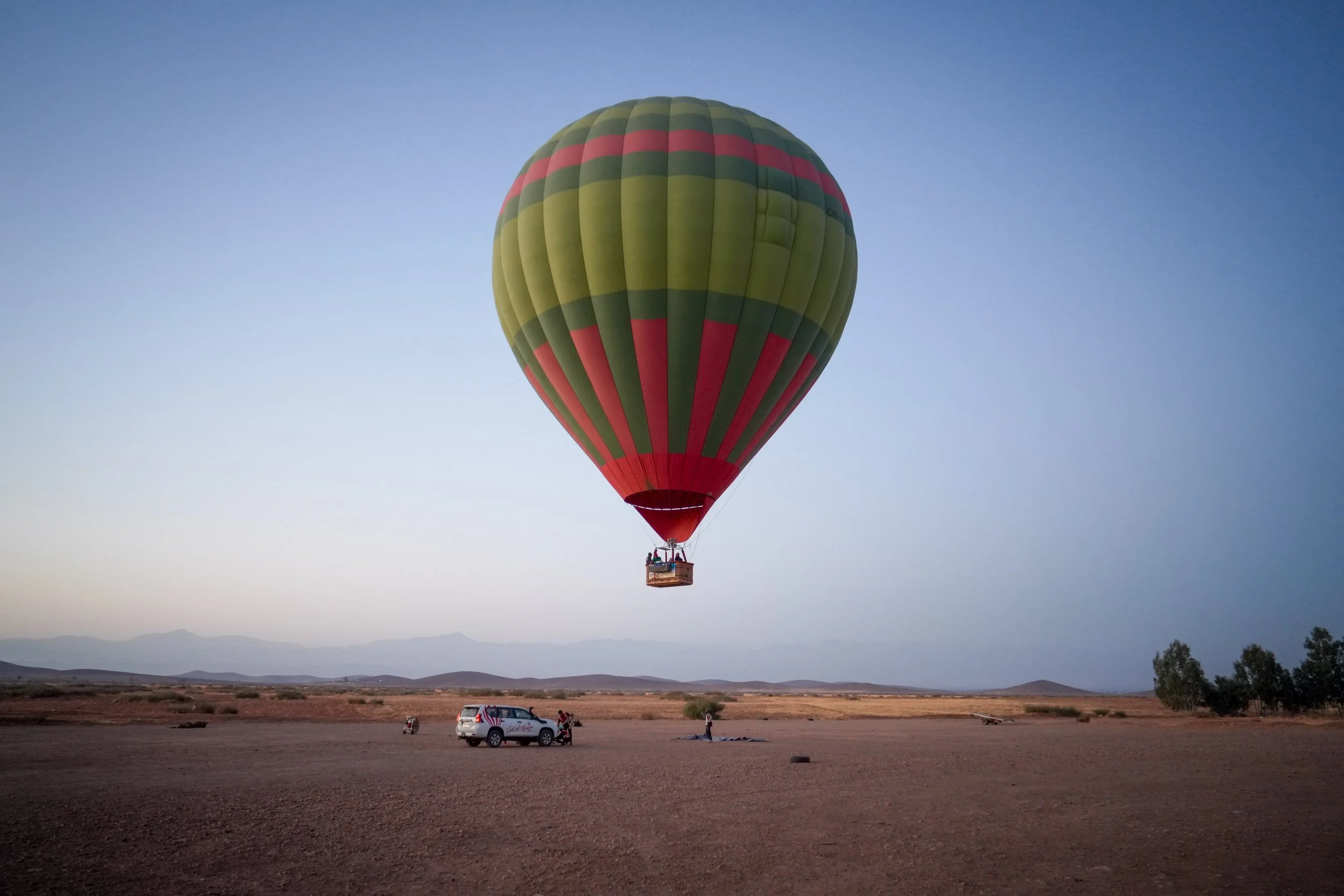
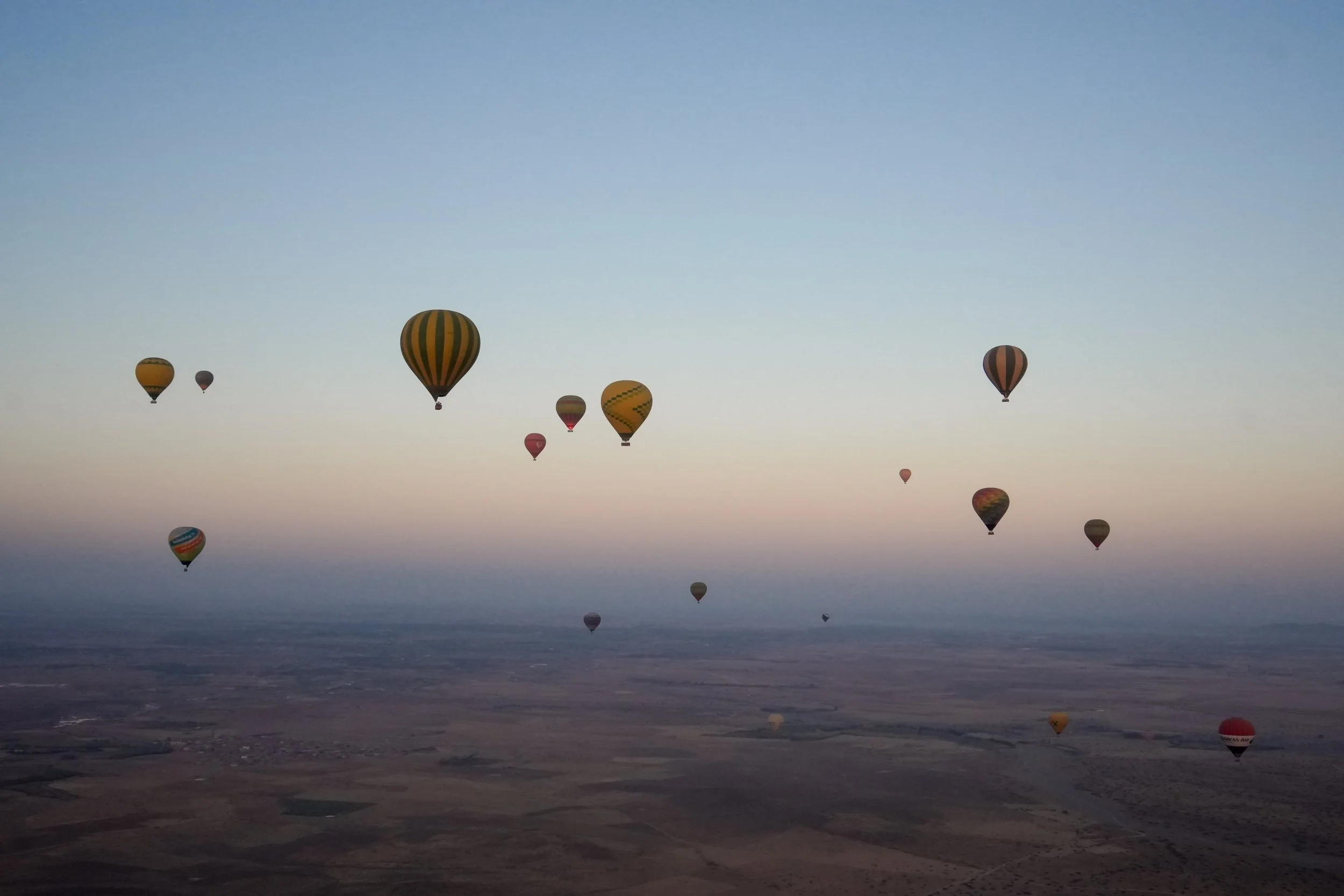
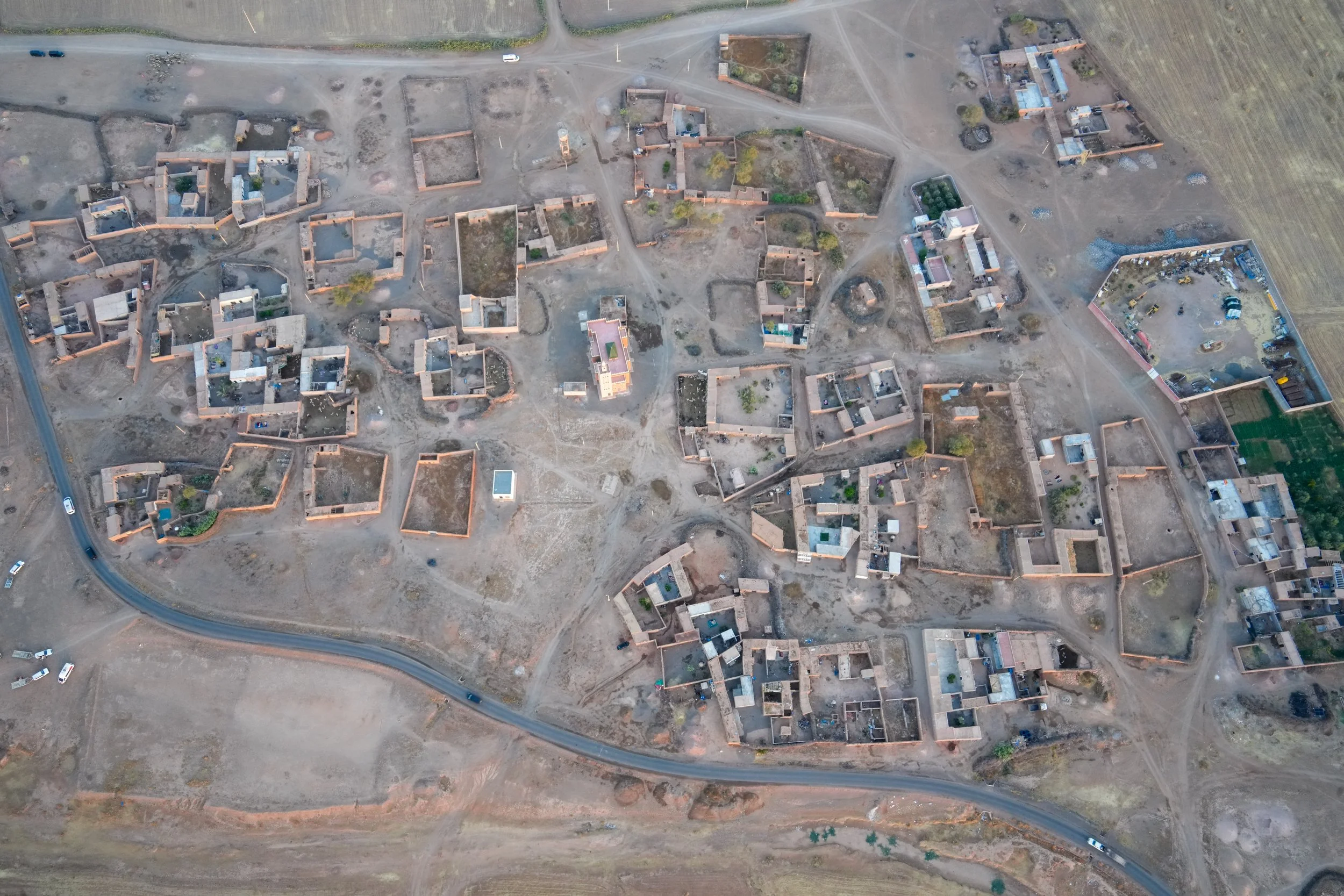
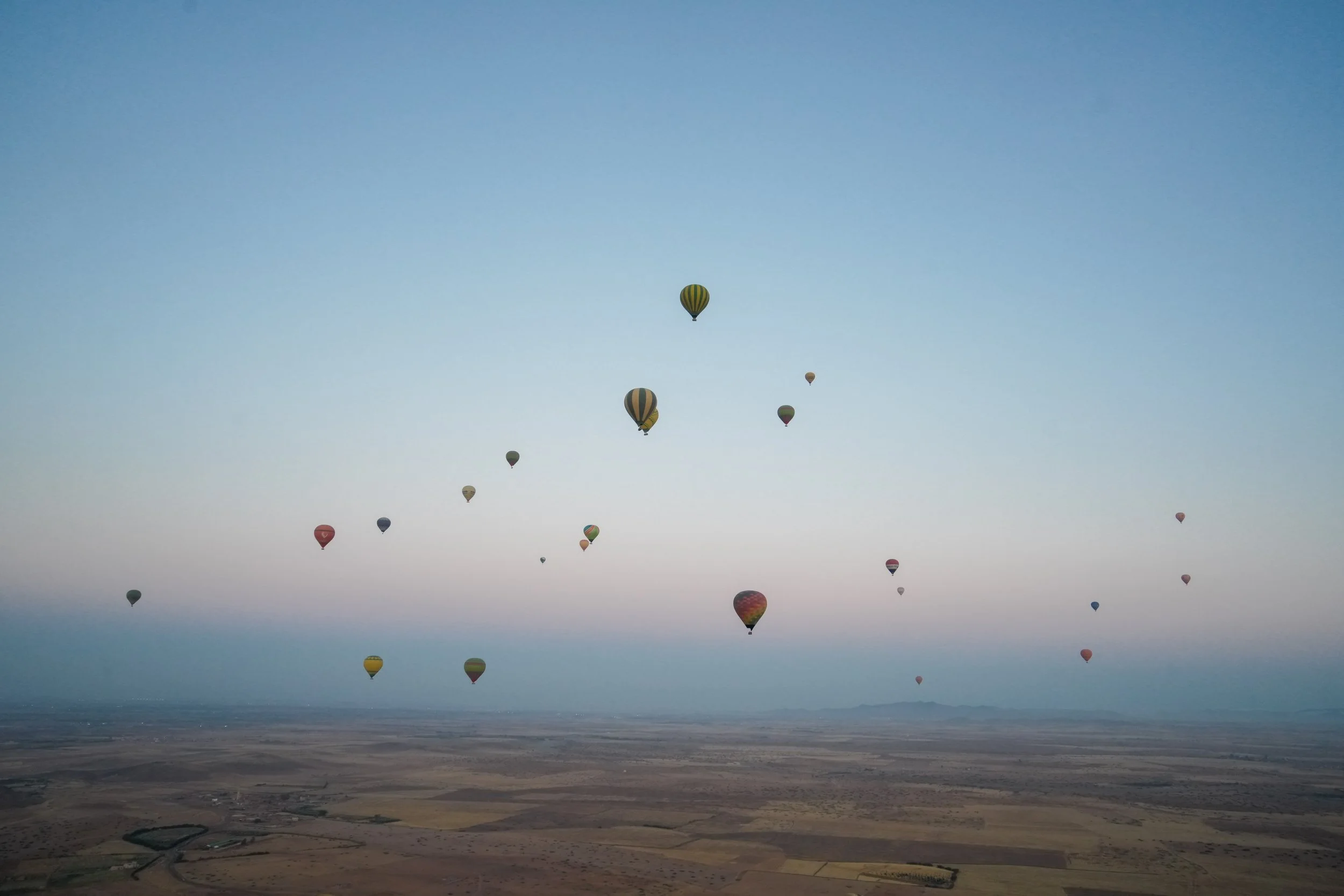
One of my favorite experiences of the entire trip happened early one morning, when we left the streets behind and saw Morocco from above.
It was my first time in a hot-air balloon.
I'm not a big fan of heights, but being in a balloon was surprisingly calm. Most of the time it almost felt like standing on solid ground. Then I'd look over the edge and quickly remember that I wasn't.
We went up around sunrise with the mountains in the distance. At certain moments, instead of looking up toward the sunrise, it felt like we were looking straight across at it.
Seeing the landscape from that perspective was completely different from anything else I'd photographed during the trip. For days I'd been photographing Morocco from street level—walking through crowds, looking down alleys and watching life happen around me.
Now everything was quiet.
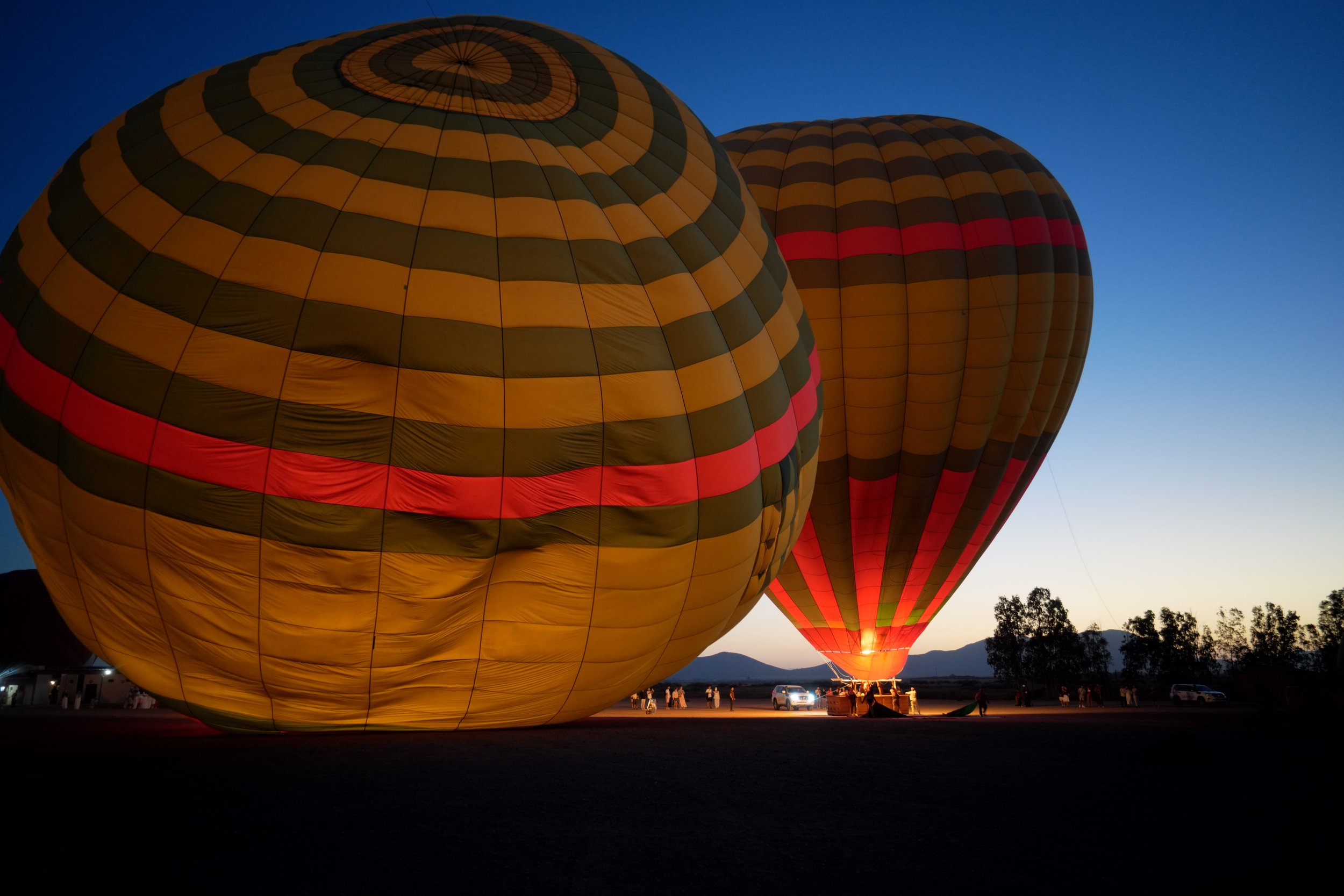
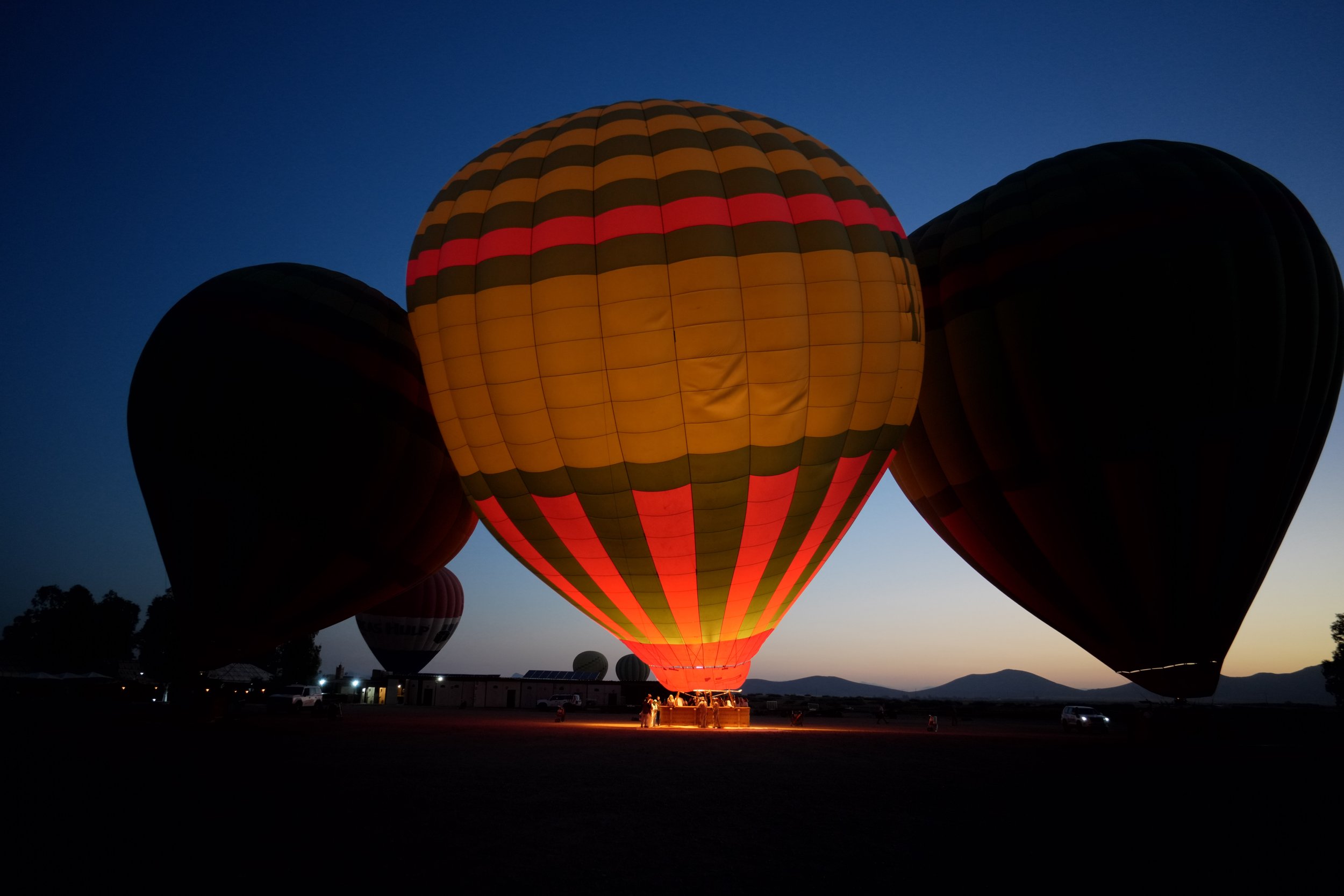
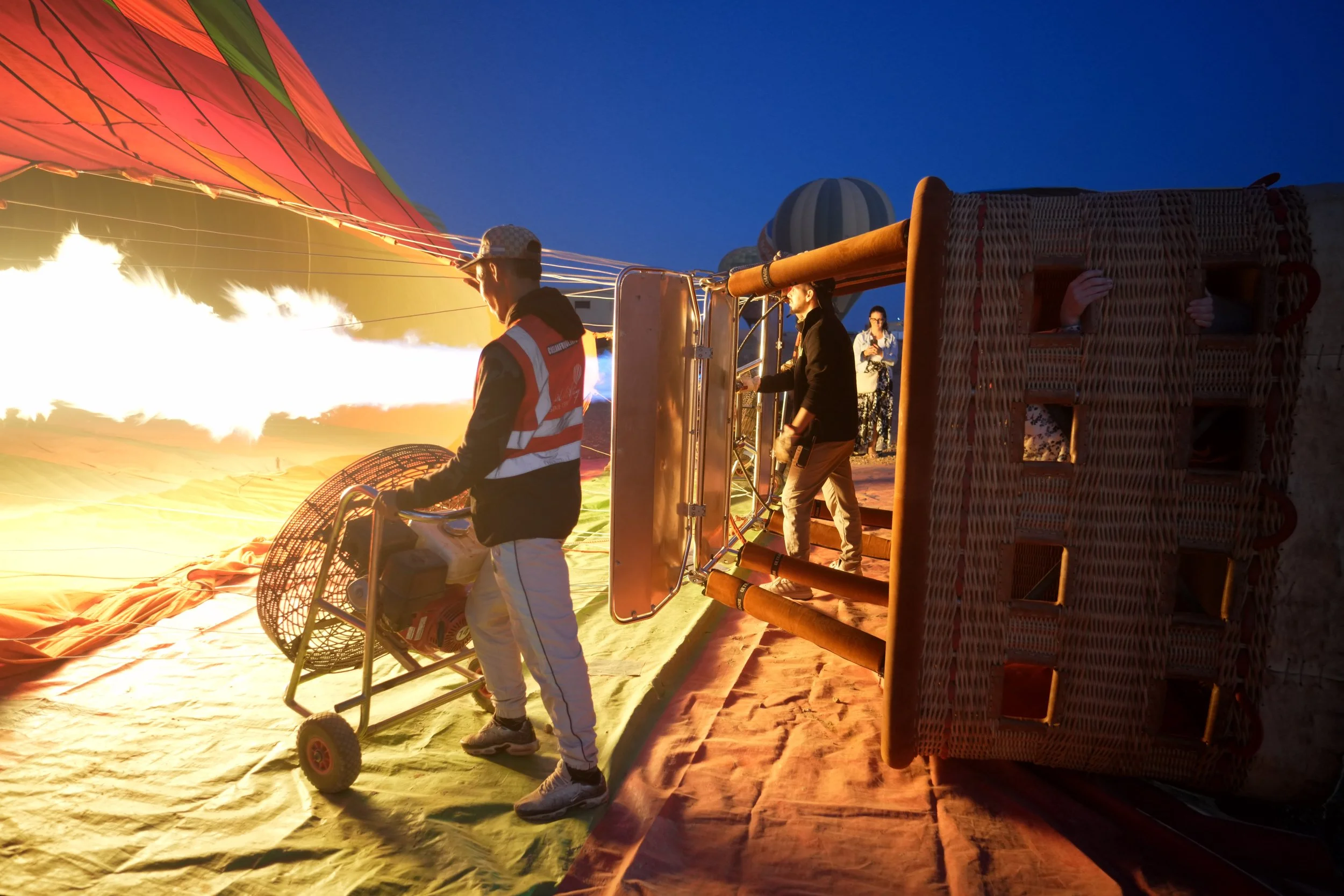
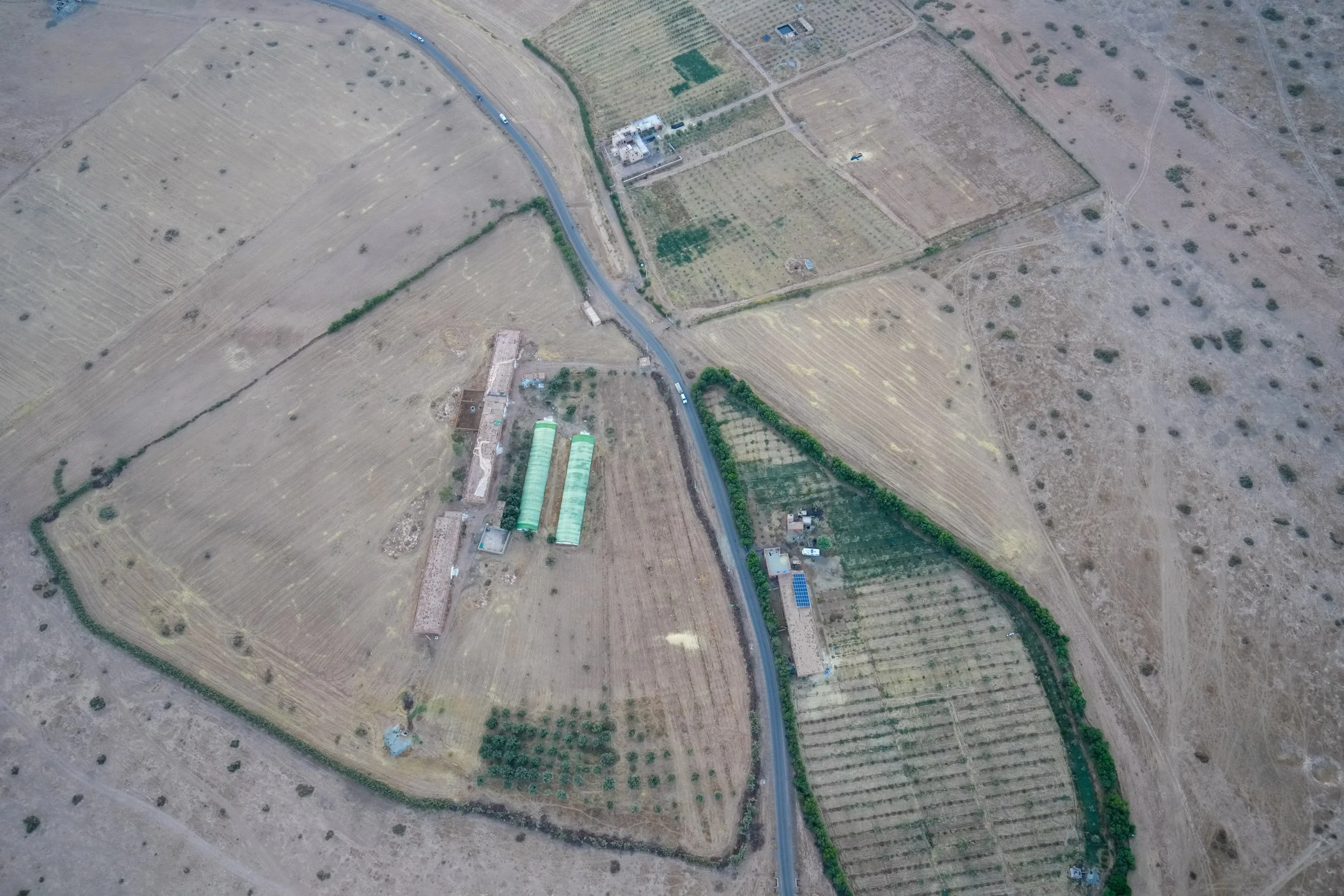
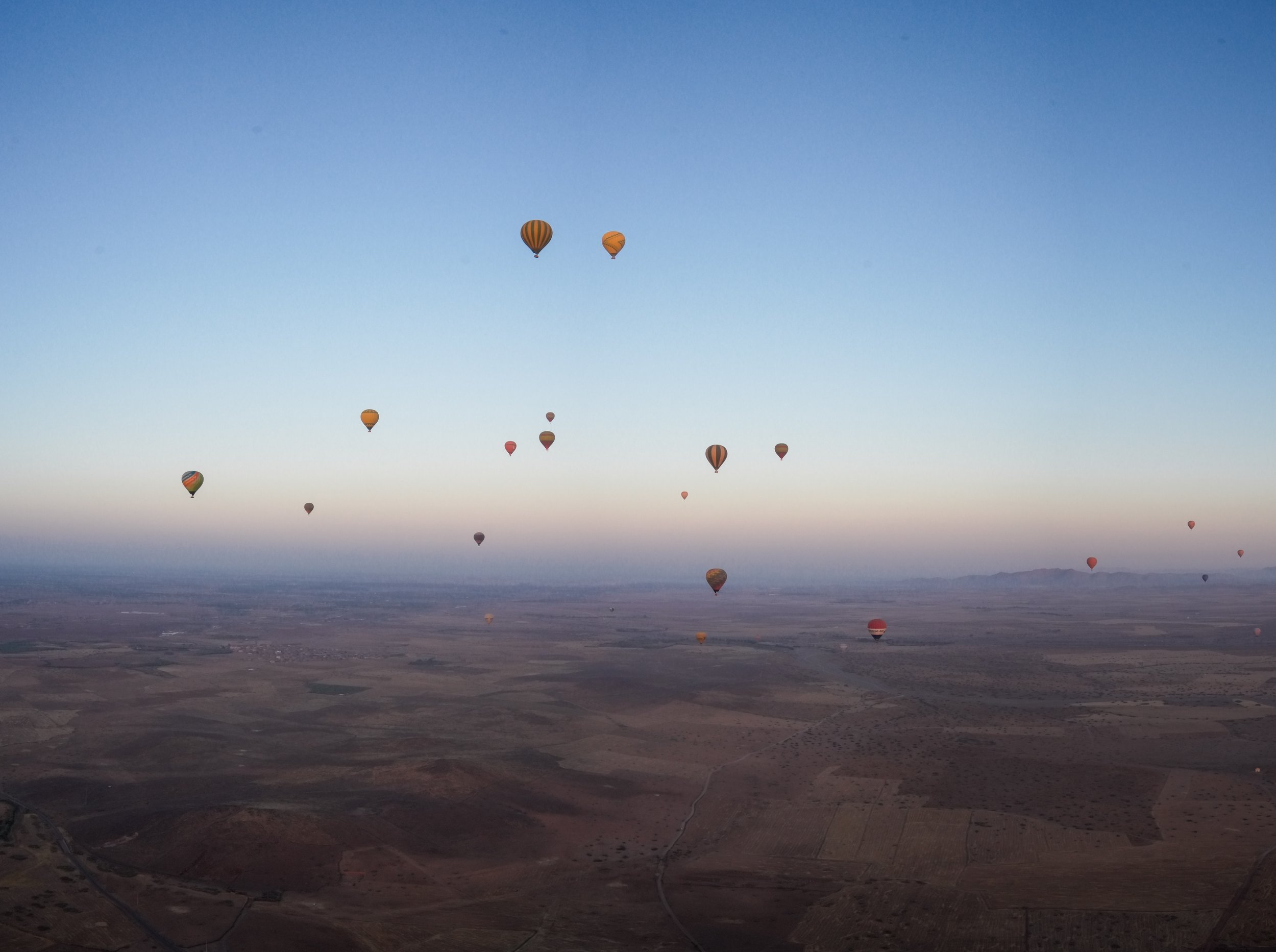
One of my favorite photographs from that morning was made with my phone.
I wanted a vertical photograph that isolated the sunrise against the mountains, and my Samsung gave me the reach I needed. I had the Sony hanging right there with me, but the phone gave me the picture I wanted.
That's really all that mattered.
Looking Back
Morocco kept changing in front of me.
Casablanca didn't look like Rabat. Rabat didn't look like Chefchaouen. Chefchaouen certainly didn't look like Marrakesh. Even within Marrakesh, the city I photographed during the day became something different after sunset.
That variety is part of what I came home thinking about.
It's also another reminder of just how diverse Africa is. Morocco is African, but its North African, Amazigh, Arab, Mediterranean and European influences create a sense of place completely different from other parts of the continent I've visited.
I went there intentionally trying not to arrive with someone else's photographs already in my head.
These are the photographs I came home with.